With increasing power outages, rising electricity costs, and growing interest in solar energy, many people are looking for reliable backup cooling solutions. One common question is: Can we run AC on a lithium battery?
The simple answer is yes: an air conditioner can run on a lithium battery, but the battery itself cannot power the AC directly. You need a suitable inverter system to convert the battery’s stored DC energy into AC electricity that your air conditioner can use.
The actual runtime depends on several factors, including your AC’s power consumption, battery capacity, inverter efficiency, and battery voltage.
For homeowners, RV owners, and off-grid users, modern lithium batteries, especially LiFePO4 batteries for air conditioners, have made battery-powered cooling more practical and efficient than traditional backup systems.
Can an AC Run on a Lithium Battery?
Yes, an AC can run on a lithium battery when connected through a properly sized inverter. A larger battery capacity allows longer operation, while an efficient inverter AC consumes less power and extends runtime.
For example, a 48V lithium battery system with a suitable inverter can support a home air conditioner for several hours, depending on the AC size and battery capacity.
How Does Running an AC on a Lithium Battery Work?
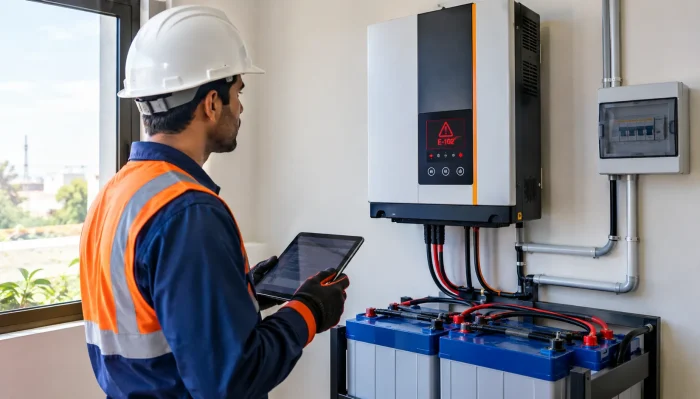
A standard air conditioner requires alternating current (AC) electricity, while lithium batteries store energy as direct current (DC). Because of this difference, an inverter is required between the battery and the AC unit.
The basic process works like this:
Lithium Battery → Inverter → Air Conditioner → Cooling
The lithium battery stores electrical energy, the inverter converts DC power into AC power, and the air conditioner uses that electricity to operate.
A high-quality inverter is important because air conditioner compressors often require extra power when starting. A pure sine wave inverter is generally recommended because it provides cleaner electricity and works better with sensitive appliances.
Can an AC Run Directly on a Lithium Battery?
No, most household air conditioners cannot run directly on a lithium battery.
A lithium battery produces DC power, while household AC units are designed for AC electricity. You need:
- A lithium battery system
- A compatible inverter
- Proper wiring and protection equipment
The battery voltage also matters. Common options include:
- 12V lithium battery for AC
- 24V lithium battery for air conditioner
- 48V lithium battery for AC
Higher voltage systems are usually preferred for larger AC units because they reduce current flow and improve overall efficiency.
What Size Lithium Battery Is Needed to Run an Air Conditioner?
The battery capacity required for an air conditioner depends on how much electricity your AC consumes and how long you want it to operate.
The main factors include:
- AC size and cooling capacity
- Energy efficiency rating
- Running wattage
- Battery voltage
- Inverter efficiency
- Required backup time
A small portable AC may need a much smaller battery system compared to a large home air conditioner. Choosing an energy-efficient air conditioner can significantly reduce battery requirements and extend backup time. Learn more about energy-efficient cooling from the ENERGY STAR air conditioner guide.
Understanding AC Power Consumption on Battery
Before choosing a lithium battery, it is important to understand your AC’s electricity usage. It’s also a good idea to compare the cost of lithium batteries and choose a battery that fits both your energy needs and budget.
Typical power consumption:
| AC Type | Approximate Power Usage |
|---|---|
| Small portable AC | 500–1000 watts |
| 1-ton inverter AC | 700–1200 watts |
| 1.5-ton inverter AC | 1200–1800 watts |
| Large AC units | 2000+ watts |
Inverter air conditioners usually consume less energy because they adjust compressor speed according to cooling demand. Traditional non-inverter ACs often consume more power because the compressor repeatedly starts and stops.
How Long Can a Lithium Battery Run an AC?
The answer to how long a lithium battery can run an AC depends on the battery size and AC power consumption.
A basic calculation is:
Battery Capacity (Wh) ÷ AC Power Consumption (Watts) = Approximate Runtime
For example:
A 48V 100Ah lithium battery:
48 × 100 = 4800Wh
After accounting for inverter losses, the usable energy may be around 4000Wh.
If your AC consumes 1000 watts:
4000 ÷ 1000 = approximately 4 hours
However, real-world runtime can change because of:
- Room temperature
- AC temperature setting
- Insulation quality
- Outdoor weather
- Compressor cycling
- Battery health
Can a 100Ah Lithium Battery Run an AC?
Yes, a 100Ah lithium battery can run an AC, but the runtime depends heavily on the battery voltage.
12V 100Ah Lithium Battery
Energy calculation:
12V × 100Ah = 1200Wh
This may support:
- Small portable AC units
- Short backup periods
- Low-power cooling solutions
It is generally not ideal for running a large home AC.
24V 100Ah Lithium Battery
Energy calculation:
24V × 100Ah = 2400Wh
A 24V system can provide better performance and may support smaller inverter air conditioners.
48V 100Ah Lithium Battery
Energy calculation:
48V × 100Ah = 4800Wh
A 48V battery system is more suitable for:
- Home AC backup
- Solar energy systems
- Longer cooling periods
Can a 200Ah Lithium Battery Run an AC?
A 200Ah lithium battery can run an AC, but the operating time depends on the battery voltage and AC consumption.
12V 200Ah Lithium Battery
Energy:
12 × 200 = 2400Wh
Suitable for:
- Small AC units
- Limited backup usage
48V 200Ah Lithium Battery
Energy:
48 × 200 = 9600Wh
This provides significantly more stored energy and can support:
- Larger inverter AC systems
- Longer backup duration
- Solar-powered cooling setups
A bigger battery does not make your AC consume less electricity. It simply allows the system to run for a longer time.
Also Read: How long does it take to charge a 100Ah lithium battery with a solar panel?
What Is the Best Lithium Battery for AC?
Choosing the best lithium battery for AC depends on your cooling needs, budget, and backup requirements.
One of the most popular choices for air conditioner systems is a LiFePO4 battery.
Why LiFePO4 Batteries Are Popular for AC Systems
LiFePO4 batteries offer several advantages:
- Longer lifespan
- Better thermal stability
- Higher safety levels
- More charging cycles
- Lower maintenance requirements
- Better deep discharge performance
Because air conditioners require a consistent power supply, many solar backup systems use LiFePO4 technology.
Solar Lithium Battery for Air Conditioner: Is It a Good Option?
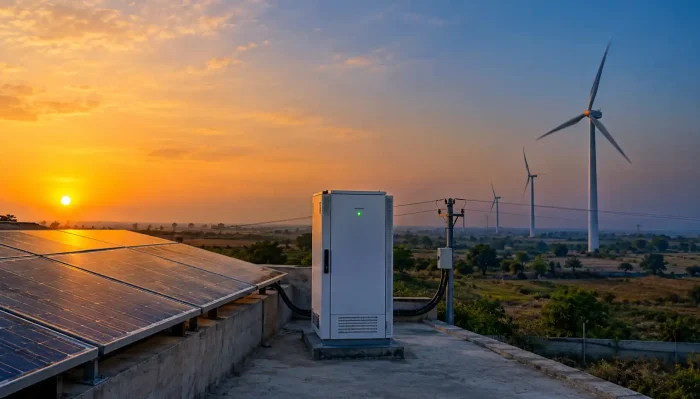
A solar lithium battery for an air conditioner combines solar panels, a charge controller, battery storage, and an inverter to create an independent power system.
The setup works like this:
Solar Panels → Charge Controller → Lithium Battery → Inverter → AC
Benefits include:
- Reduced electricity costs
- Backup during power failures
- Renewable energy usage
- Better energy independence
Solar-powered AC systems are especially useful in areas with frequent outages or strong sunlight availability.
What Size Inverter Is Needed for Running an AC on Battery Power?
Choosing the correct inverter is just as important as choosing the battery.
Your inverter should handle:
- Continuous AC power consumption
- Compressor startup surge
- Battery voltage compatibility
General recommendations:
| AC Size | Suggested Inverter Capacity |
|---|---|
| Small AC | 1500W–2000W |
| 1-ton AC | 2000W–3000W |
| 1.5-ton AC | 3000W+ |
A pure sine wave inverter is usually the better choice for air conditioners because it provides stable power.
Lithium Battery Backup for Home AC: Pros and Cons
A lithium battery backup for home AC can provide comfort during power outages, but it has both benefits and limitations.
Advantages
- Reliable cooling during blackouts
- Lower maintenance compared to lead-acid batteries
- Longer battery lifespan
- Works well with solar systems
- Quiet operation
Limitations
- Higher initial investment
- Requires proper system sizing
- Large AC units need bigger battery banks
- Professional installation may be required
Lithium Battery vs Inverter Battery for Running AC
Many users compare lithium batteries with traditional inverter batteries.
| Feature | Lithium Battery | Lead Acid Inverter Battery |
|---|---|---|
| Lifespan | Longer | Shorter |
| Charging Speed | Faster | Slower |
| Maintenance | Low | Higher |
| Weight | Lightweight | Heavy |
| Usable Capacity | Higher | Lower |
Lithium batteries usually provide better efficiency and longer-term value for frequent backup usage. For the best performance and maximum backup time, your lithium battery, inverter, and air conditioner should be properly sized by experienced professionals.
Factors That Affect AC Runtime on Lithium Batteries
Several factors influence how long your AC can operate on battery power.
AC Efficiency
Energy-efficient inverter ACs require less power and increase battery runtime.
Battery Size
Higher-capacity batteries store more energy and provide longer backup.
Inverter Efficiency
Power losses inside the inverter reduce available energy.
Room Insulation
Well-insulated rooms require less cooling energy.
Outdoor Temperature
Extremely hot weather makes the AC work harder and consume more electricity.
Common Mistakes When Running an AC on Lithium Batteries
Avoid these common problems:
- Choosing a battery that is too small
- Using an inverter with insufficient capacity
- Ignoring compressor startup requirements
- Buying low-quality batteries
- Installing incorrect wiring
- Not calculating actual AC power usage
Proper system sizing helps improve performance and protects your equipment.
Conclusion
Can we run AC on a lithium battery? Yes, with the right battery capacity, inverter, and properly sized system, a lithium battery can reliably power an air conditioner. The required battery size depends on your AC’s power consumption and the amount of backup time you need. For the best performance and long-term reliability, choose a high-quality LiFePO4 battery and ensure your system is professionally designed to match your energy requirements.
For most backup and solar applications, LiFePO4 batteries provide a reliable solution because of their long lifespan, safety, and efficiency.
Before purchasing a lithium battery system, calculate your AC power consumption and determine how many hours of backup cooling you need. A properly designed system can keep your home comfortable even during power outages while reducing dependence on traditional electricity sources.
Frequently Asked Questions
Can an AC run on a lithium battery?
Yes, an AC can run on a lithium battery when connected with a suitable inverter. The battery size determines how long it can operate.
How long can a lithium battery run an AC?
A lithium battery can run an AC from a few hours to longer periods depending on battery capacity, AC wattage, and inverter efficiency.
Can a 200Ah lithium battery run an AC?
Yes, a 200Ah lithium battery can run an AC, but the runtime depends on whether it is a 12V, 24V, or 48V system.
What is the best lithium battery for AC?
LiFePO4 batteries are commonly preferred because they provide long life, safety, and efficient performance.
Can a 12V lithium battery run an air conditioner?
A 12V lithium battery can run small AC units with the correct inverter, but larger home AC systems usually require 24V or 48V batteries.
What battery capacity is required for an air conditioner?
The required capacity depends on AC power consumption, battery voltage, and desired backup hours.
Can solar lithium batteries run an AC overnight?
Yes, if the battery storage capacity is large enough to handle the AC load throughout the night.