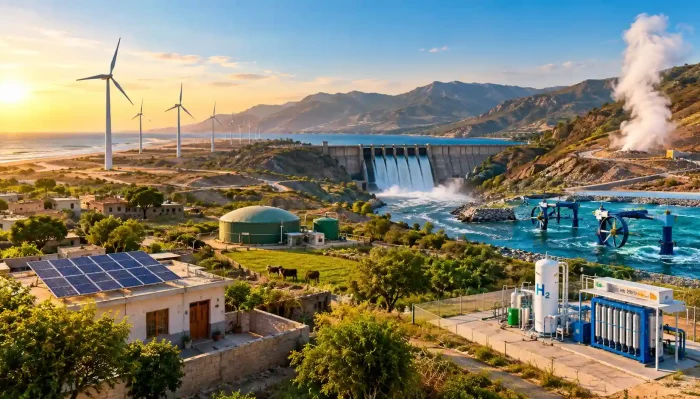
Hydro energy is power made from moving water. Five common examples are storage hydropower, run-of-river hydropower, pumped-storage hydropower, micro hydropower, and tidal or offshore hydropower. Each one moves water in a different way to spin a turbine.
If you are asking what are 5 examples of hydro energy, this guide gives you the types, real projects, and rough costs. In Pakistan, people say “hydel” for the same idea. The tech is the same, only the word changes.
What Is Hydro Energy?
Hydro energy is the power stored in water. Water on high ground holds potential energy. When it falls or flows, that turns into kinetic energy.
A plant catches that motion with a turbine. The turbine spins a generator. The generator makes electricity. A transformer then raises the voltage so the power can travel through the grid.
That is the whole idea. Every type below is a different way to get water to the turbine. For a step-by-step view, read our guide on how does hydropower work.
What Are 5 Examples of Hydro Energy?
Here is the short list. Each example differs by how it stores or moves water.
1. Storage Hydropower
Storage hydropower uses a dam to hold a large lake called a reservoir. Water sits behind the dam at a high level. That height is what gives it energy.
Operators open gates when power is needed. Water rushes down a pipe called a penstock. It hits the turbine, and the turbine drives the generator.
A dam alone does not make power. The height difference between the lake and the turbine does. More height means more force.
The best-known Pakistani example is Tarbela Dam on the Indus River. It stores water in monsoon months and releases it when demand rises.
2. Run-of-River Hydropower
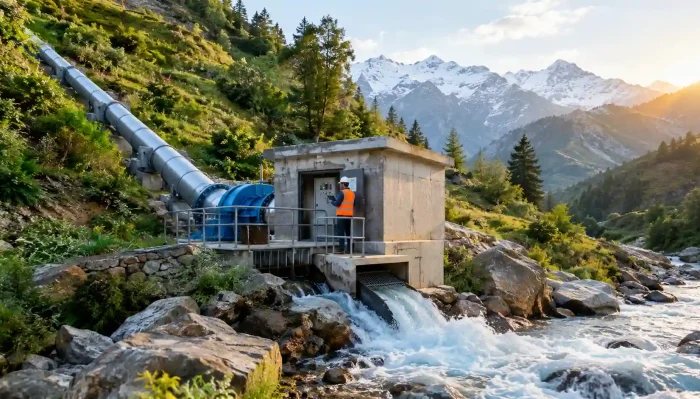
Run-of-river plants use the natural flow of a river. They need little or no large reservoir. A small barrage or intake diverts part of the flow into a canal or penstock. That water then spins the turbines.
The good part is a smaller footprint. The catch is that output follows the river. In summer, snowmelt gives strong flow. In winter, flow drops and so does power.
Pakistan has two clear examples: Ghazi-Barotha on the Indus and Neelum-Jhelum on the Neelum River. The International Hydropower Association (IHA) describes these plants as systems that guide flowing river water to a turbine through a canal or penstock.
3. Pumped-Storage Hydropower
This one works like a giant water battery. It uses two reservoirs, one high and one low.
When power demand is low, extra grid electricity pumps water uphill. When demand is high, the water flows back down through turbines. The plant then sends power to the grid.
Pumped storage is mainly a storage tool, not a fresh source of energy. It uses more electricity to pump than it gets back. The value is timing. It moves cheap night power to the busy evening hours. Pakistan has no large working plant of this type yet, but the idea suits its mountain sites.
4. Micro and Small Hydropower
Micro hydropower uses small streams and small turbines. These systems often make from a few kilowatts up to about 100 kilowatts. Small hydropower covers larger plants, usually up to 10 megawatts.
They fit mountain villages far from the grid. A stream in Khyber Pakhtunkhwa or Gilgit-Baltistan can light homes, run a flour mill, or power a clinic. The power stays local, so there are no long wires to build.
This type suits Pakistan well because many northern valleys have fast streams and weak grid access.
5. Offshore and Tidal Hydropower
Tidal power uses the rise and fall of ocean water. Some plants use a barrage across a bay. Others put underwater turbines in strong tidal currents.
Tidal power sits in the wider water-energy family, but it is not the same as river or dam hydropower. It uses sea movement, not river flow. IHA calls offshore hydropower a less mature but growing group that draws power from tides and waves.
The oldest large example is La Rance in France, running since 1966. Sihwa Lake in South Korea is another.
Hydro Energy Examples at a Glance
| Type | Water Source | Storage | Common Use |
| Storage hydropower | River and reservoir | High | Large-scale electricity |
| Run-of-river | River flow | Low | River-based generation |
| Pumped storage | Two reservoirs | High | Grid energy storage |
| Micro hydropower | Small rivers and streams | Low | Remote communities |
| Offshore and tidal | Ocean tides and waves | Different mechanism | Marine renewable energy |
What Are the Different Types of Hydropower?
Experts group hydropower in three main ways: impoundment (storage), diversion (run-of-river), and pumped storage. Micro and tidal systems are variations. If someone asks what are the types of hydro energy, the five above cover the full answer.
What Does Each Type Cost?
Costs change by site, so treat these as rough guides. Check the source before you plan a budget.
| Type | Rough Installed Cost | Notes |
| Storage hydropower | USD 2,000 to 4,000 per kW | Dam and land add most of the cost |
| Run-of-river | USD 1,500 to 3,500 per kW | Tunnels and canals drive price |
| Pumped storage | USD 1,500 to 3,000 per kW | Cost depends on height and geology |
| Micro hydropower | USD 1,500 to 5,000 per kW | Small size means higher cost per kW |
| Tidal | Often above USD 5,000 per kW | Still early and costly |
The International Renewable Energy Agency (IRENA) tracks hydropower costs each year. Its reports show that hydropower stays among the cheapest sources over a long life, often 50 years or more. The high price comes at the start. Fuel cost is zero.
For a small system, the turbine is only part of the bill. Add the intake, pipe, powerhouse, wiring, and yearly upkeep.
What Are Some Real Examples of Hydropower Plants?
Types are ideas. Plants are real places. Here are five well-known projects. Figures come from the plant owners, such as WAPDA, and can change after upgrades.
Tarbela Hydropower Project, Pakistan
Tarbela sits on the Indus River. It is an earth-filled dam and the largest hydropower source in Pakistan. Its installed capacity is about 4,888 MW after the fourth extension added 1,410 MW in 2018. A fifth extension of about 1,530 MW is planned to lift the total to around 6,400 MW.
Mangla Hydropower Project, Pakistan
Mangla is on the Jhelum River. It has an installed capacity of about 1,150 MW. It stores water for farms as well as power. This is a good example of one dam serving two jobs.
Ghazi-Barotha Hydropower Project, Pakistan
Ghazi-Barotha takes water from the Indus below Tarbela. A power channel about 52 km long carries it to the plant. Capacity is about 1,450 MW. It is a clear case of run-of-river design.
Neelum-Jhelum Hydropower Project, Pakistan
This plant diverts the Neelum River through long tunnels to a powerhouse. Capacity is about 969 MW. It shows how tunnels can replace a big reservoir. It also shows the risk of complex builds, since tunnel problems delayed full use.
How Does Hydro Energy Generate Electricity?
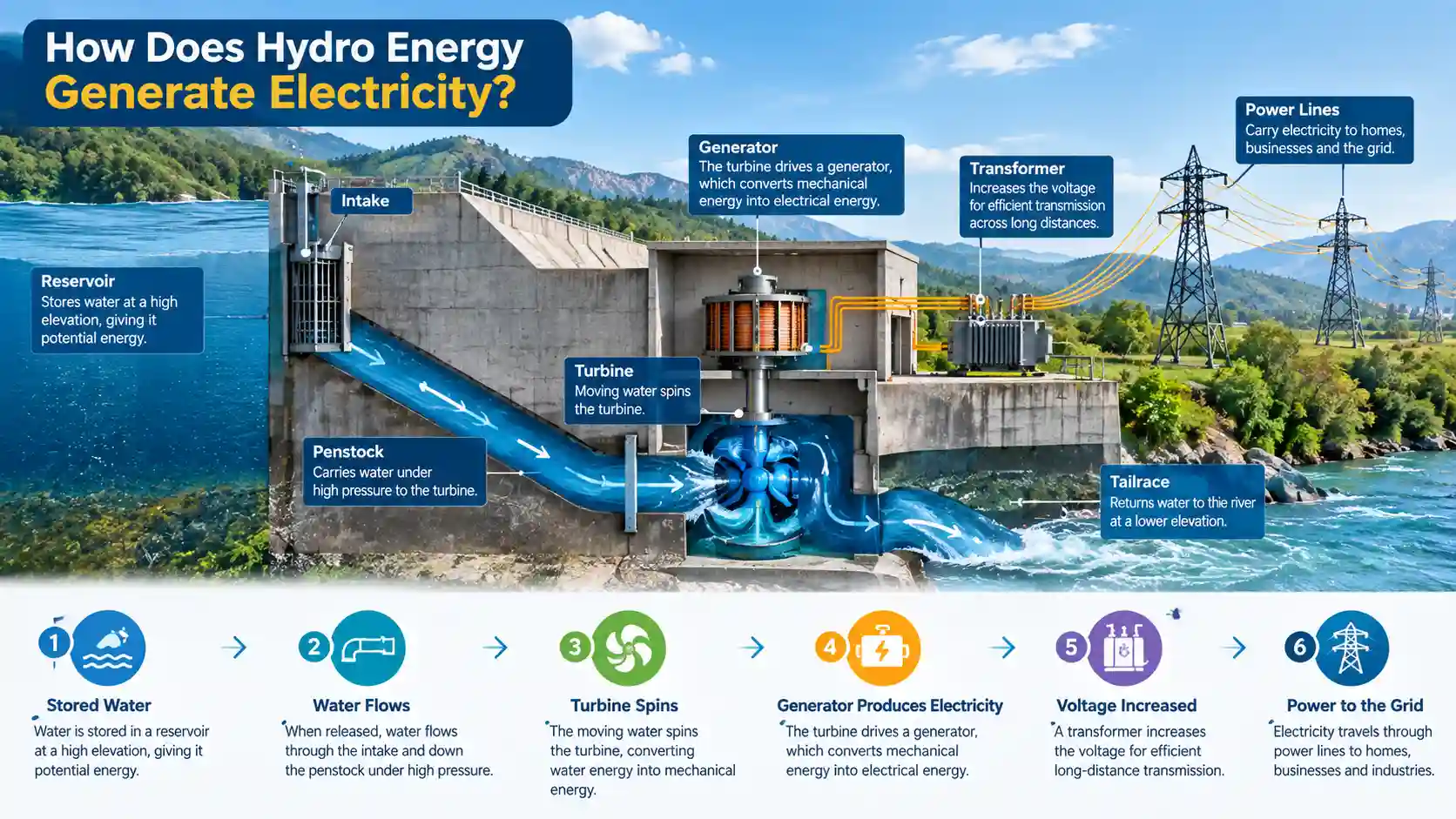
Every plant follows five steps:
- Water is stored or flows naturally.
- Water moves through an intake and penstock.
- Water turns a turbine.
- The turbine drives a generator.
- Electricity passes to a transformer and then the grid.
Want the detail behind each step? Our guide on how does hydropower work covers turbines, head, and flow.
Why Is Hydro Energy Considered Renewable?
The sun heats water. Water rises, forms clouds, and falls as rain or snow. Rain fills rivers and lakes. Rivers feed turbines. Then the water flows on, and the cycle repeats. The plant does not use up the water.
Renewable does not mean free of harm. Dams can change fish routes and river life. Reservoirs can flood land and move families. Silt can build up behind walls and cut storage. Good planning and fair support for local people matter as much as good engineering.
Advantages and Limitations of Hydro Energy
Advantages
- Renewable water source
- Steady, reliable output
- No fuel to buy
- Fast response to grid demand
- Long plant life, often 50 to 100 years
Limitations
- High cost to build
- Output depends on rain and snow
- Changes to river life
- Silt buildup
- Land and community impact
For a deeper look, read our full article on the advantages of hydroelectric energy.
What Are Examples of Hydropower in Pakistan?
Pakistan uses almost every design in this guide. It is a useful case because the country has big rivers in the north and steep mountain streams.
- Tarbela: storage on the Indus.
- Mangla: storage on the Jhelum, with irrigation.
- Ghazi-Barotha: run-of-river on the Indus.
- Neelum-Jhelum: river diversion through tunnels.
- Mini hydel schemes: small plants in Khyber Pakhtunkhwa and Gilgit-Baltistan that serve mountain villages.
So when readers ask what are examples of hydropower in Pakistan, the answer covers large dams, canals, tunnels, and village-scale plants. Large dams feed the national grid. Small schemes reach places the grid does not.
Need Help With Hydel Energy Installation?
Not every site suits a dam. Many farms, factories, and remote homes have a stream or canal with a steady drop. A small system can turn that into power for years.
The right size depends on two numbers: how much water flows and how far it falls. A site check comes first. After that come the turbine choice, pipe layout, and grid or off-grid wiring.
Progressive Ventures can guide you through this process. If you want a clear plan for Hydel Energy Installation, talk to the team. Contact Progressive Ventures today to book a site review and get a cost estimate for your project.
Hydro Energy vs Hydel Energy
They mean the same thing. In Pakistan, “hydel” is the common short form for hydroelectric power. International sources usually write “hydro” or “hydroelectric.” Both describe electricity from moving water. Read more in our guide to hydel energy.
Final Thoughts
If you still wonder what are 5 examples of hydro energy, remember them as five ways to use water: store it, follow the river, pump it uphill, use small streams, or tap the tides. Pick the type by the site, the budget, and the goal.
FAQs
What are 5 examples of hydro energy?
The five are storage hydropower, run-of-river hydropower, pumped-storage hydropower, micro hydropower, and tidal or offshore hydropower. Each one moves water in a different way to spin a turbine.
What are 5 examples of hydropower?
Hydropower and hydro energy mean the same thing here. The five examples are the same: storage, run-of-river, pumped storage, micro, and tidal.
What are examples of hydroelectric energy?
Tarbela Dam in Pakistan and Three Gorges Dam in China are storage examples. Ghazi-Barotha is run-of-river. Dinorwig in Wales is pumped storage. A village stream turbine is micro hydro.
What are the main types of hydropower?
The three main types are storage (impoundment), run-of-river (diversion), and pumped storage. Micro hydro and tidal power are added groups.
What is the best example of hydropower?
There is no single best one. Each type fits a different goal. Storage suits large power and water supply. Run-of-river suits steady rivers. Pumped storage suits grid balance. Micro hydro suits remote homes.
What are examples of hydropower in Pakistan?
Tarbela, Mangla, Ghazi-Barotha, Neelum-Jhelum, and many small hydel schemes in the northern valleys.
Is hydel energy the same as hydro energy?
Yes. Hydel is the local term in Pakistan. Hydro and hydroelectric are the common international terms.
Is hydropower renewable energy?
Yes. It relies on the water cycle, which rain and snow refill. It still has environmental and social effects that need care.