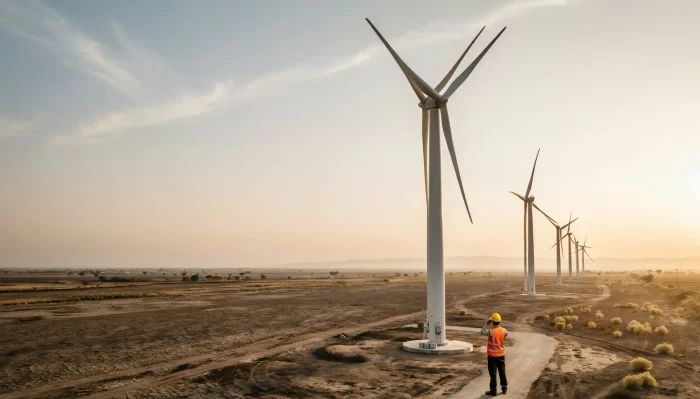
What is the lifespan of a wind turbine? The typical lifespan of a wind turbine is 20 to 25 years, but high-quality maintenance can extend it to 30 years. While structural towers last decades, internal parts wear out faster, requiring gearboxes to be replaced every 8 to 12 years and generators every 15 to 20 years. Longevity depends on mitigating weather damage and using predictive sensors to stop minor wear before it causes failure.
At the end of its life, a turbine is either decommissioned for recycling, granted a life extension, or “repowered” with brand-new machinery to reset its lifespan for another 20+ years.
Average Lifespan of Wind Turbines
How long do wind turbines last? It depends on what you buy and where you put it. Here’s the usual spread.
| Turbine type | Typical lifespan | What to know |
| Onshore (utility scale) | 20 to 25 years | Can reach 30 to 35 years with lifetime extension |
| Offshore | 20 to 25 years | Many newer designs target 25 years or more |
| Small or home turbines | 15 to 20 years | Depends on tower height, turbulence and servicing |
That 20 to 25 year figure is the design life, meaning the years the machine was engineered and certified for. Plenty of turbines blow past it. Some don’t get there. Treat the average lifespan of a wind turbine as a number for your spreadsheet, then check your own machine’s records before you trust it.
Age on paper misleads, too. A turbine on a windy ridge goes through far more load cycles each year than one on a calm plain, so two machines installed on the same day can be in very different shape.
Industry bodies put onshore working life at 20 to 25 years, and pushing it to 30 or 35 years has become fairly routine. Pakistan has had utility-scale wind farms running for well over a decade now, mostly in Sindh’s wind corridor. Those early projects are heading toward the age where owners have to decide what comes next. If you’re buying or inheriting an older machine, get its remaining life assessed before you agree a price. A turbine can look perfect from the ground and still have cracked blades or tired bearings.
Lifespan of Each Wind Turbine Component
A turbine is really a bundle of parts with different expiry dates. Blades, gearbox and generator wear out on their own schedules, while the structure underneath usually outlives all of them.
| Component | Typical service life | Main cause of wear |
| Blades | 20 to 25 years | Leading-edge erosion, lightning, fatigue |
| Gearbox | 10 to 15 years before a major repair or swap | Heavy loads, bearing wear, oil contamination |
| Generator | 15 to 20 years | Heat, insulation ageing, bearing failure |
| Tower | 25 to 30 years or more | Corrosion, bolt fatigue, weld cracks |
| Foundation | 30 years or more | Concrete cracking, water ingress, ground movement |
Read these as typical industry ranges. Your model, your site and your service history can move any of them by years.
The gearbox is the part we’d watch first. It carries the heaviest loads and it’s often the first expensive failure. Direct-drive designs avoid it, though you pay for that with a bigger, pricier generator. The steel and concrete of the tower and foundation tend to outlast the machinery on top, which is why fitting new blades or rebuilding a gearbox on a 20-year-old turbine can still make sense.
What Affects the Lifespan of a Wind Turbine?
Design and Material Quality
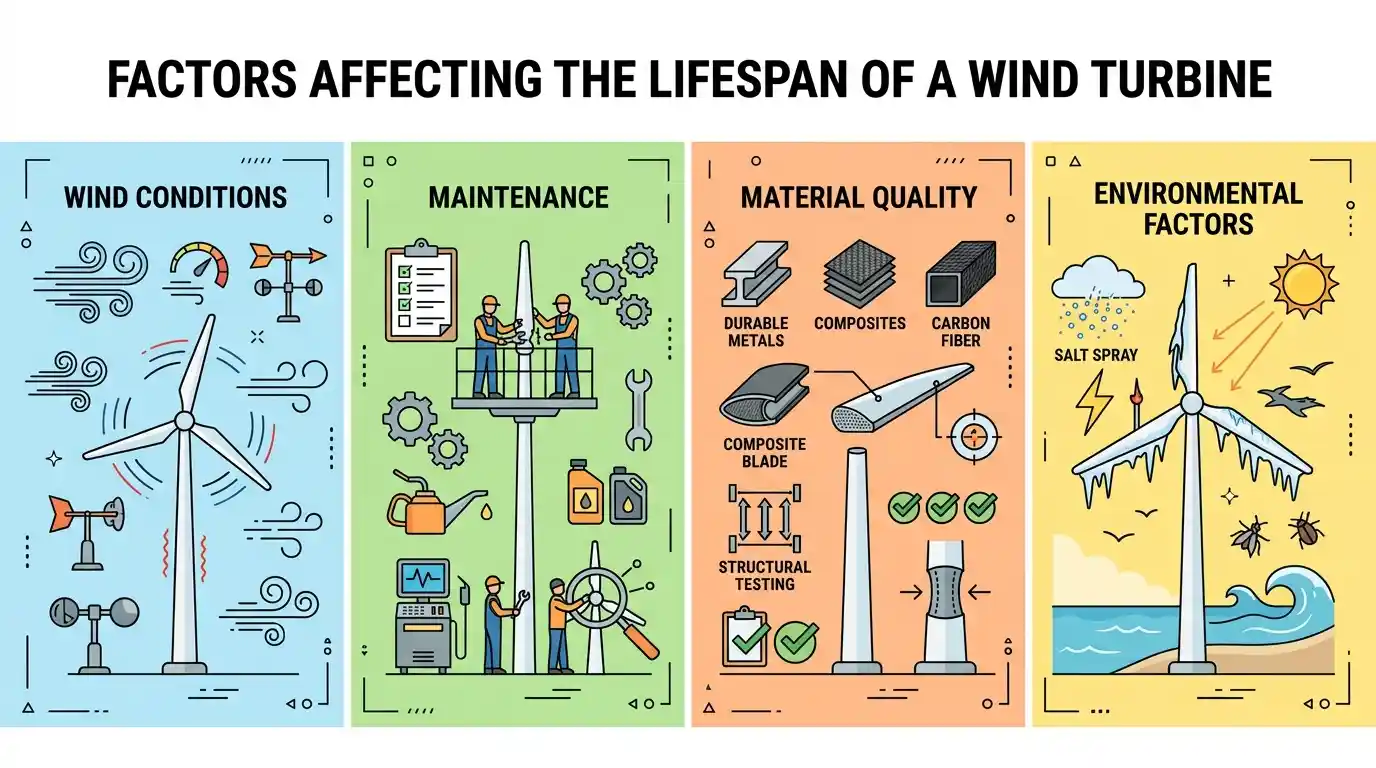
Most large turbines are certified to the IEC 61400 standard, which sets a minimum design life of 20 years. That’s the baseline, so ask what’s behind it. Get the design life certificate, the load calculations and the full maintenance log before you buy or take over a machine. Then look hard at the coatings and bearings, because those age first.
Location: Onshore vs Offshore
Salt is the villain here. It gets into steel, bolts, cables and blade roots. Offshore turbines sit in it around the clock while waves push on the foundation, and when something breaks you wait for a weather window and a vessel.
So how long do offshore wind turbines last? Usually 20 to 25 years, and only with serious corrosion protection. Coastal sites in Sindh deal with a gentler version of the same problem.
Wind and Weather Conditions
Strong wind is good for output. Turbulent wind is bad for parts. Hills, tree lines and neighbouring turbines all chop up the airflow, and the blades, bearings and gearbox pay for it over the years.
Add heat, dust and sand and there’s more to manage. Sand scours blade edges, and high temperatures thin out lubricants faster than the maker planned for. If your site has hot, dusty summers like much of Pakistan, check the cooling and filtration early.
Maintenance
This is the one you fully control, and it’s where most turbines are won or lost. Scheduled oil changes, bolt torque checks, blade inspections, brake tests. Boring work. Skip it and the gearbox pays, since a missed oil change is about the cheapest way to shorten its life.
Budget for that gearbox early. Many owners set money aside for an overhaul or replacement somewhere around year 10 to 15, so it never lands as a surprise. And keep every inspection report. You’ll want the paper trail when a lifetime extension review comes around.
Monitoring and Operating Strategy
Sensors catch trouble before a part fails. Vibration, temperature and oil data show wear long before it turns into downtime. Track load history as well and you can estimate wind turbine life expectancy from evidence instead of guessing.
How you run the machine matters too. Slowing or stopping it in extreme gusts costs a little output but spares the drivetrain.
How Can Wind Turbine Lifespan Be Extended?
Four steps add years, roughly in this order:
- Inspect on a fixed schedule. Cover blades, tower bolts, welds and the foundation. Drone or rope-access inspections spot small cracks before they spread.
- Monitor condition. Vibration, temperature and oil analysis let you plan repairs around your calendar instead of the turbine’s.
- Upgrade parts. Replace worn bearings, gearboxes or blades, and add leading-edge protection to slow blade erosion.
- Run a lifetime extension assessment. Engineers review the structure, the load history and the remaining life of each part, usually as the turbine nears its design life. WindEurope expects about half of Europe’s wind farms to get an extra five to ten years once they reach 20 years of operation.
Extension usually beats building new on cost, since you already own the foundation, tower and grid connection. The catch is that the structure has to pass the review. Cracks in the tower or a damaged foundation can end the conversation fast.
Starting from scratch? A good Wind Energy Installation partner will set up monitoring and a maintenance plan on day one, instead of scrambling after the first fault.
What Happens When a Wind Turbine Reaches End of Life?
When extension stops making sense, you’re choosing between repowering and decommissioning. Recycling happens either way.
Repowering
Repowering swaps old turbines for newer, usually bigger ones on the same site. You keep the land, the grid connection and the access roads. Often, fewer machines end up producing more power than the old fleet did.
Decommissioning
If repowering isn’t possible, the site gets dismantled. Crews remove the turbine, tower and cables, then restore the land. Lease terms and local rules decide how much of the foundation has to come out, so read them early and put the cost in your budget.
Recycling
Around 85 to 90 percent of a dismantled turbine can be recycled today, including the tower, foundation, generator and gearbox.
Blades are the hard part. They’re glass-fibre composites bonded with resin, and that resin doesn’t melt down or separate neatly. Cement co-processing is the most widely used treatment so far.
Read more What Is Cut In and Cut Out Speed in a Wind Turbine
Final Thoughts
Most turbines run 20 to 25 years, and good care can buy another 5 to 10. The tower and foundation usually outlast the machinery, so the gearbox and blades set the pace. Where yours lands depends on the site, the upkeep and how closely you watch it.
Before you commit capital, ask one question: what is the lifespan of a wind turbine at this exact site? That answer shapes your budget, your maintenance plan and your return. Progressive Ventures can help you plan a project built for the long end of that range. Contact us today and tell us about your site.
FAQs
Can a wind turbine last 30 years?
Yes, many do with strong maintenance, monitoring and a lifetime extension review. Parts like the gearbox may need replacing along the way.
How long do wind turbine blades last?
Blades typically last 20 to 25 years. Edges often need repair earlier because of erosion and lightning.
Why do offshore turbines wear out faster?
Salt water, constant humidity and heavy waves speed up corrosion and fatigue. Repairs at sea are also harder to schedule.
What happens to old wind turbines?
They are extended, repowered or decommissioned. Most of their material is then recycled, with blades being the hardest part.
How long does a small home wind turbine last?
Usually 15 to 20 years. Tower height, wind turbulence and regular servicing make the biggest difference.