What are bifacial solar panels? They are solar modules that collect sunlight on both the front and the back, so they can produce more power than a standard panel of the same size. The front works like any normal panel. The rear picks up light that bounces off the ground, the roof, or nearby surfaces.
Progressive Ventures has worked in solar installation for 16 years, and bifacial modules now come up in most of our system design talks. This guide covers how they work, where they pay off, and whether they suit your property in Pakistan.
What Are Bifacial Solar Panels and How Do They Work?
A bifacial panel has solar cells that absorb light from both sides. Instead of the solid white or black sheet on the back of a standard panel, it uses clear glass or a transparent backsheet. That clear layer lets light reach the rear cells.
So how do bifacial solar panels work in practice? Direct sunlight hits the front and produces power as usual. Light reflected from the surface below then reaches the back and adds extra output. That extra output is called bifacial gain.
Datasheets also list a bifaciality factor. It tells you how well the rear side performs compared with the front, and good modules often reach 70% or more.
How Do Bifacial Solar Panels Generate Electricity From Both Sides?
Both sides feed the same cells, so the process runs in four steps:
- Sunlight strikes the front and creates direct current (DC).
- Light bounces off the ground, roof, or walls. The share of light a surface reflects is called albedo.
- The rear cells absorb that reflected light, along with scattered light from the sky.
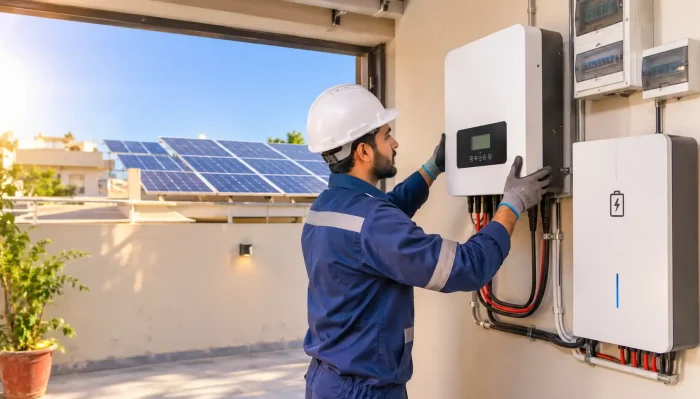
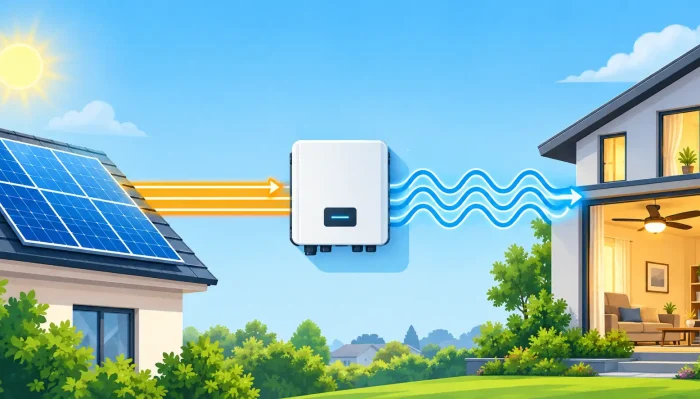
- The combined DC flows to the inverter, which converts it to alternating current (AC) for your property.
The rear side also works on hazy mornings and late afternoons, when scattered light matters more than direct sun.
Bifacial vs. Monofacial Solar Panels: What Is the Difference?
Monofacial panels collect light only from the front. Choosing between bifacial vs monofacial solar panels comes down to your site and your budget.
| Feature | Bifacial | Monofacial |
| Light capture | Front and back | Front only |
| Back layer | Clear glass or transparent sheet | Solid opaque sheet |
| Extra output | Depends on surface and mounting | None |
| Upfront price | Usually a little higher | Usually lower |
| Best mounting | Raised racks, open ground, flat roofs | Flush pitched roofs |
| Weight | Often heavier (dual glass) | Often lighter |
What Are the Benefits of Bifacial Solar Panels?
- More energy from the same footprint. You get extra output without adding panels, which helps when roof or land space is limited.
- Better use of scattered light. The rear side keeps producing when the sky is bright but not sunny.
- Strong build. Many bifacial models use two layers of glass, which resists moisture and wear well.
- Lower cost per unit of energy. If the extra output is large enough, the higher purchase price can pay back over the system’s life.
- Good match for trackers. Systems that follow the sun let the rear side collect more reflected light.
What Are the Disadvantages of Bifacial Solar Panels?
Bifacial panels do not suit every site. Here are the trade-offs you should weigh:
- The upfront price is usually higher than standard panels.
- Gains shrink on dark or flush-mounted surfaces, such as a pitched tile roof.
- Raised racks need stronger structures and careful design.
- Dual-glass modules are heavier, so check your roof’s load limit.
- Dust on the rear glass cuts output, and the back is harder to clean.
- Shade from racks, pipes, or tanks falls on the rear cells and lowers gain.
How Much More Electricity Can Bifacial Solar Panels Generate?
Most installations see about 5% to 20% more energy than a matching monofacial system. Ideal setups with light ground, tall racks, and open space can reach higher. Results vary from site to site, so a design study beats any general figure.
Here is a simple example. A 5 kW array with a 10% bifacial gain produces about as much energy as a 5.5 kW monofacial array. You cover the difference without adding panels.
Are Bifacial Solar Panels Suitable for Residential and Commercial Installations?
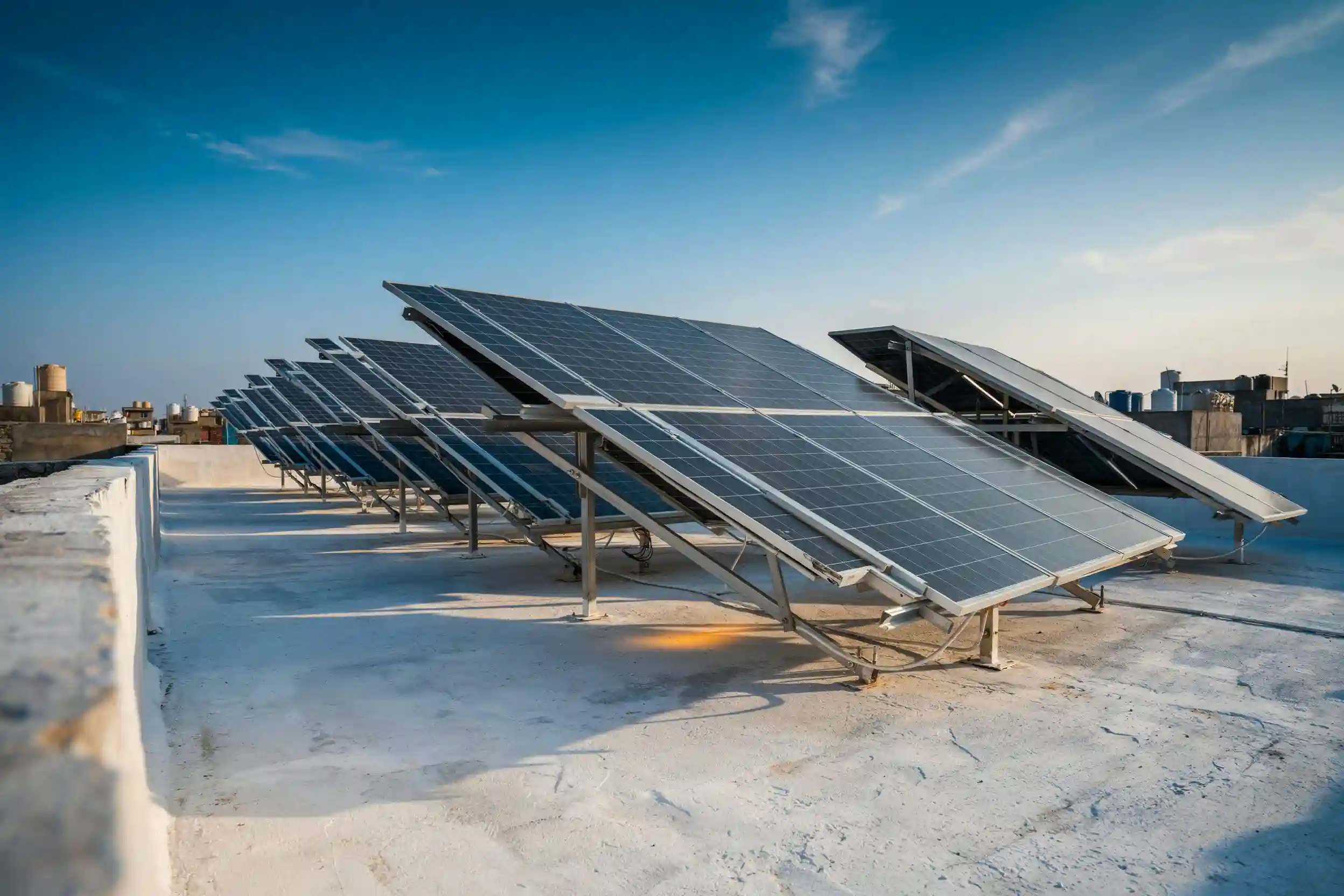
Yes, if the mounting and surface are right. The setup matters more than the property type.
Residential Rooftops
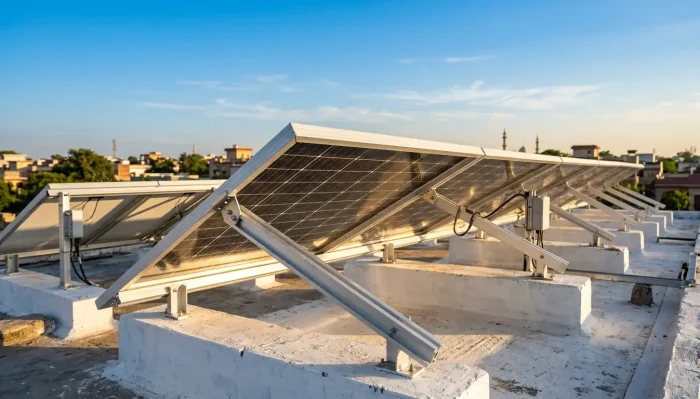
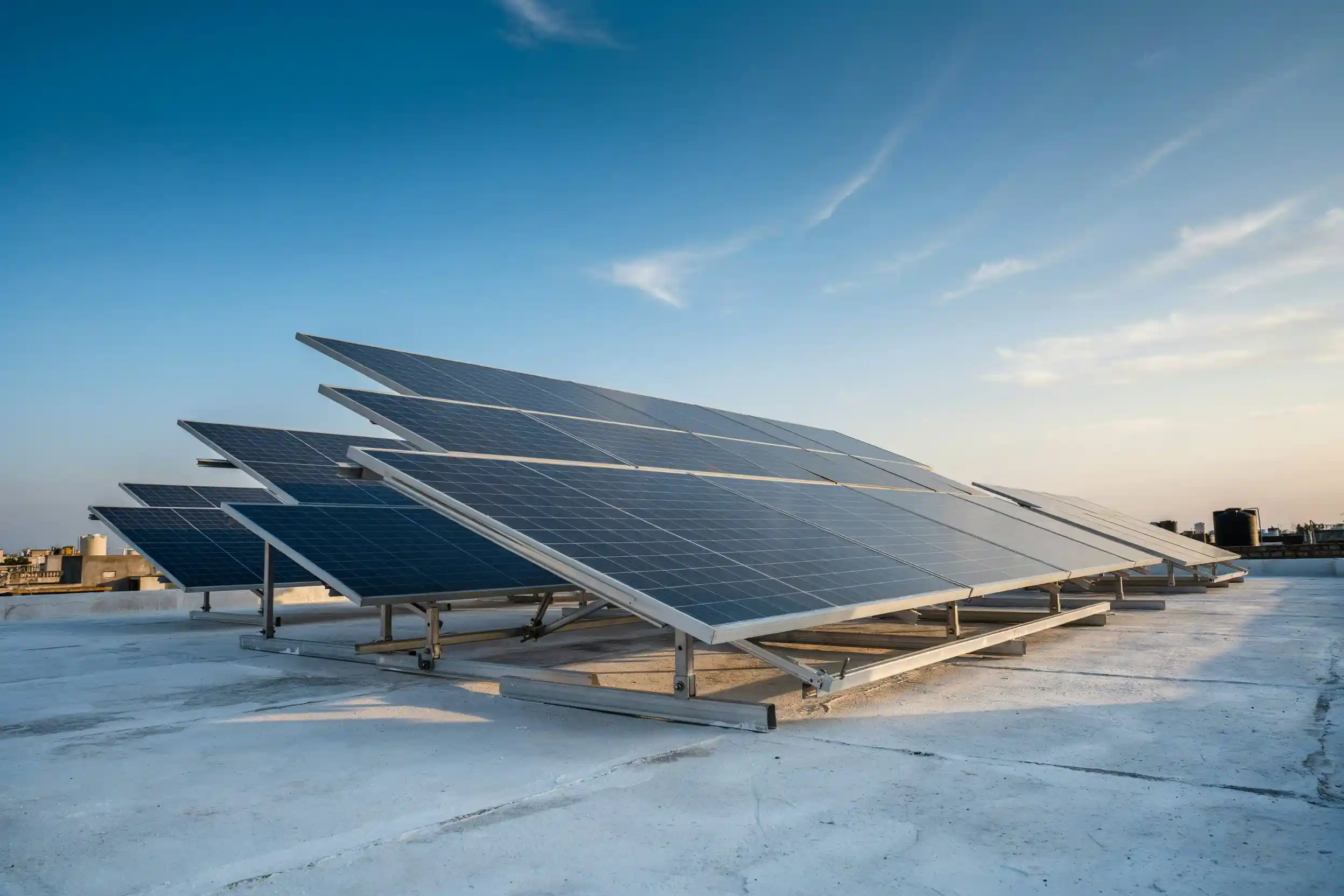
Flat concrete roofs are the best home option. Raise the panels on racks and paint the roof surface white, and the rear side gets plenty of reflected light. On a pitched roof with panels mounted close to the tiles, you will see only a small gain.
Commercial and Industrial Sites
Factory roofs, warehouses, car parks, and open land suit bifacial modules well. Large flat areas allow wide row spacing and high racks. Bigger systems also make a few percent of extra output worth real money.
What Factors Affect Bifacial Solar Panel Efficiency?
Several site details decide your actual gain:
- Surface reflectivity (albedo). White paint, light gravel, and white membranes reflect far more than dark soil or grass.
- Mounting height. Higher panels let more light reach the back.
- Tilt and row spacing. Wider gaps between rows reduce shading on the rear side.
- Shading. Racks, railings, and nearby buildings block reflected light.
- Cleanliness. Dust on either glass surface lowers output.
- Module quality. A higher bifaciality factor means a stronger rear side.
- Local sunlight. More sun means more light to reflect.
Are Bifacial Solar Panels Worth Installing in Pakistan?
For many sites, yes. Pakistan gets strong sunshine for most of the year, and that gives the rear side plenty of reflected light to use. Open ground, flat commercial roofs, and white-coated rooftops give the best returns.
Dust is the main local concern. Plan regular cleaning, and keep the area under the panels tidy. Check the current net metering and licensing rules with your distribution company before you size the system.
We start every job with a roof or ground survey, because surface color, mounting height, and free space decide the result. If you want a design built around those details, our Solar Energy Installation team can compare bifacial and standard options for your property.
Final Thoughts
Bifacial panels collect light on both sides and give you more energy from the same space. They pay off most on raised racks, light surfaces, and open sites, and they add little on dark pitched roofs. Match the panel to the site, and keep the rear glass clean.
Progressive Ventures can survey your property and tell you if bifacial modules make sense. Contact us today to get a clear plan and a quote.
FAQs
What are bifacial solar panels made of?
They are made of solar cells, glass or a clear backsheet on both sides, and an aluminum frame.
Are bifacial panels more expensive than regular panels?
Yes, usually by a small margin. The extra output can cover that gap at the right site.
Can I install bifacial panels on a pitched roof?
Yes, but the gain stays small because flush mounting leaves little room for light to reach the back.
How long do bifacial solar panels last?
Most manufacturers offer performance warranties of 25 to 30 years. Check the datasheet for the exact terms.
Do bifacial panels need a special inverter?
No. A standard inverter works, but confirm that it can handle the extra current.