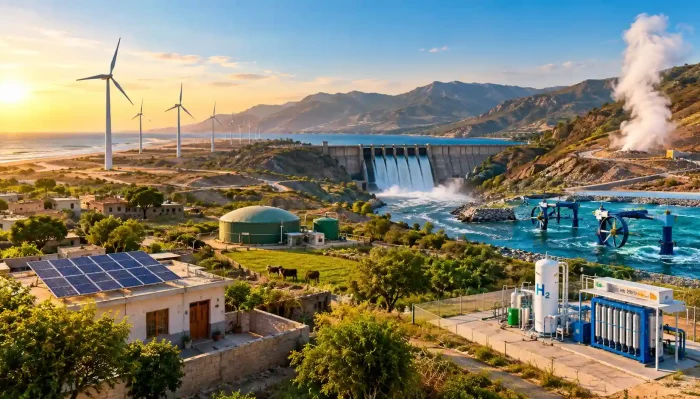
The short answer to what are 5 examples of wind energy is this: onshore wind farms, offshore wind farms, residential wind turbines, utility-scale wind turbines, and hybrid wind-solar systems. Each one uses the same basic idea. Moving air spins a turbine, and that motion turns into electricity.
That’s the quick version. But knowing the names isn’t enough. You need to know how each one works, where it’s used, and what it means for a country like Pakistan that sits on one of the best wind corridors in Asia. That’s what this guide covers.
Quick Answer: The 5 Examples at a Glance
Here are the 5 types of wind energy in daily use around the world today:
- Onshore wind farms – turbines built on land, usually in open plains or coastal belts
- Offshore wind farms – turbines placed in the sea, where wind blows harder and steadier
- Residential or small-scale wind turbines – single turbines that power one home, farm, or business
- Utility-scale wind turbines – large turbines connected directly to the national power grid
- Hybrid wind-solar systems – wind turbines paired with solar panels and battery storage
There’s also a sixth, older use worth a mention: windmills and wind pumps. These don’t make electricity. They use wind directly to grind grain or pump water, and farmers in parts of Pakistan and India still use simple wind pumps today.
Now let’s look at each of the five main examples of wind energy in detail.
Example 1: Onshore Wind Farms
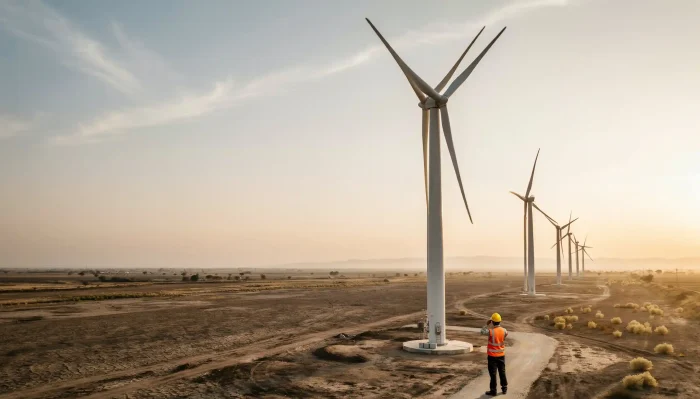
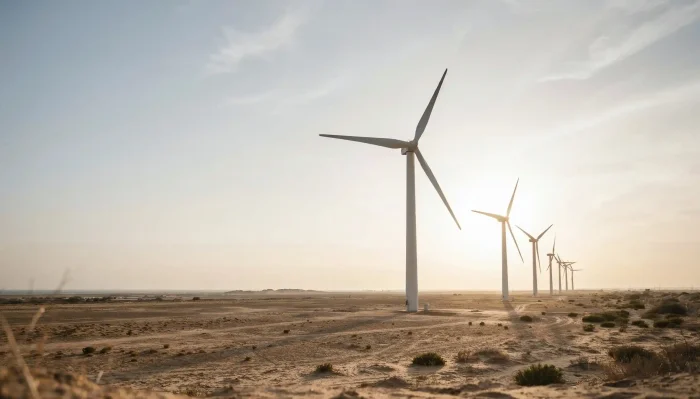
Onshore wind farms generate renewable energy by placing groups of wind turbines in flat, open land areas with strong, steady winds. Most facilities use a horizontal-axis design, featuring three rotor blades that spin parallel to the ground to drive a generator inside the nacelle (the housing atop the tower).
Performance is measured by a capacity factor the ratio of actual power generated to maximum potential output which typically ranges from 30% to 45% for onshore sites. While these projects require expansive territory, the turbines themselves occupy a minimal footprint, allowing farmers to simultaneously use the surrounding land for crops or livestock grazing.
Globally, the Gansu Wind Farm in China represents one of the largest onshore developments, with a planned capacity exceeding 20,000 MW. On a regional scale, the Jhimpir and Gharo-Keti Bandar wind corridor in Sindh, Pakistan, serves as a vital clean energy hub. This coastal stretch captures consistent sea breezes to feed reliable, zero-emission electricity directly into the national grid.
Example 2: Offshore Wind Farms
Offshore wind farms generate clean electricity by harnessing stronger, more consistent winds over open water, utilizing either seabed-fixed foundations in shallow regions or advanced floating platforms in deeper seas. This sector is dominated by turbine manufacturing giants Siemens Gamesa and Vestas, alongside major developers like Ørsted.
Flagship installations off the coast of England highlight the massive scale of this technology; the Hornsea Project One became the first offshore wind farm to surpass 1 gigawatt (GW) of capacity enough to power over a million homes while the Walney Extension generates nearly 660 MW.
The primary trade-off for offshore wind is the high balance of capital cost versus exceptional power yield. While building and maintaining marine turbines requires expensive specialized vessels or helicopters, the energy output per turbine is vastly superior to land-based models due to unobstructed oceanic winds. Over a turbine’s operational lifetime, this steadier and significantly higher energy generation successfully offsets the steep upfront installation and maritime maintenance expenses, making offshore wind a vital pillar of the global renewable energy transition.
Example 3: Residential and Small-Scale Wind Turbines
Not every wind turbine needs to be huge. A residential wind turbine is a single, small unit built to power one home, farm, or small business. These are sometimes called small wind electric systems, and you can buy and install one without needing to connect to a giant wind farm.
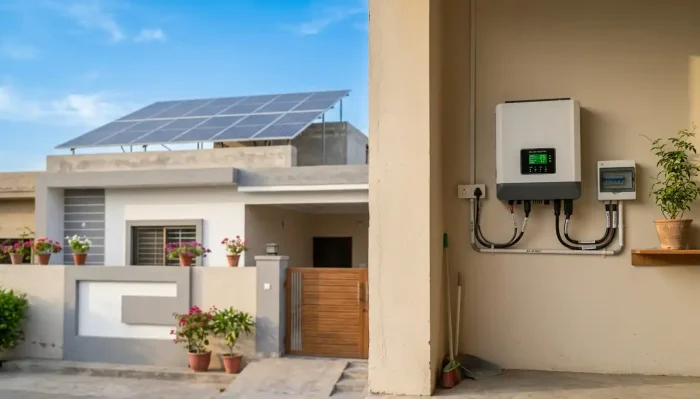
A small turbine sits on its own tower, tall enough to catch clean wind above nearby buildings or trees. If the site gets enough wind, a home system can cut electricity bills by 50 to 90 percent, based on figures reported by renewable energy researchers in the US. Some setups also use net metering, where extra power the turbine makes gets sent back to the grid in exchange for credit on the bill.
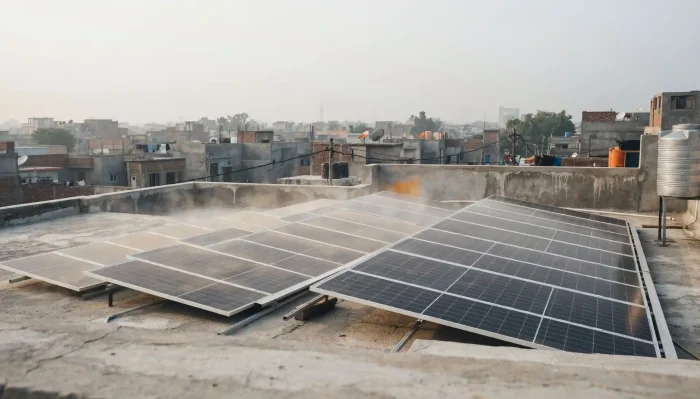
This matters a lot in Pakistan. Many rural areas deal with regular load-shedding, and some villages aren’t connected to the grid at all. A small wind turbine, especially paired with a battery, can give a household reliable power without waiting on grid expansion. Farms already use similar setups for water pumping, so adding a turbine for electricity is a natural next step.
Example 4: Utility-Scale Wind Turbines on the National Grid
Utility-scale wind turbines are the biggest category. These are large turbines, usually grouped into wind farms, built specifically to feed electricity into a country’s national grid. This is the version most people picture when they think of wind energy, rows of tall turbines lined up across open land.
In Pakistan, this is where the story gets interesting. The Gharo-Jhimpir wind corridor in Sindh already hosts several utility-scale projects feeding power straight into the grid managed by NTDC, Pakistan’s National Transmission and Dispatch Company.
These projects operate under rules set by NEPRA, the National Electric Power Regulatory Authority, and get support through Pakistan’s Alternative Energy Development Board (AEDB), the government body responsible for pushing renewable energy targets forward. This is the clearest example of wind energy working at national scale in Pakistan, not just as a concept, but as power already running through people’s homes.
Example 5: Hybrid Wind-Solar Systems
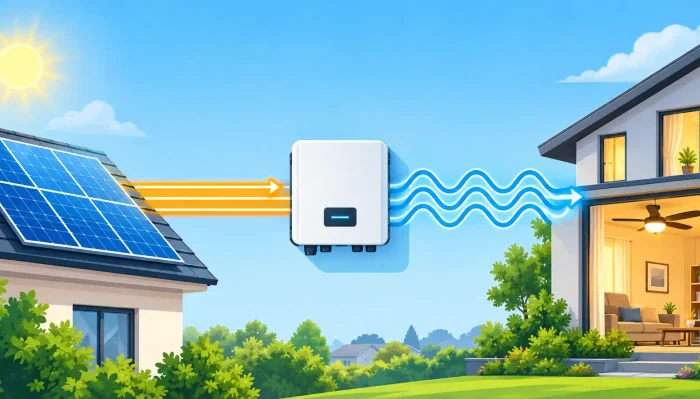
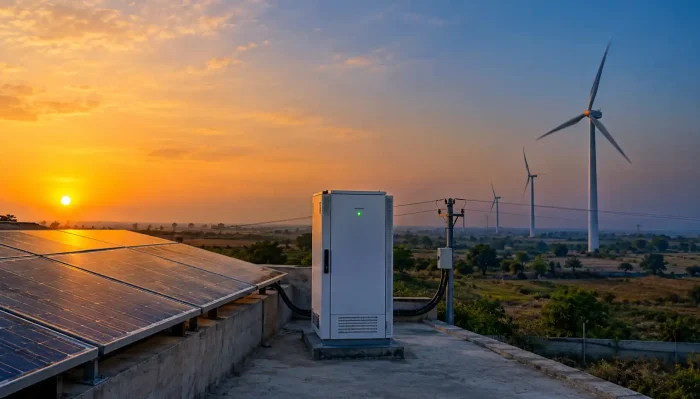
A hybrid wind-solar system combines wind turbines and solar panels on the same site, often with battery storage added in. The idea is simple. Wind and sun don’t always show up at the same time, so pairing them smooths out the gaps.
Denmark has run projects like this for years. The Nørhede-Hjortmose energy park places wind turbines and solar panels on the same land, and together they produce far more power than the local area consumes. The extra gets exported to the rest of the grid.
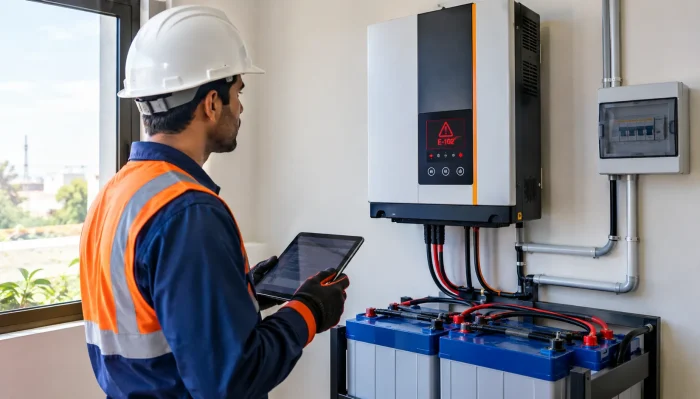
Energy storage through batteries is what makes these hybrid systems work well. When wind and solar both produce more than needed, batteries store the extra. When neither is producing much, the stored power keeps the grid stable. This grid balancing role is becoming a bigger part of renewable energy planning, including in Pakistan, where hybrid wind-solar pilot projects are being studied as a way to make the Sindh coastal corridor more reliable and less dependent on any single power source.
Types of Wind Turbines Behind These Examples
Every example above depends on one of two turbine designs. Here’s a simple side-by-side look.
| Type | Design | Best Used For | Main Advantage |
| Horizontal-axis turbine | Blades spin around a shaft parallel to the ground, like a propeller | Large wind farms, onshore and offshore | Higher efficiency, most common design worldwide |
| Vertical-axis turbine | Blades spin around an upright shaft | Small, urban, or rooftop setups | Works with wind from any direction, easier to maintain |
Almost every large wind farm in the world, including the ones in Pakistan’s Sindh corridor, uses horizontal-axis turbines. A German physicist named Albert Betz proved back in 1919 that no turbine can convert more than 59 percent of wind’s kinetic energy into usable power. This is known as Betz’s Law, and it’s still the baseline engineers design turbines around today.
Wind Energy in Pakistan: Local Examples and Potential
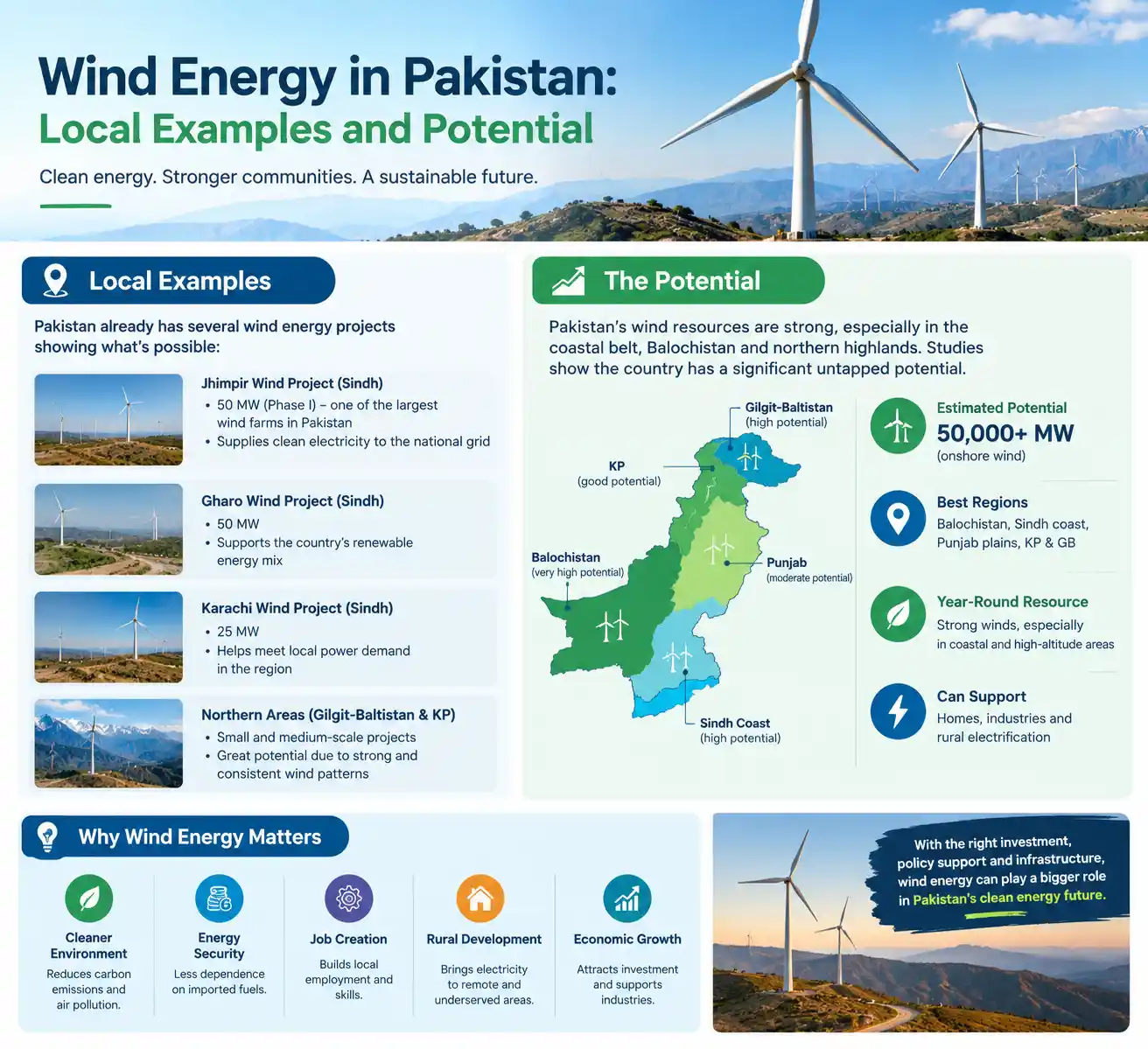
Pakistan holds over 132 gigawatts of technical wind energy potential, yet actual installed capacity remains low, with the IGCEP 2047 plan targeting just 10,000 MW by 2047. The primary hurdle is inadequate grid transmission infrastructure, compounded by bureaucratic bottlenecks in obtaining NEPRA approvals and securing grid connections from the NTDC.
Partnering with an experienced consultant like Progressive Ventures can help stakeholders manage the development lifecycle, from feasibility studies to regulatory permitting and grid connection.
The grid infrastructure connecting Jhimpir to the rest of the country can’t yet carry all the power the corridor is capable of producing, which is why continued investment in wind energy installation and grid upgrades matters for Pakistan’s energy future.
If you’re a business or landowner in a windy region of Sindh or Balochistan looking into your own project, working with an experienced partner makes a real difference in permitting, turbine selection, and long-term output. Progressive Ventures works with clients across Pakistan on wind energy installation, from feasibility studies through to grid connection, so projects don’t stall the way so many small developers do when they try to navigate NEPRA approvals alone.
Comparison Table: 5 Examples of Wind Energy at a Glance
| Example | Location Type | Typical Scale | Best For | Real Example |
| Onshore wind farms | Land, open plains or coast | 50 MW to 20,000+ MW | National grid supply | Gansu Wind Farm, China / Jhimpir corridor, Pakistan |
| Offshore wind farms | Open sea | 500 MW to 1,200+ MW | High, steady output | Hornsea Project One, UK |
| Residential turbines | Single property | 1 kW to 100 kW | Rural or off-grid homes | Farm and village turbine kits |
| Utility-scale turbines | Grid-connected wind farms | 50 MW to several GW | Powering cities and industry | Zorlu Enerji, Sachal Energy, FFC Energy (Pakistan) |
| Hybrid wind-solar systems | Combined energy parks | 20 MW to 100+ MW | Stable, round-the-clock power | Nørhede-Hjortmose, Denmark |
Conclusion
The 5 examples of wind energy, onshore, offshore, residential, utility-scale, and hybrid systems, all rely on the same principle but serve very different needs. Pakistan already has working examples of most of them sitting in the Sindh wind corridor today, with far more room to grow than the country has tapped so far.
If you want to know whether your site is a good fit, reach out to Progressive Ventures for a site assessment before you commit to any turbine order.
FAQs
What are the 5 types of wind energy?
The 5 types are onshore wind, offshore wind, residential (small-scale) wind, utility-scale wind, and hybrid wind-solar systems.
What is the most common example of wind energy?
Onshore wind farms are the most common example worldwide. They cost less to build and maintain than offshore projects, which is why most countries, including Pakistan, developed onshore wind first.
What are examples of wind power in everyday life?
Outside of electricity, wind power still shows up in sailing, windsurfing, kite surfing, water-pumping windmills on farms, and even land yachting. These don’t generate electricity, but they use the same natural force.
Is wind energy renewable?
Yes. Wind energy comes from the sun heating the earth unevenly, which creates air movement. As long as the sun keeps shining, wind keeps blowing, which makes it a renewable resource with no fuel to run out.
How much wind energy potential does Pakistan have?
Estimates from USAID and NREL put Pakistan’s technical wind potential above 132 GW, most of it concentrated in the Gharo-Jhimpir corridor in Sindh. Current installed capacity is a small fraction of that number, leaving significant room for growth.