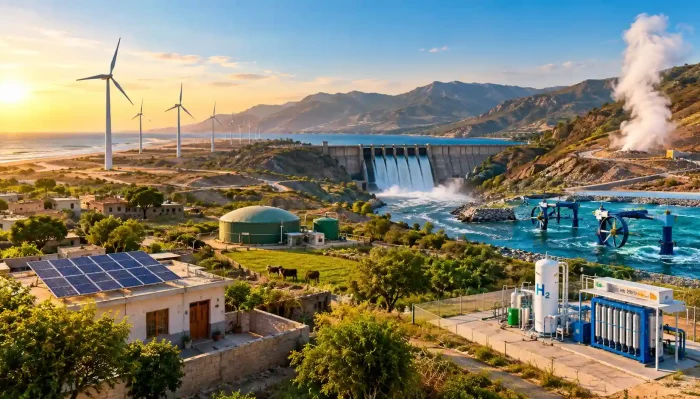
Renewable energy comes from sources that nature refills on its own. Sunlight, wind, water, heat from the earth, plants, the sea, and hydrogen made from clean power all count. If you are asking what are 7 types of renewable energy, they are solar, wind, hydropower, geothermal, biomass, ocean, and green hydrogen.
Some agencies list five or six types and fold ocean or hydrogen into other groups. The science is the same. This guide explains each type in plain words, with costs and Pakistan examples.
What Are the 7 Types of Renewable Energy?
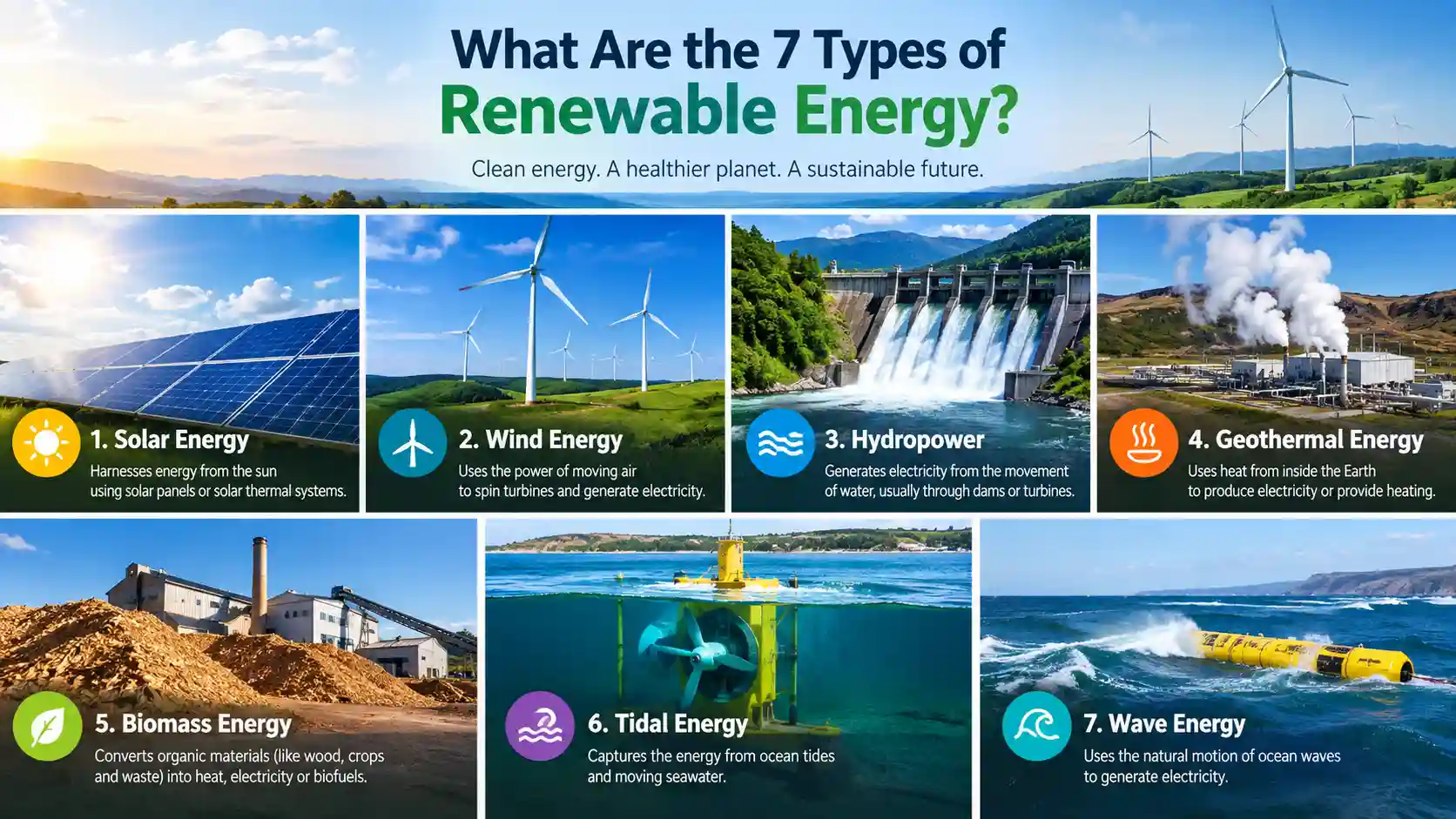
Renewable energy is power from sources that do not run out. You use them today and they are still there tomorrow. Coal, oil, and gas take millions of years to form, so we treat them as finite.
Here is each type, one by one.
1. Solar Energy
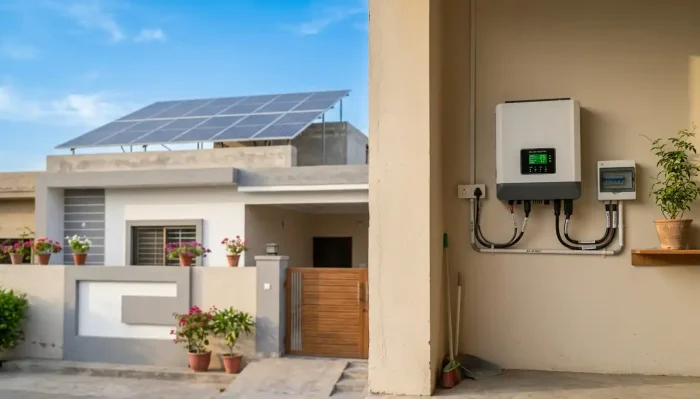
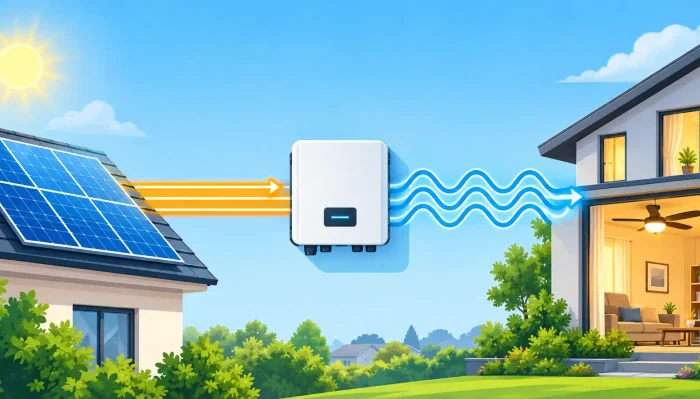
Solar energy comes from sunlight. A solar panel has many photovoltaic (PV) cells. Light hits the cells and knocks electrons loose. That flow of electrons is electricity.
You can use solar power at home, on a farm, or at a large plant. Some systems also heat water directly with sunlight.
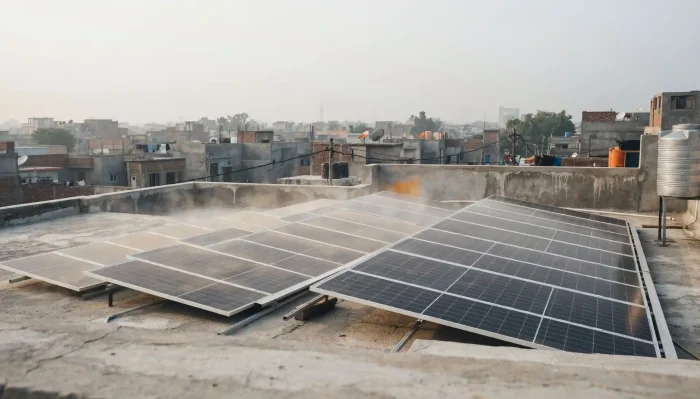
Pakistan gets strong sun for most of the year. That is why rooftop panels spread so fast here. Ember, an energy research group, estimated that Pakistan imported about 17 GW of panels in 2024. Many families did this to cut their electricity bills.
A rough cost guide: a 5 kW home system in Pakistan has recently cost somewhere around PKR 500,000 to 800,000, depending on panel brand, inverter, and battery. Prices move often, so get two or three quotes before you buy.
2. Wind Energy
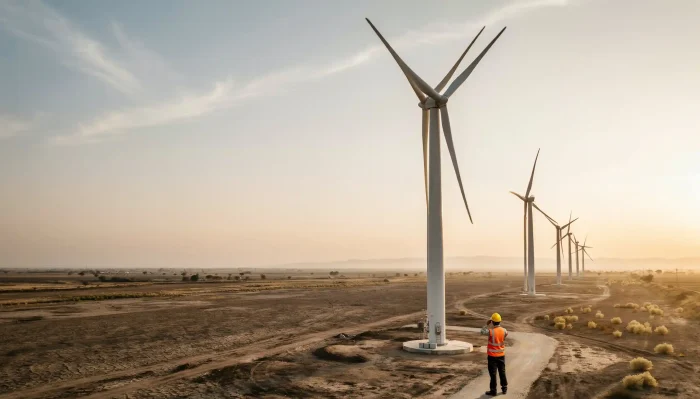
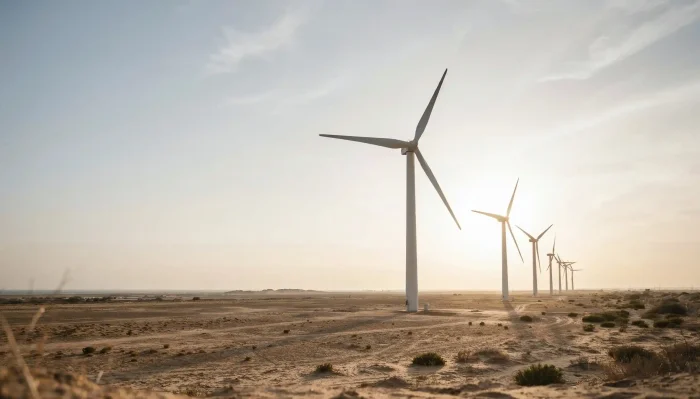
Wind pushes the blades of a wind turbine. The blades spin a shaft. The shaft turns a generator, and the generator makes electricity.
Turbines come in a few forms. Onshore turbines stand on land. Offshore turbines stand in the sea, where wind is stronger and steadier.
Let’s look at the main types of wind energy. There are five common ones:
- Onshore wind: turbines on land, the cheapest to build.
- Offshore wind: turbines in shallow sea water.
- Floating offshore wind: turbines on floating bases in deep water.
- Utility-scale wind: big turbines that feed the national grid.
- Distributed wind: small turbines for a farm, school, or village.
Pakistan has clear examples of wind power. The Jhimpir and Gharo areas in Sindh sit inside a strong wind corridor. Many wind farms operate there and send power to the grid. These are the best local examples of wind energy you can visit or study.
Are you planning a farm, factory, or land project? Proper wind energy installation starts with a wind survey, then site design, then turbine choice. Skipping the survey is the most common and costly mistake. Progressive Ventures can guide you through each step.
3. Hydropower
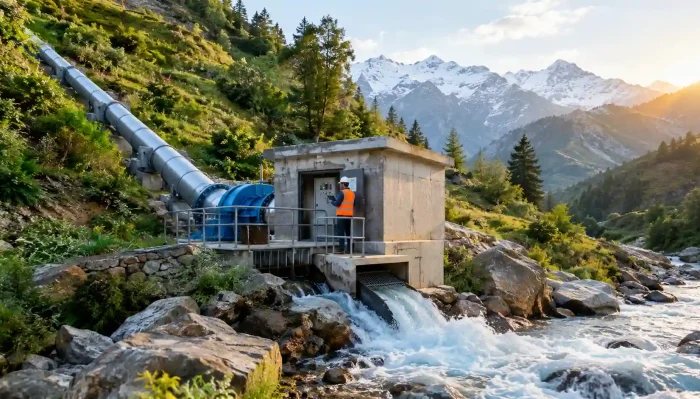
Hydropower uses moving water. Water flows or falls through a pipe and spins a turbine. The turbine drives a generator inside a hydropower plant.
There are two main designs:
- Storage (reservoir) plants: a dam holds water, and the plant releases it when power is needed.
- Run-of-river plants: these use the natural river flow with little or no storage.
Pakistan depends heavily on hydropower. The Tarbela Dam on the Indus River is the largest, with a capacity of nearly 4,900 MW. Mangla Dam on the Jhelum River adds about 1,150 MW. WAPDA, the Water and Power Development Authority, runs these plants.
Hydropower is one of the cheapest sources once the dam is built. The building itself takes years and a very large budget.
4. Geothermal Energy
Geothermal energy is heat from inside the earth. In some places, hot rock sits close to the surface. Wells bring up hot water or steam. The steam spins a turbine and makes electricity.
You can also use this heat directly. Some countries heat homes, greenhouses, and fish farms with hot underground water.
This source works best near volcanic or tectonic zones. Iceland, Kenya, and the Philippines use it well. Pakistan has hot springs in a few regions, but large geothermal power is still at a study stage here.
5. Biomass Energy
Biomass is organic matter. Think crop waste, wood, animal dung, and food scraps. You can burn it for heat, or turn it into biogas and liquid fuel.
Biogas forms when bacteria break down waste without air. You can cook with it or run a small generator. Sugar mills in Pakistan already burn bagasse, the leftover from crushed sugarcane, to make power for their own plants.
Biomass helps farms deal with waste. It also needs care. Burning wood or crop residue in open fires creates smoke and harms health. Modern plants with clean burners are much safer.
6. Ocean Energy
The sea holds a lot of energy. There are two main forms.
Tidal energy uses the rise and fall of tides. Water moves through underwater turbines, much like a wind turbine but slower and heavier.
Wave energy captures the up and down motion of surface waves. Floating devices move with the waves and drive a generator.
Ocean energy is still small compared with solar or wind. Costs remain high and the equipment must survive salt water and storms. Countries like the UK and South Korea run pilot and commercial projects. Pakistan has a long coastline in Sindh and Balochistan, so this source is worth watching.
7. Green Hydrogen
Green hydrogen is made with renewable power. The process is called electrolysis. An electric current splits water into hydrogen and oxygen. If the electricity comes from solar or wind, the hydrogen is “green.”
Hydrogen is not a fuel that you dig out of the ground. It is an energy carrier. You make it, store it, and use it later.
Steel plants, fertilizer factories, and shipping companies want it because they cannot easily run on batteries. Cost is the big problem today. Green hydrogen is still much more expensive than gas-based hydrogen, but prices are expected to fall as electrolyzers get cheaper.
How Does Renewable Energy Generate Electricity?
Every type uses a different natural source. Most of them end with a spinning turbine or a chemical reaction. This table shows the quick version.
| Energy Type | Main Source | How It Generates Energy |
| Solar | Sunlight | PV cells |
| Wind | Moving air | Wind turbine |
| Hydropower | Moving water | Water turbine |
| Geothermal | Earth’s heat | Steam turbine |
| Biomass | Organic matter | Heat or biogas |
| Ocean | Tides and waves | Turbine systems |
| Green hydrogen | Water and renewable electricity | Electrolysis |
What Are the Benefits of Renewable Energy?
- Naturally replenished. The sun, wind, and rivers keep coming back.
- Lower operational emissions. Most plants release very little pollution while running.
- Less fossil-fuel dependence. Pakistan spends a lot on imported oil, gas, and coal. Home-grown power cuts that bill.
- More energy choices. A mix of sources keeps the lights on if one fails.
- Local and distributed power. A village or factory can make its own electricity.
What Are the Limitations of Renewable Energy?
- Weather dependence. Solar drops at night and on cloudy days. Wind stops when air is still.
- High starting cost. Panels, turbines, and dams need money upfront, even if running costs are low.
- Storage needs. Batteries and other storage add to the total price.
- Location limits. Geothermal needs hot rock. Hydropower needs rivers. Wind needs strong, steady air.
- Grid needs. Old power lines often need upgrades to carry new power.
Which Renewable Energy Sources Are Used in Pakistan?
Pakistan uses four of these sources at a real scale.
Hydropower gives the country its biggest renewable base. Tarbela and Mangla are the two names most people know, and WAPDA manages them.
Wind grows in the Jhimpir and Gharo belt of Sindh. These farms show that wind works well on the coast.
Solar grew fastest in the last few years. Homes, shops, farms, and factories all install panels.
Biomass stays smaller. Sugar mills use bagasse, and some farms run biogas plants for cooking and power.
Renewable Energy vs Clean Energy
People mix these two terms up. They overlap, but they are not the same thing.
Renewable energy means the source refills naturally. Solar, wind, and hydropower fit here.
Clean energy means low or zero pollution when you use it. Some clean sources are not renewable. Nuclear power is one example. Some renewable sources are not fully clean. Burning biomass can create smoke and carbon dioxide.
| Renewable Energy | Clean Energy | |
| Key idea | Source refills naturally | Low or no pollution |
| Example | Wind, hydropower | Nuclear, solar |
| Can be both? | Yes | Yes |
A Note From Progressive Ventures
At Progressive Ventures, we help people and businesses pick the right renewable option for their site and budget. We start with real numbers, like your power bill and land conditions. Then we suggest a system that makes sense for you. If you are thinking about solar or wind, talk to us before you buy anything.
Conclusion
Renewable energy gives us power that does not run out. The seven types are solar, wind, hydropower, geothermal, biomass, ocean, and green hydrogen. If you still wonder what are 7 types of renewable energy, use this list as your starting point. Pakistan already runs on hydropower, wind, and solar in a big way. Match the source to your location and budget, and start small if you need to. Contact Progressive Ventures to plan your project today.
FAQs
What are the 7 types of renewable energy?
They are solar, wind, hydropower, geothermal, biomass, ocean, and green hydrogen. Some lists use fewer groups, but the sources stay the same.
What is the most common renewable energy source?
Hydropower is the largest source of renewable electricity globally. Solar and wind are growing faster each year. In Pakistan, hydropower from Tarbela and Mangla leads, while solar is rising quickly.
Is solar energy renewable?
Yes. The sun sends energy every day. Panels turn that light into electricity without using it up.
Is hydropower renewable energy?
Yes. Rain and snowmelt refill rivers and dams through the water cycle. Large dams can still affect rivers and nearby land, so planning matters.
Which renewable energy sources are used in Pakistan?
Pakistan uses hydropower, wind, solar, and biomass. Tarbela and Mangla handle hydropower. Jhimpir and Gharo host wind farms. Solar is spreading across homes and businesses.