What are the dimensions of a Solar Panel? Not all solar panels come in the same physical dimensions, and to determine if a solar panel is the right fit, it’s not simply about wattage output. Length, width, height, and the density and pattern of cells, coupled with the actual wattage, will determine if you can properly mount a solar panel and, to some extent, the system production.
In terms of size, solar panels are typically 5.5 to 6.5 feet long and 3 to 3.5 feet wide (standard residential sizes). Again, there can be a variance, and wattage aside, these dimensions can also be influenced by cell type and manufacturing brand. Higher-watt and/or more powerful output devices might also be slightly longer and weigh more.
What Are the Standard Dimensions of a Solar Panel?
There’s indeed no one standard size for a solar panel. The panel manufacturers come in a variety of sizes because they’re made differently based on panel technology, power output, and installer type. You can typically expect your residential panels to be somewhere in the range of 1.7 to 1.9 meters tall and 1.0 to 1.15 meters wide.
Panels will be approximately 30mm to 40mm in thickness, and that number will fluctuate based on materials and the overall frame built.
In fact, depending on your commercial or industrial scale use, you might find the need for even bigger panels. Several newer solar panels have even surpassed the length of 2.2–2.4 meters and are typically about 1.1 meters in width. While bigger solar panels can supply a higher wattage output, they do take up more real estate on your roof and make the process of installing the panels slightly tougher.
Typical Residential Panel Dimensions
Think of a 60-cell design for the former—traditional residential-type panels. More modern modules might have designs where they’re utilizing anywhere from 108 up to 144 half-cells. Keep in mind a panel with that much more individual cell space or half-cells doesn’t actually make it any physically larger.
You could have two completely different cell configurations, but the physical dimensions of both of the panels are almost the same, relatively speaking.
And when you can have a modern, higher-efficiency module that will obviously produce more energy but not disproportionately increase in size, that means if you’re planning a project, look at the spec sheet. Don’t just categorize something.
Solar Panel Size by Wattage
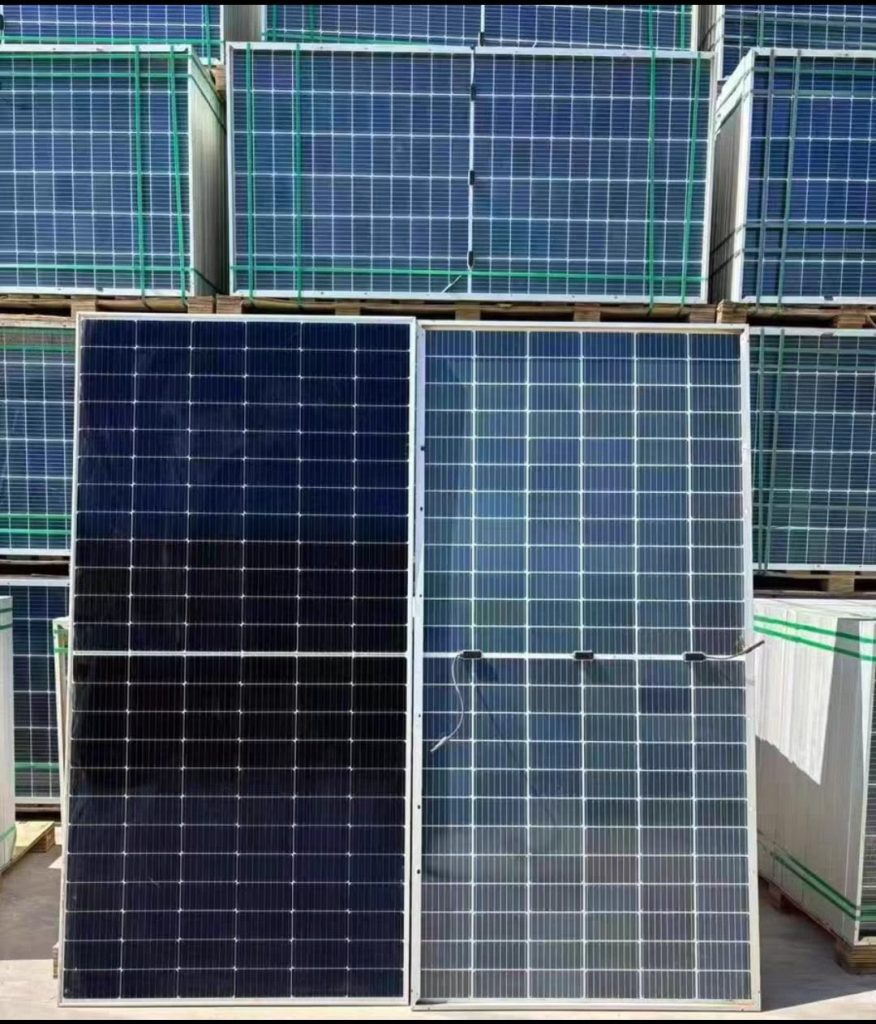
When it comes to solar panels’ wattage and size, these are actually related but are not the same! Panels with higher wattage can indeed be physically bigger because their solar cells would need to cover more surface area, but higher wattage can also occur if they come with smaller, higher-efficiency cells to produce more energy in that space.
Two panels that have the same size might also have different wattages. Larger power ratings sometimes are achieved with physically larger panels, especially in large-format modules. Cell efficiency advancements allow greater power in the same-size module or even smaller!
Does a Higher-Wattage Panel Mean a Bigger Panel?
Suppose we look at the theoretical potential for a moment: no. Not always; the size of the panel varies with the size of the cell, its efficiency, the design of the panel, and the way you plan to install the module.
A handy comparison chart of solar panel sizes for your house. The best solar panel size for a house. A detailed look at panel size and the factors to consider—efficiency, weight, and more.
The physical size of solar panels can significantly impact the solar installation process, affecting everything from transportation and mounting to rooftop layout and panel arrangement.
When purchasing more powerful panels, don’t assume they have to be substantially larger; a higher wattage panel is capable of producing more energy from the same area thanks to advances in solar cell technology.
What Is the Solar Panel Size in Pakistan?
The “solar plate size in Pakistan” is a frequent term when consumers are considering solar panels for residences, factories, agricultural land, or any other solar installation. Pakistani markets are not limited to one standard size. This standard varies with brand, model, wattage, and cell type.
A higher-wattage panel comes in larger sizes to support more generation power with a lower count of panels.
Currently, new panels could range between 2.2 and 2.4 meters in length and nearly 1.1 meters in width. Always have a look at the data sheet of the concerned model before buying.
Why Panel Size Matters in Pakistan
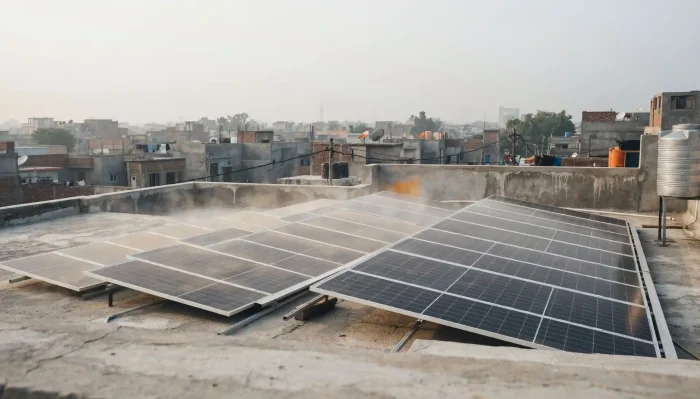
In Pakistan, space constraints on a rooftop are a primary factor. A larger-dimension solar panel with a larger wattage capacity might offer more power generation from fewer panels. However, while calculating required space, one should not forget space for the mounting structures and safe space around them.
Also, one must consider if any portion is not a good recipient for sunlight.
Furthermore, your roof must be strong enough to carry the weight of solar panels & mounting apparatus. Wind and other site conditions should be taken into account during the design of the mounting structure. A proper setup design by experts will consider every condition while crafting the layout of the rooftop of your property.
How Many Solar Panels Fit on a Roof?
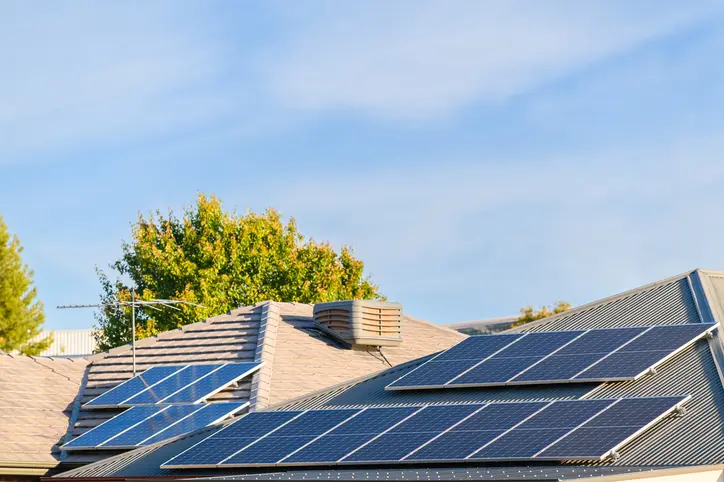
It is not possible to install an optimal-size panel array for the roof size. An optimal-size array fits within the usable space-that’s the available roof space that isn’t shadowed by objects or isn’t an access point in the roof space, which includes water tanks, vents, parapet walls, etc. Other elements that can play a role in final design and layout include walks on the roof (if needed), maintenance access, and, yes, edges of the roof.
For example, just because you have a lot of rooftop, that doesn’t mean there is room for enough modules. Sometimes the roof has odd sections that can’t fit certain shaped panels. Installers will measure and space your roof plan according to the panels you chose for your home and space.
Panel Orientation and Layout
What’s interesting is that you might also be able to use either landscape or portrait orientation depending on your roof and mounting system! Different orientations can sometimes help panel configuration navigate around unique roof spacing! A well-designed roof array system makes room for considerations of spacing, panel orientation, roof lines, and shade/sun to create not just a jumbled arrangement of panels, but an optimized energy system.
Does Solar Panel Size Affect Electricity Production?
Although physical size affects how much electricity is produced, as more square footage to work with can accommodate more solar cells, it’s not the only variable to consider. Other factors impacting solar panel output include cell efficiency, the type of technology used, how a panel fares at high temperatures, shading from nearby structures or trees, the orientation of the array, and prevailing sunshine conditions.
Two panels with equal physical dimensions could have very different wattage specifications, and panels with different physical dimensions might produce roughly equivalent output if one panel uses more advanced cell technology.
Ultimately, you’re looking to get the most “useful” watts from your system.
Size vs. Efficiency
The efficiency of a solar panel refers to the degree to which it can transform sunlight into usable electricity. Higher efficiency can be a significant advantage when you’re faced with limitations such as roof space, as you can meet your system requirements with fewer panels. When size and efficiency are combined, you gain a clearer perspective of which type of solar panel is right for you rather than relying strictly on wattage output and potentially buying a panel that takes up a lot of space but doesn’t offer optimal performance for your needs.
How Thick and Heavy Are Solar Panels?
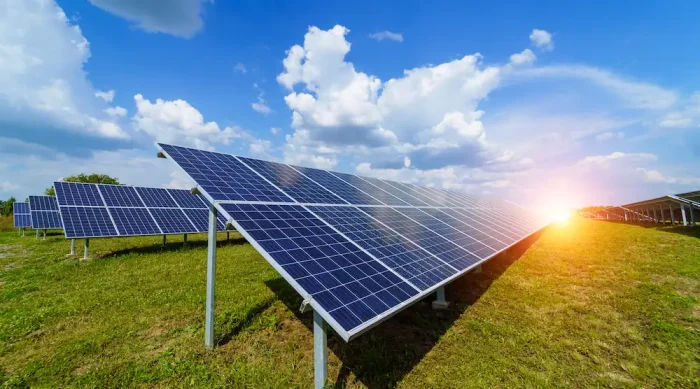
Weight and thickness matter. Thickness is for ease of mounting; weight is for transport, lifting, and stressing the roof structure. Modern framed modules are generally 30-40 mm in thickness, but again, depending on the module style. The weight depends on the module size, glass, and frame technology of the chosen panel. The roof and frame structure need to be load tested (before fitment) with the total load of modules, frames, rails, clips, etc.
How to Choose the Right Solar Panel Size
To begin, select your panel based on your energy needs and potential installation space. You need to know how much electricity your system is expected to produce before you factor in whether you have room on your roof, in what orientation, and whether it’s in shadow, structurally sound, and readily accessible.
Our best advice is to check out two or three different high-wattage options. For example, if you have a roof filled with obstructions, a 300-watt, small, high-efficiency solar panel could be the most effective option for your setup, while a 400-watt panel could be a better option if you have wide areas to place solar panels on the roof. If your project will be installed by Progressive Ventures, dimensions from the data sheet of the selected model can be used long before installation.
Conclusion
There are many sizes available when buying the best solar plates, and no single ‘correct’ size is available for every setup. In most homes, panels tend to be approximately 1.7 to 1.9 meters long and 1 meter wide, though you will find that more of the new high-wattage plates are far larger. The size really varies from one brand to the next and also depends on the technology of the plate used, the wattage, and the plate design.
There’s so much more to compare than just how much wattage the plate delivers, including dimensions, efficiency ratings, weight, roof space availability, mounting options, and long-term viability. Contact Progressive Ventures can also help you assess which solar panels would fit your project!
FAQs
What is the average size of a solar panel?
Many residential solar panels are approximately 1.7–2.0 meters long and 1.0–1.15 meters wide. Each model and maker have different specs though.
What should I consider besides solar panel dimensions?
Some other important features to consider besides your home solar panels dimension are Wattage, efficiency, weight, guarantee and warranty, available roof space, shade obstacles and house solar panel orientation.
Can Progressive Ventures help me choose the right solar panels?
Yes, we can certainly evaluate your home solar wants and discover the right dimension and configuration that fit your living space in additon to meet all your electricity needs.
Are all 550W solar panels the same size?
No. You’ll be able to source 550W solar panels from many suppliers in various sizes, weights, cells, and efficiency, as different providers build these models according to their specifications. Always make sure to check each spec when selecting models!
Is a bigger panel equivalent to more electric power?
Larger panel surface area is one variable among several factors that determine how much electricity is generated. This also includes cell efficiency, the panel’s technology, the amount of sunshine, and ambient temperatures, as well as panel installation angle & shading.
What size are Pakistani solar panels?
There’s no standard solar panel size in Pakistan. Length can typically be found between 1.7 and over 2 meters long based on wattage & the given brand’s design choices.
How much room do you need on a roof for one panel?
A panel takes up an area of at least around 2 square meters for itself, and you may also need additional room all around it for access, roof edges & clearance.