Solar panels have become a common sight on homes, businesses, and large-scale solar farms around the world. As more people embrace renewable energy, one question frequently comes up: What are solar panels made of?
While solar panels may appear to be simple black or blue rectangles, they are actually made from several carefully engineered materials designed to convert sunlight into electricity while withstanding decades of outdoor exposure.
Understanding the materials used in solar panels can help homeowners make informed decisions when investing in solar energy. It can also provide valuable insight into how solar technology works and why modern solar systems are so reliable.
In this guide, we’ll explore the key materials that make up a solar panel, how they function together, and why material quality plays a major role in efficiency and longevity.
What Is a Solar Panel?
A solar panel is a device that converts sunlight into electricity using a technology called the photovoltaic (PV) effect. These panels are made up of smaller units known as solar cells, which do the actual work of generating power.
How Solar Panels Work (Simple Explanation)
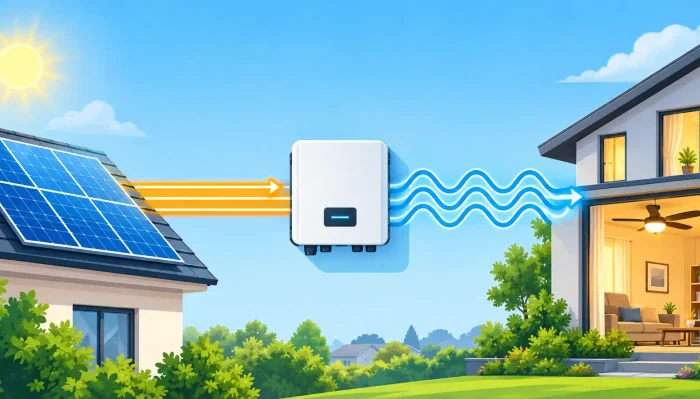
When sunlight hits a solar panel, it excites electrons inside the solar cells. This movement of electrons creates an electric current, which is then used to power homes and businesses. According to the U.S. Department of Energy, solar photovoltaic (PV) panels are primarily made from silicon-based materials along with glass, aluminum, and conductive metals, which work together to convert sunlight into electricity efficiently.
Why Materials Matter
The efficiency and lifespan of a solar panel depend heavily on the materials used. High-quality materials result in:
- Better electricity production
- Longer lifespan (often 25–30 years)
- Greater resistance to weather conditions
What Are Solar Panels Made Of?
Solar panels are primarily made of silicon solar cells, tempered glass, aluminum frames, encapsulant layers, copper wiring, and protective back sheets. Silicon cells convert sunlight into electricity, while the other materials protect the cells and ensure long-term performance in various weather conditions.
Quick Breakdown
| Component | Purpose |
|---|---|
| Silicon | Converts sunlight into electricity |
| Glass | Protects the panel from the weather |
| Aluminum | Provides strength and support |
| Conductors | Carry electrical current |
These materials work together to ensure that solar panels are efficient, durable, and suitable for long-term use.
The Heart of Solar Panels – What Is a PV Cell Made Of?
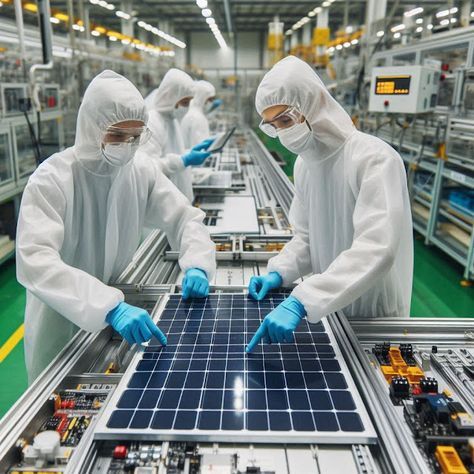
The most important part of any solar panel is the photovoltaic (PV) cell. This is where electricity is actually generated.
What Is a PV Cell? What Are Photovoltaic Panels Made Of?
A PV cell is a small unit that converts sunlight into electrical energy. A single solar panel contains dozens of these cells connected together.
Main Material: Silicon
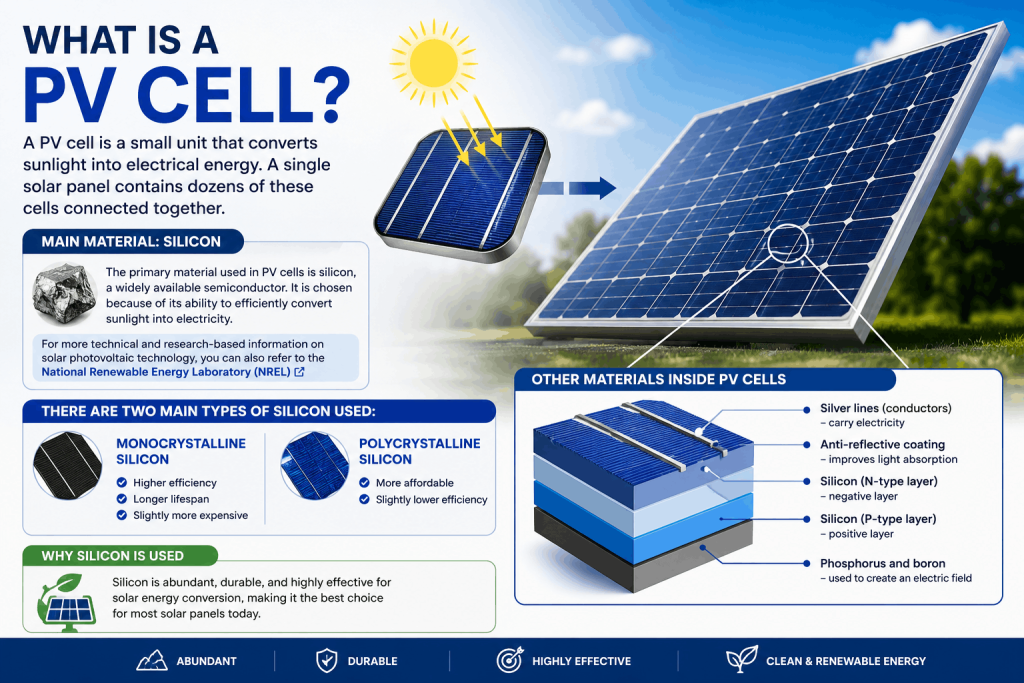
The primary material used in PV cells is silicon, a widely available semiconductor. It is chosen because of its ability to efficiently convert sunlight into electricity. For more technical and research-based information on solar photovoltaic technology, you can also refer to the National Renewable Energy Laboratory (NREL)
There are two main types of silicon used:
Monocrystalline Silicon
- Higher efficiency
- Longer lifespan
- Slightly more expensive
Polycrystalline Silicon:
- More affordable,
- slightly lower efficiency
- Other Materials Inside PV Cells
Besides silicon, PV cells also contain:
- Phosphorus and boron – used to create an electric field
- Silver lines (conductors) – carry electricity
Why Silicon Is Used
Silicon is abundant, durable, and highly effective for solar energy conversion, making it the best choice for most solar panels today.
Layers of a Solar Panel Explained
Solar panels are built like a sandwich, with multiple layers working together to protect and enhance performance.
1. Tempered Glass (Top Layer)
This is the outermost layer that protects the panel from:
- Rain and dust
- Hail and strong winds
- Physical damage
It is strong, transparent, and designed to allow maximum sunlight to pass through.
2. EVA (Encapsulation Layer)
EVA (Ethylene Vinyl Acetate) is a plastic layer that:
- Holds solar cells in place
- Prevents moisture from entering
- Absorbs shocks
3. Solar Cells (Core Layer)
This is where electricity is generated. These cells are connected in a grid-like pattern to maximize energy production.
4. Backsheet (Bottom Layer)
The backsheet protects the panel from:
- Electrical leakage
- Environmental damage
It is usually made from durable polymer materials.
5. Aluminum Frame
The frame:
- Provides structural strength
- Makes installation easier
- Protects edges from damage
Types of Materials Used in Solar Panels
Not all solar panels are made the same way. Different technologies use different materials.
Silicon-Based Solar Panels
These are the most common and widely used panels. They offer:
- High efficiency
- Long lifespan
- Reliable performance
Most residential and commercial solar installations use silicon-based panels because they provide stable and long-term energy savings.
Thin-Film Solar Panels
These panels are made from materials such as:
- Cadmium telluride (CdTe)
- Amorphous silicon
They are:
- Lightweight
- Flexible
- Less efficient than silicon panels
Future Materials Being Used in Solar Technology
Solar technology continues to evolve, with researchers developing new materials to improve efficiency and reduce manufacturing costs.
Perovskite Solar Cells
Perovskite materials have shown significant potential for achieving higher efficiency while lowering production costs.
Bifacial Solar Panels
Bifacial panels capture sunlight from both the front and rear surfaces, increasing overall energy production.
Advanced Composite Materials
Manufacturers are also exploring stronger and lighter materials that can improve durability while reducing installation costs.
Why Material Choice Matters in Solar Panels
Choosing the right solar panel depends heavily on the materials used.
Efficiency
High-quality silicon and better design lead to higher electricity production.
Durability
Good materials ensure panels last 25–30 years or more.
Cost
Premium solar panel materials may cost more upfront, but they offer better long-term value. That’s why it is important to understand the total cost of solar panels before installation, so you can make an informed, cost-effective decision.
Climate Suitability (Pakistan Focus)
In hot and dusty environments:
- Heat-resistant materials are important
- Strong glass helps protect against dust and storms
Environmental Impact of Solar Panel Materials
Are Solar Panels Eco-Friendly?
Yes, solar panels produce clean energy without emissions. However, manufacturing does require energy and raw materials.
Recycling Solar Panels
Many components can be recycled, including:
- Glass
- Aluminum
- Some semiconductor materials
Sustainable Innovations
New research is focused on:
- Reducing waste
- Improving recyclability
- Using eco-friendly materials
Common Myths About Solar Panel Materials
Myth 1: Solar Panels Are Made of Rare Materials
Fact: Silicon is one of the most abundant elements on Earth.
Myth 2: Solar Panels Harm the Environment
Fact: Their long-term environmental benefits outweigh production impacts.
Myth 3: All Solar Panels Are the Same
Fact: Material quality and design vary significantly, affecting performance.
Conclusion
So, what are solar panels made of? In simple terms, they are built from silicon, glass, aluminum, and conductive metals—all carefully combined to create a reliable energy system.
The most important component is the photovoltaic cell, which uses silicon to convert sunlight into electricity. Surrounding layers of glass, plastic, and metal ensure protection, durability, and efficiency.
At Progressive Ventures, we provide reliable and cost-effective solar panel installation services for homes, businesses, and industrial units across Pakistan. With rising electricity costs and frequent power outages, switching to solar energy is no longer a luxury—it is a smart investment.
Our team specializes in designing and installing high-performance solar systems that reduce your electricity bills and provide long-term energy independence.
Understanding what is the material used in solar panels is helps you make better decisions when choosing a system for your home or business. It also gives you confidence in the technology powering your investment.
As solar energy continues to grow in Pakistan, knowing these basics can help you select high-quality panels that perform well for decades.
FAQs
What are solar panels made out of?
Solar panels are mainly made from silicon, glass, aluminum, and metals like silver and copper.
What is a solar panel made of?
A solar panel consists of photovoltaic cells, a protective glass layer, a backsheet, and a metal frame.
What is the material used in solar panels?
The main material is silicon, supported by glass, plastic polymers, and conductive metals.
What is a PV cell made of?
A PV cell is made of silicon semiconductor material combined with elements like phosphorus and boron.
What are photovoltaic panels made of?
They are made of multiple solar cells, protective layers, and a structural frame.
How long do solar panel materials last?
Most solar panels last between 25 to 30 years.
Are solar panels recyclable?
Yes, many parts like glass and aluminum can be recycled, and recycling technology is improving.