Many homeowners considering solar energy ask one important question: Do solar panels need direct sunlight to work?
The short answer is no. Solar panels do not require direct sunlight to generate electricity. However, they perform best when exposed to strong, direct sunlight. Even on cloudy days, during winter, or in indirect light, modern solar panels continue producing electricity—just at a lower output.
If you’re planning to install solar panels in Pakistan, understanding how sunlight affects performance will help you choose the right system, estimate energy production, and maximize your investment.
Understanding How Solar Panels Work
To understand whether solar panels need direct sunlight, we first need to understand how they actually produce electricity.
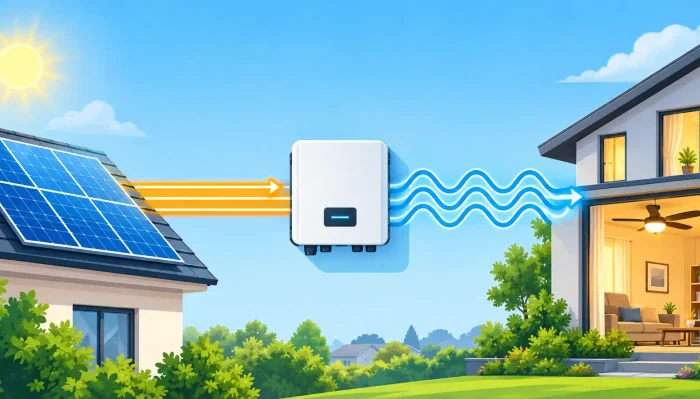
Solar panels work using a process called the photovoltaic (PV) effect. Each panel contains many solar cells made from semiconductor materials like silicon. When sunlight hits these cells, it excites electrons and creates an electric current.
Importantly, solar panels do not rely on heat. They rely on light particles (photons).
Key points:
- Sunlight contains energy in the form of photons
- Solar cells convert photons into electricity
- More light = more electricity
- Heat is not required for energy generation
This means any form of sunlight—direct or indirect—can still produce electricity.
Do Solar Panels Need Direct Sunlight to Work?
Let’s break it down clearly.
The Short Answer:
Solar panels do not require direct sunlight — but they perform best with it.
The Detailed Reality:
- Direct sunlight = Maximum efficiency
- Indirect sunlight = Moderate efficiency
- Heavy clouds or shade = Reduced efficiency
So if you’re asking:
- Do solar panels require direct sunlight? → No
- Does solar power need direct sunlight? → Not required
- Do solar panels need direct sunlight to work → They work without it
This means solar energy is still a viable option in most environments.
Direct vs Indirect Sunlight: Understanding the Difference
1. Direct Sunlight
This occurs when sunlight reaches panels without any obstruction.
Benefits:
- Maximum electricity production
- Higher energy savings
- Faster return on investment
2. Indirect Sunlight
This is sunlight scattered by clouds, dust, or air particles.
Performance:
- Panels still produce electricity
- Output drops depending on conditions
- For best results and long-term efficiency, always hire certified solar installer companies, as proper installation and system design can significantly improve performance even in low-light conditions
Even in indirect light, panels can generate 10% to 50% of their normal capacity. Research from the International Energy Agency confirms that solar systems are effective even in less sunny regions.
Do Solar Panels Need Direct Sunlight or Just Light?
A common question people search online is: do solar panels need direct sunlight or just light?
The answer is that solar panels only need light to generate electricity. Any visible daylight can activate photovoltaic cells.
This means solar panels can work:
- On cloudy days
- During winter
- In rainy weather
- In shaded conditions
- During early morning and late afternoon
However, electricity production changes depending on the intensity of the light available.
Do Solar Panels Need Sunlight to Work?
Yes, solar panels need sunlight to work, but not necessarily bright, direct sunlight.
Solar panels cannot generate electricity in complete darkness because photovoltaic cells require light photons to create energy. At night, panels stop producing power unless your system includes battery storage or grid connectivity.
Can Solar Panels Work in Artificial Light?
Technically, yes. Solar panels can react to artificial light sources, but the energy generated is extremely small and not practical for powering homes.
Natural sunlight remains the most effective energy source for solar systems.
Do Solar Panels Work on Cloudy Days?
Yes — and this is where many people get it wrong.
Solar panels still work on cloudy days because daylight continues to reach the Earth’s surface.
What Happens in Cloudy Weather?
- Light intensity decreases
- Output reduces but does not stop
- Efficiency depends on cloud thickness
For example:
- Light clouds → Small drop in efficiency
- Heavy clouds → Larger drop
Countries like Germany and the UK — which experience frequent cloudy weather — still use solar energy successfully.
This directly answers:
Do solar panels need direct sunlight or just light?
→ They need light, not necessarily direct sunlight.
Do PV Panels Need Direct Sunlight?
Photovoltaic (PV) panels do not need constant direct sunlight to generate electricity.
PV systems are designed to absorb available solar radiation from the environment. Even when clouds block direct rays, diffuse sunlight still reaches the panels.
Diffuse Light Explained
Diffuse light occurs when sunlight scatters through clouds or particles in the atmosphere. Solar panels can still absorb this scattered light and convert it into electricity.
Although production may drop compared to clear sunny days, the system continues working.
Do Solar Panels Work in Rain?
Yes, solar panels work during rain — although output is lower due to reduced sunlight.
Interestingly, rain has a hidden benefit:
- It cleans dust and dirt from panels
- Improves efficiency afterward
- Helps maintain long-term performance
So while production drops during rain, it often improves afterward.
Do Solar Panels Work in Winter?
Another common concern is winter performance.
The Truth:
Solar panels work in winter as long as there is daylight.
Key Points:
- Cold temperatures actually improve panel efficiency
- Shorter days reduce total energy production
- Snow may block panels temporarily
In fact, solar panels often perform better in cold weather than in extreme heat.
What Factors Affect Solar Panel Efficiency?
Even though direct sunlight is not required, several factors influence the overall performance of a solar system:
1. Sunlight Intensity
More light means more electricity generation. Strong, direct sunlight produces the highest output, while cloudy or low-light conditions reduce efficiency.
2. Panel Angle and Direction
Solar panels should be installed at the correct tilt and direction to capture maximum sunlight throughout the day. Poor positioning can significantly reduce energy production.
3. Temperature
Although solar panels rely on sunlight, extremely high temperatures can slightly reduce their efficiency. Panels generally perform better in moderate or cooler conditions.
4. Dust and Pollution
Dust, dirt, and air pollution — especially common in urban areas — can block sunlight from reaching the panels, lowering their efficiency over time if not cleaned regularly.
5. Shading
Shadows from trees, buildings, or nearby structures can greatly impact performance. Even partial shading on one panel can reduce the output of the entire system.
6. Solar Installation Quality
The quality of solar installation plays a major role in overall efficiency. Proper system design, correct wiring, and proper solar installation ensure maximum performance. Poor installation can lead to energy losses, reduced output, and long-term system issues, which is why it is always recommended to hire experienced and certified solar installers.
Solar Energy Performance in Pakistan
Pakistan is one of the most solar-friendly countries in the world due to high solar irradiance levels.
Cities like:
- Karachi
- Lahore
- Islamabad
- Multan
receives strong sunlight for most of the year.
Even during winter or monsoon seasons, solar systems continue generating usable electricity due to indirect sunlight.
This makes solar energy a practical and cost-effective solution for households and businesses in Pakistan.
Do Solar Panels Work in Shade?
This is slightly different from cloudy conditions.
- Partial shade → Reduced performance
- Full shade → Very little electricity
Modern systems use microinverters or optimizers to reduce losses caused by shading.
Still, avoiding shade is important for the best results.
Best Conditions for Solar Panels
Even though solar panels don’t need direct sunlight, ideal conditions include:
- Clear sky
- Minimal shading
- Correct tilt angle
- South-facing direction (in the Northern Hemisphere)
These factors ensure maximum efficiency and energy production.
Real-Life Example: Solar Without Constant Sunlight
Many people think solar only works in hot, sunny countries.
But here’s the reality:
- Germany is one of the world’s top solar producers
- It receives less sunlight than many Asian countries
- Yet solar adoption is extremely high
This proves that solar panels rely on light availability, not just strong sunshine.
Why Solar Panels Sometimes Perform Better in Cooler Weather
Many people assume hot temperatures improve solar efficiency, but excessive heat can actually reduce panel performance.
Solar panels generally work more efficiently in cooler temperatures with strong sunlight.
Ideal Conditions for Solar Panels
The best conditions include:
- Bright sunlight
- Moderate temperatures
- Minimal shading
- Clean panel surfaces
This is why some cooler countries achieve excellent solar energy production despite having fewer sunny days.
Is Solar Worth It Without Direct Sunlight?
Yes — in most cases, it absolutely is.
Even without constant direct sunlight:
- You can still reduce electricity bills
- You gain energy independence
- You protect yourself from rising energy costs
In regions like Pakistan, where sunlight is abundant most of the year, solar is even more beneficial.
Expert Tip: How to Maximize Solar Output Without Perfect Sunlight
If your area doesn’t get full sun all day, you can still optimize performance:
- Install high-efficiency panels
- Use proper tilt and direction
- Avoid shading during peak hours
- Keep panels clean
- Consider battery storage
These steps ensure better performance even in less-than-perfect conditions.
Conlusion
So, do solar panels need direct sunlight? No—they do not. Modern solar panels generate electricity from both direct and indirect sunlight, allowing them to work on cloudy days, during winter, and in varying weather conditions. While direct sunlight delivers the highest power output, a properly designed solar system can provide reliable energy throughout the year.
For homeowners in Pakistan, abundant sunshine makes solar power a practical long-term investment that can lower electricity costs and provide dependable clean energy.
FAQS
1. Do solar panels need direct sunlight to work?
Solar panels do not need direct sunlight to work. They generate electricity using daylight, which includes both direct and indirect sunlight. However, their performance is highest when they receive direct sunlight because the intensity of light is stronger, allowing them to produce more energy efficiently.
2. Does a solar panel need direct sunlight every day?
No, a solar panel does not need direct sunlight every day. It can still produce electricity during cloudy or overcast conditions because sunlight can pass through clouds. While the energy output may decrease on cloudy days, the system continues to generate usable power throughout the day.
3. Do solar panels require direct sunlight or just light?
Solar panels only require light, not necessarily direct sunlight. They are designed to absorb photons from any visible light source, including diffused or indirect sunlight. This means they can still function during cloudy weather, early mornings, and late afternoons, although efficiency will vary depending on light intensity.
4. Does solar power need direct sunlight in winter?
Solar power does not require direct sunlight in winter to work. As long as there is daylight, solar panels can generate electricity. In fact, colder temperatures can improve panel efficiency. However, shorter daylight hours and possible snow coverage may reduce overall energy production during the winter season.
5. How efficient are solar panels without direct sunlight?
Solar panels are less efficient without direct sunlight, but they still work effectively. Their efficiency can drop by around 10% to 70%, depending on the level of cloud cover and environmental conditions. Modern solar panels are designed to perform better in low-light conditions, making them reliable even when sunlight is not strong.
6. Can solar panels work in shade?
Solar panels can work in partial shade, but their performance will decrease significantly. If a panel is fully shaded, its electricity production can drop to very low levels. To reduce the impact of shading, advanced systems use technologies like microinverters or power optimizers, which help maintain better performance even when some panels are shaded.