Hydropower is one of the oldest and most reliable ways to produce electricity. Long before modern solar panels and wind turbines, people were already using flowing water to power mills and machinery. Today, this same natural force is used on a much larger scale to generate clean and renewable electricity.
But many people still ask a simple question: how does hydropower work?
In the simplest terms, hydropower uses moving water to spin turbines, which then generate electricity. It sounds straightforward, but behind this process is a well-designed system based on physics and engineering.
What Is Hydropower?
Hydropower, also known as hydel power or hydroelectric power, is electricity generated using the energy of moving water. It is a renewable energy source because it relies on the natural water cycle, which is continuously replenished by rainfall.
Understanding the Basics
When water flows downhill, it carries energy. Hydropower systems capture this energy and convert it into electricity. This makes hydropower one of the most efficient and sustainable energy sources available today.
Sources of Hydropower
Hydropower can come from several natural and engineered sources:
- Flowing rivers
- Large dams and reservoirs
- Waterfalls
- Ocean tides (in some advanced systems)
Why Hydropower Matters
With increasing demand for clean energy, hydropower plays a critical role in reducing dependence on fossil fuels. It produces electricity without burning fuel, which means fewer greenhouse gas emissions.
2. How Does Hydropower Work? (Simple Explanation)
If you’re looking for a quick and easy explanation of how does hydropower work simple, think of it like a water wheel.
When water flows over or through a wheel, it causes the wheel to spin. Hydropower systems use the same idea but with advanced turbines and generators.
Simple 3-Step Process
- Water flows from a higher level to a lower level
- The flowing water spins a turbine
- The turbine powers a generator to produce electricity
This is the basic concept behind hydropower how it works, and it applies to both small and large systems.
How Does Hydropower Work Step by Step?
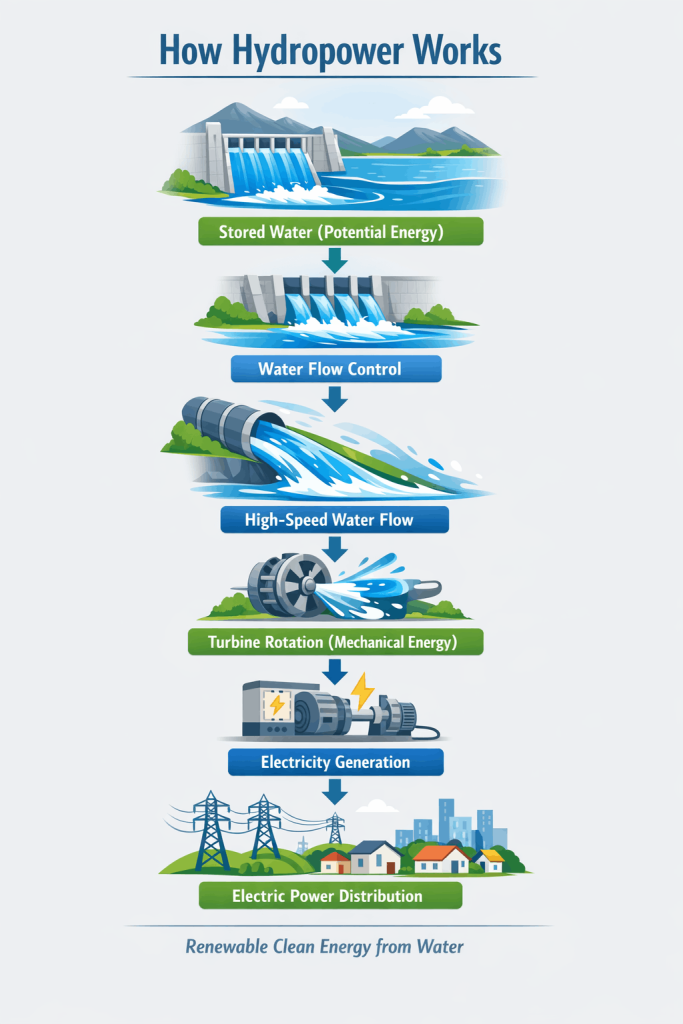
To clearly understand how does hydropower work step by step, let’s break the entire process into simple stages.
Step 1: Water Storage or Natural Flow
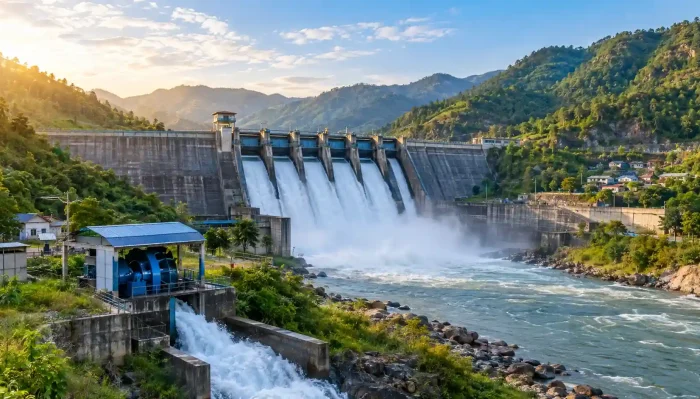
Most hydropower plants use either a dam or a natural river flow. In dam systems, water is stored in a large reservoir at a higher elevation.
This stored water has potential energy due to its height.
Step 2: Controlled Water Release
When electricity is needed, the dam opens its gates. Water begins to flow through large pipes called penstocks.
This controlled release ensures proper water pressure and flow speed.
Step 3: High-Speed Water Flow
As water moves down through the penstock, gravity increases its speed and energy.
This is a key part of how does hydroelectric power generation work, because higher water speed means more electricity can be produced.
Step 4: Turbine Rotation
The fast-moving water hits the blades of a turbine. This causes the turbine to spin rapidly.
At this stage, water energy is converted into mechanical energy.
Step 5: Electricity Generation
The turbine is connected to a generator. When the turbine spins, the generator converts mechanical energy into electrical energy using electromagnetic principles.
Step 6: Power Transmission
After electricity is generated, it passes through transformers that adjust voltage levels.
Then electricity travels through power lines to homes, schools, factories, and cities.
This entire system explains clearly how does hydroelectricity work in real life.
How Does Hydroelectricity Work in Simple Words?
If you are still wondering how does hydroelectricity works, here is the simplest explanation:
Think of a water wheel in a river. When water flows, it pushes the wheel and makes it spin. Now imagine that wheel connected to a machine that produces electricity.
That is exactly how hydropower works on a larger scale.
Instead of burning fuel like coal or gas, hydropower simply uses moving water to generate energy. This makes it one of the cleanest electricity sources available today.
According to the U.S. Department of Energy, hydropower is one of the most reliable renewable energy sources because it can generate electricity continuously as long as water is flowing.
This is why many countries still depend on hydropower for stable and clean electricity production.
How Is Hydroelectricity Produced?
The way hydroelectricity is produced depends on the type of system used. There are three main types of hydropower plants.
1. Dam-Based Hydropower Plants
This is the most common type of hydropower system.
Water is stored in a large reservoir behind a dam. When electricity demand increases, water is released through turbines.
This system is highly reliable because electricity can be generated on demand.
2. Run-of-River Systems
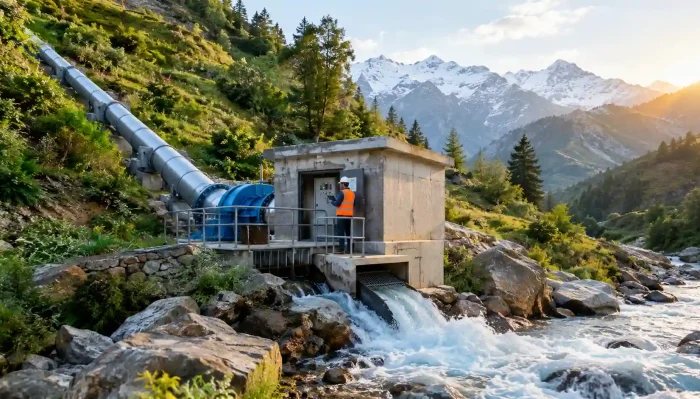
In this system, there is no large reservoir. Instead, it uses the natural flow of a river.
A portion of the river is diverted through turbines to generate electricity.
However, electricity production depends on river flow, which changes with seasons.
3. Pumped Storage Hydropower
This system works like a giant battery.
During low electricity demand, extra energy is used to pump water uphill into a reservoir. During high demand, water is released back down to generate electricity.
This system helps balance the power grid.
Principle of Hydroelectric Power Generation
The principle of hydroelectric power generation is based on energy conversion.
Water stored at a height has potential energy. When it flows downward, this energy turns into kinetic energy. As it spins the turbine, it becomes mechanical energy, which is finally converted into electrical energy by the generator.
Key Components
- Dam: Stores water and creates height difference
- Turbine: Converts water energy into mechanical motion
- Generator: Produces electricity
- Transformer: Adjusts voltage for transmission
Why It’s Efficient
Hydropower systems are highly efficient because they minimize energy loss during conversion. This makes them more reliable compared to many other energy sources.
How Is Hydroelectricity Produced?
If you’re wondering how is hydroelectricity produced, the process combines natural forces with modern technology.
Water movement is the driving force. Engineers design systems that control and direct this movement to maximize energy production.
Types of Hydropower Plants
1. Storage Hydropower (Dams)
- Most common type
- Uses reservoirs to control water flow
2. Run-of-River Systems
- No large storage
- Uses natural river flow
3. Pumped Storage Systems
- Stores energy for later use
- Pumps water back uphill when demand is low
Modern Advancements
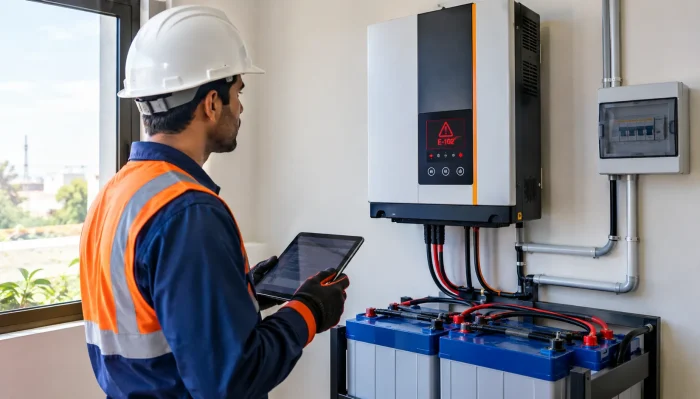
Today’s hydropower plants use smart monitoring systems, efficient turbines, and automation to improve performance and reduce environmental impact.
Types of Hydropower Systems
Hydropower systems vary in size and purpose.
Large-Scale Hydropower
These projects supply electricity to entire cities or countries. They often involve large dams and reservoirs.
Small and Micro Hydel Power Systems
Small systems are ideal for rural or remote areas. They are cost-effective and easier to install.
Pumped Storage Hydropower
This acts like a battery, storing energy and releasing it when needed.
Emerging Trends
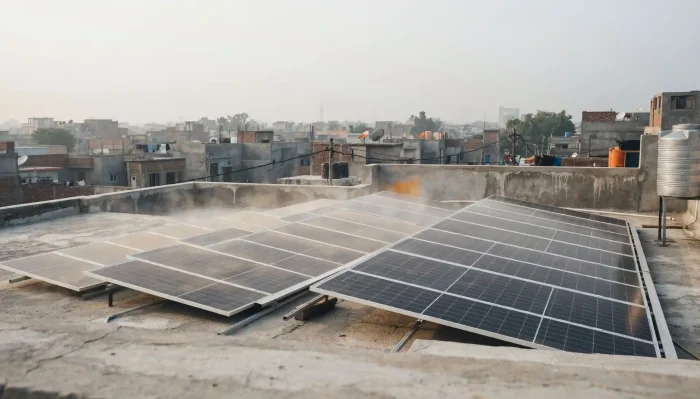
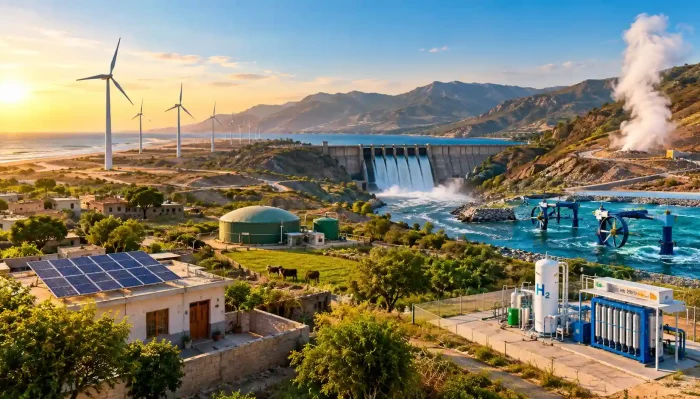
Hybrid systems combining solar and hydropower are becoming more popular, offering greater efficiency and reliability.
Advantages of Hydropower
Hydropower offers several important benefits.
Environmental Benefits
- Clean and renewable energy
- No air pollution during operation
- Helps reduce carbon emissions
Economic Benefits
- Low operating and maintenance costs
- Long lifespan (often 50+ years)
Energy Reliability
- Provides consistent and stable electricity
- Supports power grids during peak demand
Hydropower is also highly flexible, making it a strong complement to solar and wind energy.
Limitations of Hydropower
Despite its benefits, hydropower also has challenges:
High Initial Cost
Building dams and infrastructure is expensive.
Environmental Impact
Large dams can affect river ecosystems and fish movement.
Location Limitations
Not every place is suitable for hydropower plants.
Dependency on Water
Droughts or low rainfall can reduce electricity production.
Environmental Impact of Hydropower
Hydropower is much cleaner than fossil fuels, but it still affects nature.
Large dams can change water flow, flood land, and affect aquatic life.
To reduce these impacts, modern hydropower systems use:
- Fish ladders to help fish migrate
- Environmental flow control systems
- Eco-friendly turbine designs
These improvements make hydropower more sustainable and environmentally friendly.
Why Hydropower Is Still Important Today
Even with modern renewable energy sources like solar and wind, hydropower remains extremely important.
It provides stable base-load electricity, meaning it can produce power at any time when water is available.
It also supports the grid when solar or wind energy is low.
This is why hydropower is often called the backbone of renewable energy systems.
Hydropower in the Future
Hydropower technology is improving continuously.
New developments include:
- Small micro-hydropower systems for rural areas
- Smart turbines with higher efficiency
- AI-based monitoring systems
- Hybrid systems combining solar and hydro
These innovations are making hydropower more efficient and widely usable.
Hydropower vs Other Renewable Energy Sources
When comparing hydropower with solar and wind energy:
- Hydropower provides consistent, controllable power
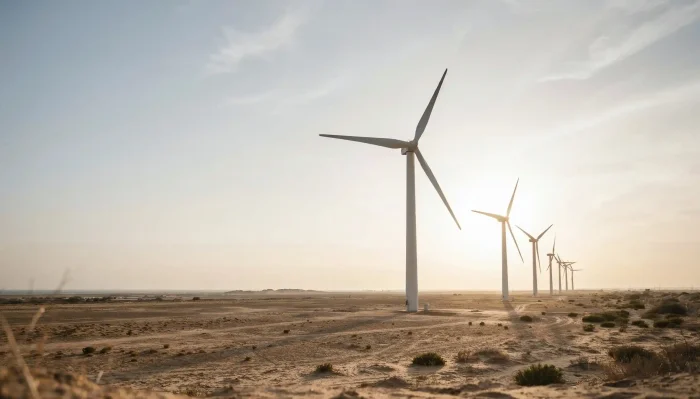
- Solar and wind depend more heavily on weather conditions
- Hydropower systems last longer and require less frequent equipment replacement
This makes hydropower a strong foundation for renewable energy grids.
Modern Trends in Hydropower Technology
Recent innovations are reshaping how hydroelectricity is produced:
- Small-scale and micro-hydro systems for rural areas
- Fish-friendly turbine designs
- Digital monitoring and predictive maintenance
- Integration with solar and wind in hybrid energy systems
Your Trusted Hydropower Installation Experts
Looking for professional support? At Progressive Ventures, we offer Hydel Energy Installation Services to help you set up efficient and reliable hydropower systems tailored to your needs. Our experienced team ensures safe installation and maximum energy output for both homes and businesses.
Conclusion
Hydropower is a powerful and reliable source of renewable energy. By using the natural flow of water, it generates electricity efficiently and sustainably.
Understanding how hydropower works helps us appreciate its role in reducing carbon emissions and supporting clean energy goals. From large dams to small hydel systems, this technology continues to evolve and adapt to modern needs.
As the world moves toward greener energy solutions, hydropower will remain a key player in building a sustainable future. Progressive Ventures, responsible for the design, modern technology, and expert execution, hydroelectric systems deliver clean power, long-term savings, and environmental benefits, making them a cornerstone of the global renewable energy future.
Frequently Asked Questions (FAQs)
How does hydropower work step by step?
Water flows downhill, spins a turbine, the turbine drives a generator, and electricity is sent to the grid.
How does hydroelectric power work without fuel?
Hydropower relies on gravity and moving water, not combustion or fuel burning.
How is hydroelectricity produced in small rivers?
Run-of-river systems divert part of the river flow through turbines without large dams.
Is hydropower renewable?
Yes, it is renewable because it depends on the natural water cycle.
Does hydropower work at night?
Yes, as long as water flow is available, hydropower can operate day and night.
Is hydroelectricity safe?
When properly designed and maintained, hydroelectric plants are among the safest energy systems.