Solar power has moved from a niche investment to one of the most practical ways for homes and businesses to control rising electricity costs. As tariffs climb and panel technology matures, more property owners are treating solar not as an experiment but as a long-term financial decision.
That decision starts with understanding solar plate types, since the panel chosen determines efficiency, upfront cost, and how quickly the system pays for itself. Not every panel performs the same way, and picking the wrong one for a given roof or budget can quietly undercut the return on investment for years.
This guide covers what a solar plate actually is, walks through the main types of solar panels on the market, compares their efficiency, and outlines which option fits which kind of home or business.
What Are Solar Plates?
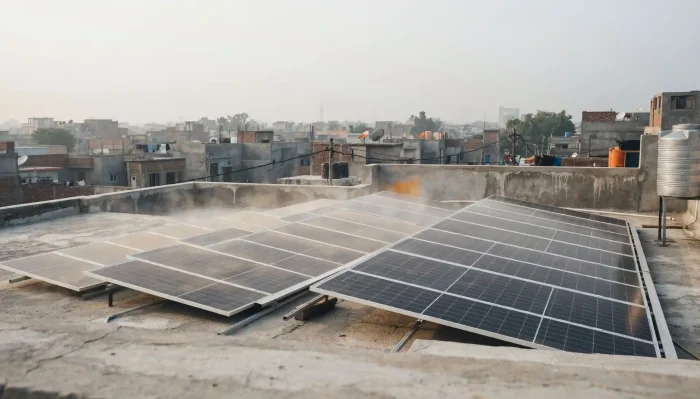
In Pakistan and much of South Asia, “solar plate” is the everyday term for what’s technically called a solar panel, or photovoltaic (PV) panel. These panels convert sunlight into electricity through photovoltaic cells, generating direct current (DC) power that an inverter then converts into the alternating current (AC) homes and businesses actually run on.
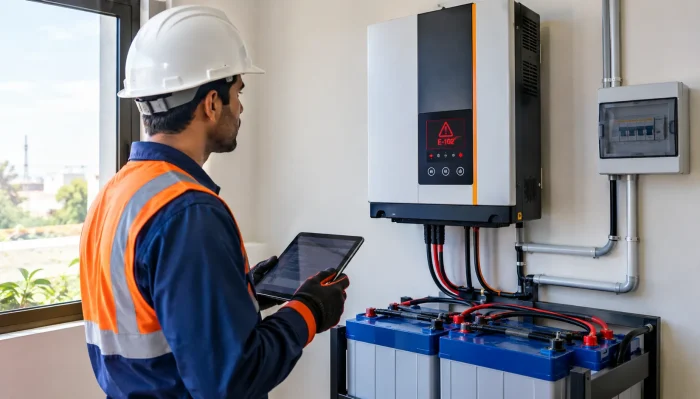
A full solar setup typically involves more than just the panels themselves. Alongside the PV modules, a system generally includes an inverter, mounting structure, wiring, protective equipment, and, in many cases, battery storage. Together, these pieces reduce a property’s dependence on the national grid while providing a more predictable electricity supply.
The World Bank has noted that expanding access to renewable energy technologies strengthens both energy reliability and long-term sustainability, a point that applies directly to how Pakistan’s solar market has grown in recent years. How a panel is manufactured also shapes its real-world performance, which is worth understanding before comparing types.
Types of Solar Cells and How They Work
A solar cell plate contains photovoltaic cells made from semiconductor materials, primarily silicon.
The process works as follows:
- Sunlight strikes the solar cells.
- Photons excite electrons inside the silicon.
- Electric current is generated.
- The inverter converts DC electricity into AC electricity.
- Electricity powers your home or business.
This clean energy production helps reduce electricity bills and dependence on the national grid.
Understanding the efficiency of solar cells is also important, as higher-efficiency panels generate more electricity from the same amount of sunlight. This means better performance, faster recovery of investment, and lower electricity costs over time.
What Are the Solar Panel Types? Complete Breakdown
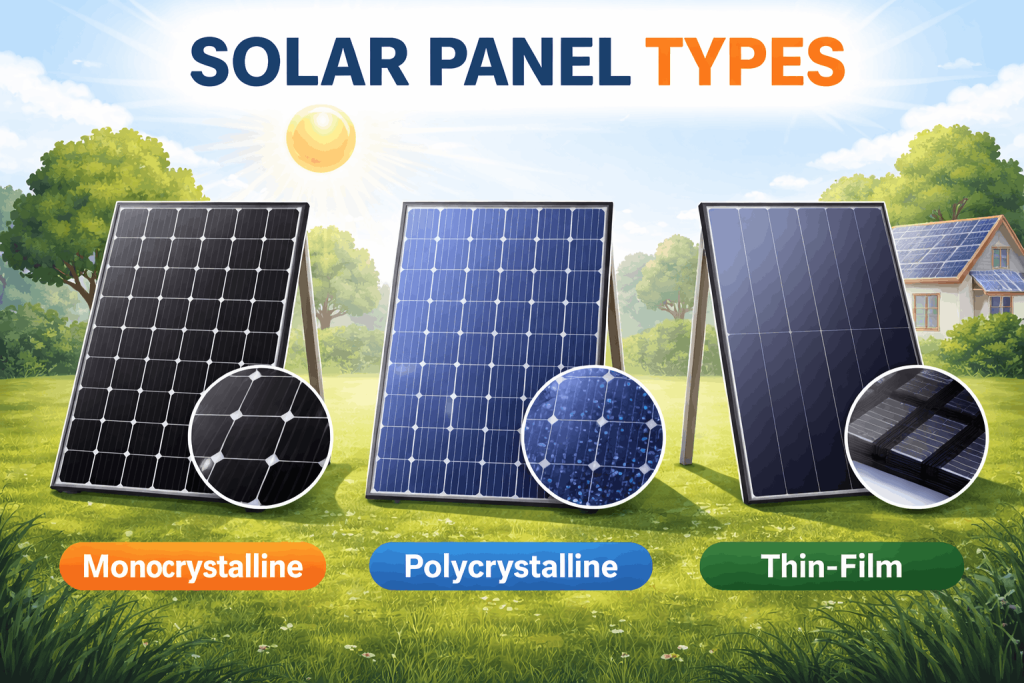
Three core panel types dominate the global market, and each suits a different combination of budget, space, and performance needs.
Monocrystalline Solar Panels
Built from a single, pure silicon crystal, monocrystalline panels sit at the premium end of the solar market. That single-crystal structure lets electrons move more freely, which is the main reason these panels outperform the alternatives.
They offer the highest efficiency available, a longer service life, and strong output even in tight roof spaces or low-light conditions, often with the recognizable black finish many homeowners prefer. The tradeoff is cost, both the panels and the manufacturing process behind them run more expensive than other options.
Efficiency typically falls between 19% and 24%, making monocrystalline panels the strongest fit for residential rooftops with limited space and for homeowners prioritizing maximum output over upfront savings.
Polycrystalline Solar Panels
Polycrystalline panels are produced by melting several silicon fragments together rather than relying on one pure crystal. That simpler process keeps manufacturing costs down, which shows up directly in the price a buyer pays.
The tradeoff is lower efficiency, generally 15% to 18%, and a need for more roof area to generate a comparable amount of power. For budget-conscious homeowners or commercial projects with room to spare, though, polycrystalline remains a reliable and widely available choice.
Thin-Film Solar Panels
Thin-film technology takes a different manufacturing approach entirely, depositing photovoltaic material onto a thin substrate rather than using rigid silicon wafers. The result is a lightweight, flexible panel available in a few distinct forms: cadmium telluride (CdTe), amorphous silicon (a-Si), and copper indium gallium selenide (CIGS).
These panels hold up well in high heat and cost less to produce, but efficiency lags behind the alternatives, typically 10% to 15%, and they need more surface area to generate equivalent power, along with a shorter overall lifespan. That profile makes them better suited to large commercial installations or portable systems than to a typical residential rooftop.
Solar Panel Types and Efficiency Comparison
| Solar Panel Type | Efficiency | Lifespan | Cost | Best Use |
| Monocrystalline | 19%–24% | 25–30 Years | High | Residential homes |
| Polycrystalline | 15%–18% | 20–25 Years | Medium | Budget installations |
| Thin-Film | 10%–15% | 10–20 Years | Lower | Commercial projects |
Among mainstream technologies, monocrystalline panels remain the most efficient, generating more power per square foot of roof space than either polycrystalline or thin-film alternatives.
Advanced Solar Panel Technologies in 2026
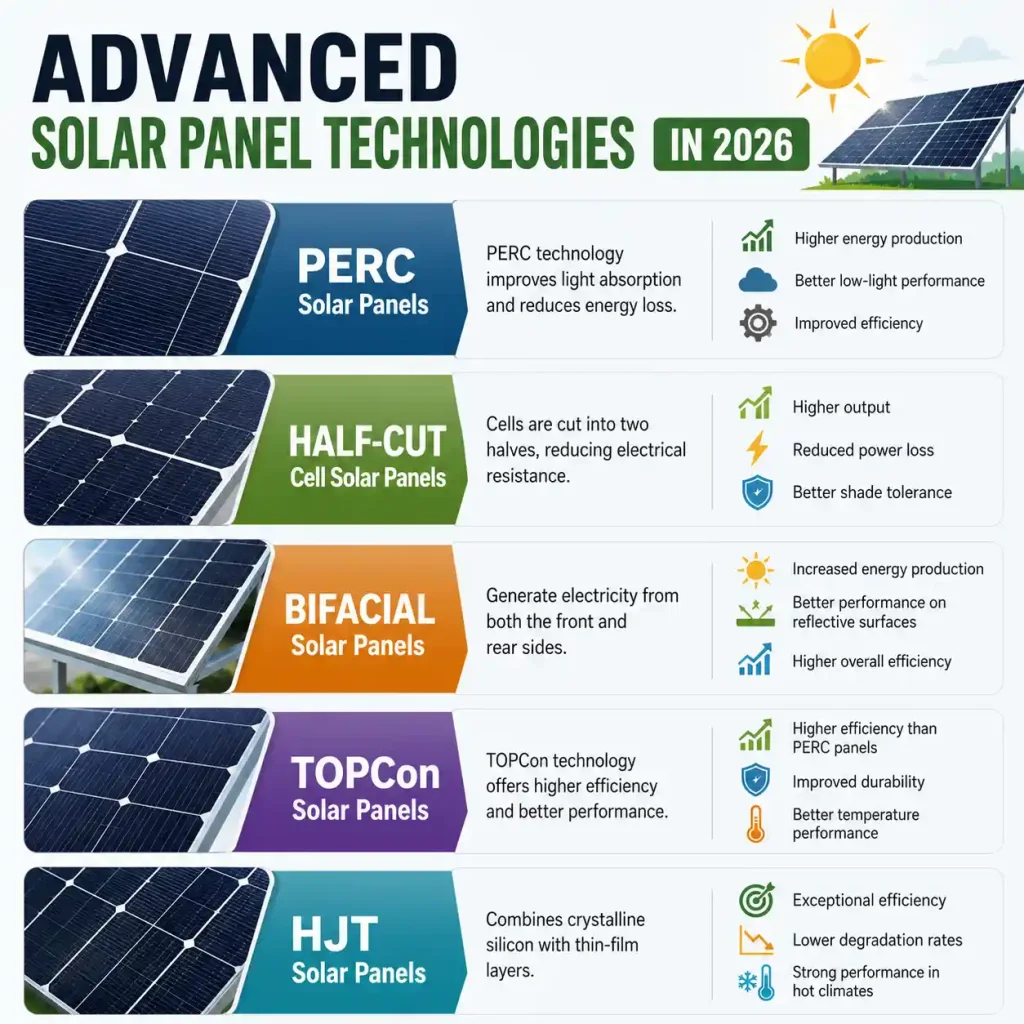
Solar technology continues to evolve rapidly. Several advanced panel designs now deliver higher efficiency and better performance.
PERC Solar Panels
PERC (Passivated Emitter and Rear Cell) technology improves light absorption and reduces energy loss.
Benefits include:
- Higher energy production
- Better low-light performance
- Improved efficiency compared to traditional panels
Half-Cut Cell Solar Panels
These panels use solar cells cut into two halves, reducing electrical resistance.
Advantages include:
- Higher output
- Reduced power loss
- Better shade tolerance
Bifacial Solar Panels
Bifacial panels generate electricity from both the front and rear sides.
Benefits include:
- Increased energy production
- Better performance on reflective surfaces
- Higher overall efficiency
TOPCon Solar Panels
TOPCon (Tunnel Oxide Passivated Contact) technology is becoming one of the most popular innovations in the solar industry.
Advantages include:
- Higher efficiency than standard PERC panels
- Improved durability
- Better temperature performance
HJT Solar Panels
Heterojunction Technology (HJT) combines crystalline silicon with thin-film layers.
Benefits include:
- Exceptional efficiency
- Lower degradation rates
- Strong performance in hot climates
Solar Panels Types in Pakistan – Market Overview
Market Trends in Pakistan
- Rapid increase in rooftop solar installations
- Growing popularity of net metering systems
- Government encouragement for renewable energy adoption
- Rising demand from residential and commercial sectors
Most Used Panel Types
- Monocrystalline panels: Preferred for high efficiency and space-saving
- Polycrystalline panels: Popular due to affordability
Climate Considerations
Pakistan’s climate plays a major role in panel selection:
- High temperatures can reduce panel efficiency
- Dust and pollution require regular cleaning
- Heat-resistant panels perform better long-term
Because of these conditions, monocrystalline panels are increasingly preferred in urban areas.
Best Types of Solar Panels for Home Use
The right panel depends heavily on the specifics of a given property. Smaller roofs benefit most from monocrystalline panels, since they extract more power from limited space. Larger roof areas open the door to polycrystalline as a more affordable option without sacrificing much practical output.
For homeowners chasing maximum performance, TOPCon and HJT panels currently sit at the top of the efficiency curve. And for anyone focused on long-term savings specifically, high-efficiency monocrystalline and TOPCon panels tend to deliver the strongest return over the life of the system.
Which Solar Plate Type Is Best for Pakistan?
Pakistan’s abundant year-round sunlight makes solar a genuinely strong option nationwide, not just in select regions. For most homeowners, monocrystalline, TOPCon, and bifacial panels stand out as the technologies best suited to local climate conditions.
Before buying, it’s worth working through a few practical questions: how much electricity does the household actually consume monthly, how much roof space is available, what’s the realistic budget, what warranty coverage comes with the system, and how might energy needs change down the line.
Cost Comparison of Different Solar Plate Types
Pricing shifts by manufacturer and market conditions, but the general hierarchy holds steady. Monocrystalline, HJT, and premium TOPCon panels sit at the top of the price range. Polycrystalline and standard TOPCon occupy the middle. Thin-film panels remain the least expensive option.
Paying more upfront for premium panels often makes financial sense over time, since the efficiency gap tends to translate into meaningfully greater long-term savings.
How to Choose the Right Solar Plate Type
A handful of practical factors should shape this decision more than brand preference or marketing claims.
Budget matters most immediately. A tighter budget generally points toward polycrystalline, while more flexibility opens the door to monocrystalline. Balancing upfront cost against long-term efficiency tends to produce the better outcome, since higher-quality panels often pay for themselves faster through stronger output. Working with a certified solar installer at this stage helps ensure the system is designed and installed correctly from the start.
Available space shapes the decision too. Limited rooftop area calls for high-efficiency options like monocrystalline, while ample space leaves room for polycrystalline to work just as well.
Energy requirements differ significantly between a small home and a factory or commercial facility, so calculating actual daily electricity usage before choosing a system size prevents both overspending and underperformance.
Weather conditions in Pakistan specifically call for heat-resistant panels, reliable dust protection, and durable frames built to withstand years of exposure.
Long-term value deserves more weight than sticker price alone. Higher-efficiency panels frequently recover their added cost through stronger output and lower bills, and professional installation ensures that efficiency actually gets realized rather than lost to poor system design.
Latest Trends in Solar Technology (2026 Update)
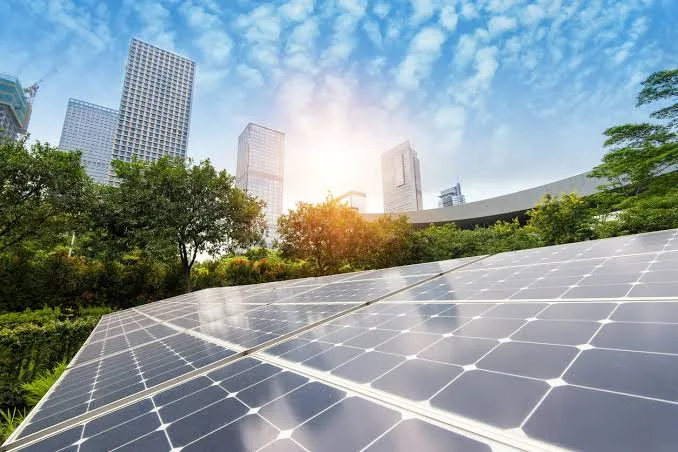
Solar technology is evolving rapidly, and new innovations are improving efficiency and performance.
Bifacial Solar Panels
These panels generate electricity from both sides by capturing reflected sunlight, increasing total energy output.
Half-Cut Cell Technology
Solar cells are cut in half to reduce resistance and improve efficiency, especially in shaded conditions.
Smart Solar Systems
Modern solar systems now include:
- AI-based monitoring apps
- Real-time performance tracking
- Smart energy optimization
Advanced Inverters
New inverters improve energy conversion efficiency and allow better control over system performance.
These innovations are making solar energy more efficient and accessible than ever before.
Common Mistakes to Avoid When Buying Solar Panels
Many people make mistakes that reduce system efficiency and long-term savings.
1. Choosing Based Only on Price
Cheaper panels may save money initially, but can reduce long-term performance.
2. Ignoring Efficiency Ratings
Efficiency determines how much electricity you can generate from sunlight.
3. Poor Installation Quality
Even high-quality panels perform poorly if installed incorrectly.
4. Not Matching Inverter Properly
An incompatible inverter can reduce overall system output.
5. Ignoring Maintenance
Regular cleaning and inspection are necessary, especially in dusty environments like Pakistan.
Conclusion
Understanding solar plate types is central to making a sound solar investment. Monocrystalline, polycrystalline, and thin-film panels each bring distinct strengths and limitations, and the right choice comes down to budget, available space, and actual energy needs.
In Pakistan, where electricity costs keep climbing and weather conditions test system durability, choosing the right solar plates types can meaningfully cut bills and build real energy independence. Monocrystalline panels generally lead on efficiency, while polycrystalline remains the practical choice for tighter budgets.
Solar isn’t a passing trend, it’s becoming a standard part of how Pakistani households and businesses manage long-term energy costs. Contact Progressive Ventures for expert guidance, installation, and support in choosing the right system for your specific needs.
Frequently Asked Questions (FAQs)
What are the solar panel types?
The main solar panel types are monocrystalline, polycrystalline, and thin-film panels. Each type differs in efficiency, cost, and performance.
Which solar plate type is best in Pakistan?
Monocrystalline solar panels are generally the best choice in Pakistan due to their high efficiency and better performance in hot weather.
What types of solar cells are used today?
The most common types of solar cells are monocrystalline silicon, polycrystalline silicon, and thin-film cells.
Are expensive solar panels worth it?
Yes, expensive high-efficiency panels often provide better long-term savings and higher electricity output.
How long do solar panels last?
Most solar panels last between 25 to 30 years, depending on quality, installation, and maintenance.