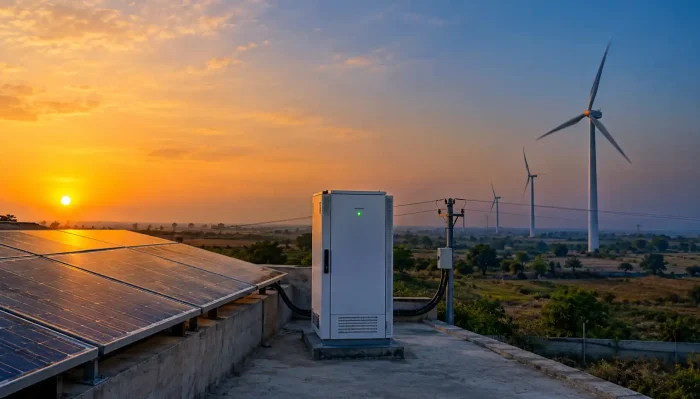
So, how much does wind energy cost will depend on the number of parameters, that is turbine size, wind speed at site, size of tower, construction of foundations, construction of tower, needs of an inverter and batteries etc. Prices of small wind turbines at present can vary from PKR 75,000 to millions depending on their rating of watts, ranging from 500 Watts.
For residential or small business purposes, it is not only turbines which are the issue, tower construction, foundation, wiring, controller, inverter, batteries, transportation, installation, will be a major part of cost. That’s why comparing the equipment price alone can give you an incomplete picture of the total cost.
Quick Wind Energy Cost Overview
Current published Pakistan market listings give the following indicative turbine-only prices:
| Turbine Capacity | Indicative Turbine Price | Typical Use |
| 500W | PKR 75,000–100,000 | Lighting and small loads |
| 1kW | PKR 160,000–199,000 | Small homes and shops |
| 2kW | PKR 350,000–400,000 | Small homes and cabins |
| 3kW | PKR 550,000–600,000 | Medium homes |
| 5kW | PKR 1,200,000–1,250,000 | Larger homes, farms, small businesses |
| 10kW | Varies by model and supplier | Farms and commercial applications |
It’s essential to see the prices here as indicative values for the hardware and not as guaranteed fully installed-system prices as final offers are dependent on turbine brand, design, tower, inverter, storage and so forth as well as on transport and installation.
What Determines the Cost of Wind Energy?
Knowing what you’re actually paying for will help you compare different quotes.
Turbine Capacity
One of the leading factors when determining the cost. Obviously, a 1kW turbine is designed to service smaller needs, thus the equipment and system are generally less robust and are thus much less costly than that in a 5kW, 10kW system or larger.
However, it’s not always better to over estimate; only choose a turbine on a basis of what is needed, the size of the household or need, and above all, the likely performance considering the site.
Tower Height
The position of a turbine on a tower may have an immense impact on the efficiency and also price; access to strong and steady wind is more accessible at greater heights-if they’re strategically placed to be well clear of nearby buildings, trees and other sources of turbulence.
With these gains to performance is an obvious hike up in steel, concrete, transportation, foundation etc, and therefore in cost.
Wind Conditions
At its core, any consideration of wind energy is to benefit from wind, but if the site is insufficient in wind then the energy yield may be considerably less valuable.
So if the potential yield of the 10kw is much less that of, let’s say, a smaller machine but placed appropriately, the return may be lesser. Factors like actual yield include the wind-speed regime and distribution, power curves of the turbine, rotor swept area, tower height, turbulence etc.
A proper assessment of the site may be helpful to determining viability before buying a machine.
Batteries and Inverters
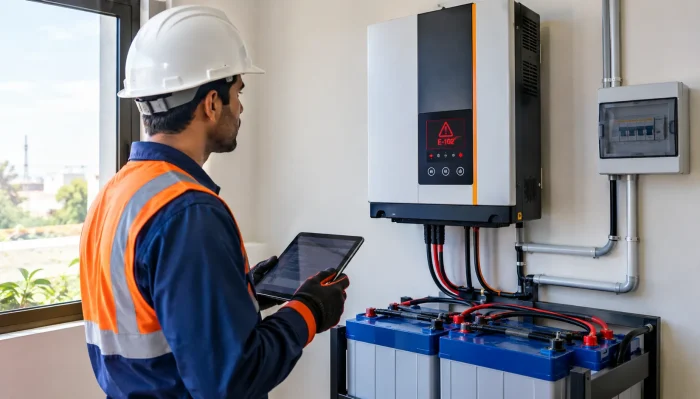
If you’re installing an off-grid or hybrid system, you’ll generally need additional equipment.
Depending on the system design, this may include:
- Wind charge controller
- Hybrid or off-grid inverter
- Battery bank
- Protection equipment
- Wiring and electrical accessories
- Monitoring equipment
These components are not necessarily included in the advertised turbine price. For example, published 5kW pricing specifically notes that batteries, inverter, tower, wiring, and installation may be separate costs.
Wind Turbine Price in Pakistan
The wind turbine price in Pakistan varies considerably depending on capacity, turbine type, manufacturer, and included components.
Current published market figures put smaller turbines at approximately PKR 75,000–100,000 for 500W, PKR 160,000–199,000 for 1kW, PKR 350,000–400,000 for 2kW, and PKR 550,000–600,000 for 3kW models. A 5kW turbine is listed around PKR 1.2–1.25 million by one Pakistan-focused supplier.
| Capacity | Indicative Price |
| 500W | PKR 75,000–100,000 |
| 1kW | PKR 160,000–199,000 |
| 2kW | PKR 350,000–400,000 |
| 3kW | PKR 550,000–600,000 |
| 5kW | PKR 1.2–1.25 million |
| 10kW | Approximately PKR 1.8–3.2 million for some listed vertical models |
The 10kW figure should be treated particularly carefully because pricing varies by turbine design and supplier. Some published listings quote PKR 1.8–3.2 million for 10kW vertical models, while other sources do not publish a fixed price.
5kW Wind Turbine Price in Pakistan
The 5kW wind turbine price in Pakistan is an important consideration for larger homes, farms, and small commercial properties.
Current published pricing for some 5kW models is around PKR 1.2 million to PKR 1.25 million for the turbine and controller. This does not necessarily represent the complete installed cost.
A complete 5kW project may additionally require:
- Tower
- Foundation
- Wind charge controller
- Inverter
- Batteries
- Wiring
- Electrical protection
- Transportation
- Installation labor
The final price can therefore be substantially higher than the advertised turbine price.
What Can a 5kW Turbine Power?
A 5kW turbine can be considered for applications such as:
- Larger homes
- Farmhouses
- Water pumps
- Small businesses
- Agricultural operations
- Hybrid solar-wind systems
- Remote facilities
However, the turbine’s 5kW rating does not mean it continuously produces 5kW. Actual generation depends on the available wind and the turbine’s power curve.
10kW Wind Turbine Price in Pakistan
If you are researching the 10kW wind turbine price in Pakistan, expect a wider price range than with smaller residential models.
One current Pakistan-focused listing gives approximately PKR 1.8 million to PKR 3.2 million for certain 10kW vertical turbines. However, the same source notes that important components such as the tower, foundation, inverter, installation, transport, and batteries may be quoted separately.
Another current 10kW guide emphasizes that there is no single final price because the project may require:
- Wind turbine and generator
- Charge controller
- Dump load
- Grid-tie or hybrid inverter
- Steel tower
- RCC foundation
- Transport
- Crane
- Installation labor
- Earthing
- Lightning protection
- Monitoring equipment
- Batteries, where required
For this reason, buyers should request a complete project quotation instead of comparing turbine prices alone.
Small Wind Turbine Price in Pakistan
For smaller applications, the turbine price in Pakistan can be considerably lower than the cost of a large residential or commercial system.
Current indicative prices include:
- 500W: PKR 75,000–100,000
- 1kW: PKR 160,000–199,000
- 2kW: PKR 350,000–400,000
- 3kW: PKR 550,000–600,000
Small turbines may be suitable for lighting, battery charging, small homes, cabins, shops, or hybrid solar-wind systems.
They are not necessarily suitable for powering an entire home. The correct size depends on how much electricity you use and how much wind your site receives.
Read More: What is Wind Turbine Installation?
Home Wind Energy Cost in Pakistan
For homeowners, the most important question isn’t simply “How much does the turbine cost?”
Instead, consider the total project:
Turbine + tower + foundation + controller + inverter + batteries + wiring + installation = total system cost
A small turbine may look inexpensive initially, but adding the supporting equipment can substantially increase the investment.
For an off-grid home, batteries can also represent a significant portion of the budget because they allow stored energy to be used when wind production is low.