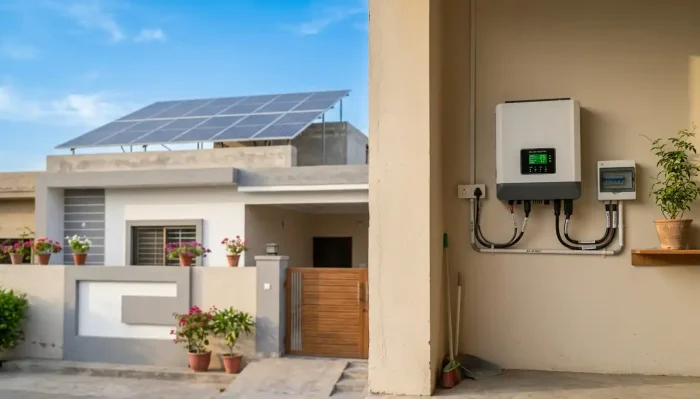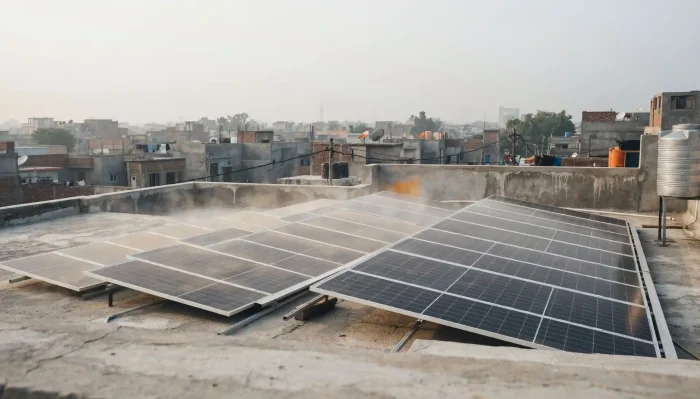
If your home uses 2,000 kWh of electricity each month, you will usually need about 25 to 35 modern solar panels, depending on panel wattage, sunlight, and system losses. A practical system may fall around 14 to 17 kW in many Pakistan locations.
The exact number is not the same for every home. How Many Solar Panels Do I Need for 2000 kWh per Month depends on your daily energy use, peak sun hours, panel output, roof conditions, and inverter efficiency.
Quick Answer: How Many Solar Panels Are Needed for 2000 kWh per Month?
A monthly use of 2,000 kWh equals about 66.7 kWh per day.
For a well-designed system using modern high-wattage panels, a reasonable planning range is around 14 to 17 kW. With 550W panels, that means roughly 26 to 31 panels.
Here is a simple comparison:
|
Panel Wattage |
Panels for 14 kW |
Panels for 15 kW |
Panels for 17 kW |
|
400W |
35 |
38 |
43 |
|
450W |
32 |
34 |
38 |
|
500W |
28 |
30 |
34 |
|
550W |
26 |
28 |
31 |
|
580W |
25 |
26 |
30 |
|
600W |
24 |
25 |
29 |
These figures show the physical panel count. The final system should be sized from your location’s actual solar production, roof conditions, and expected losses.
For a Pakistan home, 550W to 600W monocrystalline panels can reduce the number of modules and the roof area needed.
How Much Electricity Is 2,000 kWh per Month?
The first step is to convert monthly consumption into daily use.
2,000 kWh ÷ 30 days = 66.7 kWh per day
Over a year, the same household would use the following:
2,000 kWh × 12 = 24,000 kWh per year
That is a high electricity load for a typical home. It may include several air conditioners, refrigerators, water pumps, washing machines, lighting, kitchen appliances, and other heavy loads.
This number also tells you why a small solar system will not be enough. A 2 kW system and a 2,000 kWh monthly requirement are very different things.
Your electricity bill is the best starting point. Look at your actual units used over the last 12 months instead of sizing the system from one unusually high or low month.
What Size Solar System Do You Need for 2,000 kWh per Month?
The basic sizing idea is simple:
Required solar capacity = Daily energy requirement ÷ usable daily solar production per kW
Peak sun hours help estimate daily production. But they are not the same as hours of daylight.
A solar panel rated at 550W does not produce 550W for every hour the sun is above the horizon. Output changes with sunlight, heat, dust, shading, panel angle, inverter efficiency, wiring, and other losses.
A useful planning approach is to include a system performance factor rather than assuming perfect output.
For example, suppose a site receives about 5 peak sun hours and the system has an effective performance factor of 80%.
A 1 kW solar array would produce roughly:
1 kW × 5 hours × 0.80 = 4 kWh per day
To cover 66.7 kWh:
66.7 ÷ 4 = 16.7 kW
That gives a planning size of about 17 kW.
At a location with stronger solar production, the required capacity may be lower. At a site with shade, dust, high heat, or a weaker solar resource, it may need to be higher.
The Global Solar Atlas provides location-based PVOUT and solar-resource data that can be used for more detailed site assessment.
How to Calculate the Number of Solar Panels
Once you know the required solar capacity, calculating the number of modules is easy:
Number of panels = Required system capacity ÷ Panel wattage
For example, assume your design calls for 15 kW and you choose 550W panels.
First convert 550W into kilowatts:
550W = 0.55 kW
Then:
15 ÷ 0.55 = 27.27
You cannot install 27.27 panels, so you round up.
Required panel count = 28 panels
Twenty-eight 550W panels provide the following:
28 × 550W = 15,400W
That gives a DC array of 15.4 kWp.
The inverter does not need to match the panel array watt-for-watt. Proper DC-to-AC sizing depends on the inverter’s input limits, voltage range, string design, local conditions, and the desired production profile.
How Peak Sun Hours Affect a 2,000 kWh Solar System
Two homes can use exactly 2,000 kWh per month but need different solar capacities.
The reason is solar resources.
Peak sun hours are a way of expressing the amount of usable solar energy available during a day. They do not mean the sun shines at full panel rating for that entire period.
Three simple planning cases show the difference:
|
Solar Resource |
Approx. Effective Output for 1 kW* |
Approx. Capacity for 66.7 kWh/day |
|
Lower |
3.5 kWh/day |
19.1 kW |
|
Average |
4.0 kWh/day |
16.7 kW |
|
Strong |
4.5 kWh/day |
14.8 kW |
*Illustrative planning values after allowing for normal system losses. A proper design should use site-specific solar data.
This is why a calculator that gives every homeowner one fixed panel count can be misleading.
Solar irradiance, climate, temperature, shading, roof orientation, tilt angle, dust, and system design all affect solar generation.
Does Panel Wattage Change How Many Panels You Need?
Yes, but it changes the number of physical panels, not the energy target.
Suppose your design needs 15 kW.
With 400W modules:
15,000 ÷ 400 = 37.5
You need 38 panels.
With 600W modules:
15,000 ÷ 600 = 25
You need 25 panels.
The higher-wattage option can save roof space. But panel dimensions, inverter compatibility, string voltage, current limits, and available roof layout still matter.
Do not choose a panel only because it has the highest watt rating. A good system uses compatible equipment and makes efficient use of the available roof.
Read More: How Many Solar Panels Are Required for a 1.5 Ton AC?
How Many Solar Panels Do You Need for 2,000 kWh per Month in Pakistan?
Pakistan has strong solar potential, but production still varies by city and season.
For planning, the following comparison shows how location can affect a 15 kW-class system using 550W panels:
|
City |
Typical Solar Resource* |
15 kW Array |
550W Panels |
|
Islamabad |
Good |
15 kW |
28 |
|
Lahore |
Good |
15 kW |
28 |
|
Karachi |
Strong |
15 kW |
28 |
|
Peshawar |
Good to strong |
15 kW |
28 |
|
Quetta |
Strong |
15 kW |
28 |
|
Multan |
Strong |
15 kW |
28 |
*City-level figures are planning ranges, not a guarantee of monthly production. Roof direction, shading, weather, temperature, soiling, equipment, and season can change actual output.
The panel count stays the same because the example fixes the array at 15 kW. What changes is how much energy that array can produce.
For a real project, use location-based PVOUT data and a site survey instead of relying on a city average. The Global Solar Atlas offers PV power potential maps and downloadable solar-resource data for countries and regions.
This local approach is more useful than applying a U.S. state-based solar estimate to a Pakistani home.
How Much Roof Space Is Needed for 2,000 kWh per Month?
Roof space depends on the panel size and panel count.
A modern 550W or 600W module can be around 2.3 to 2.6 square metres, depending on its exact dimensions.
For example, 28 panels with an average surface area of 2.5 square metres would occupy:
28 × 2.5 = 70 square metres
That is only the panel surface.
The actual installation area must also allow for:
- access paths
- mounting structure
- roof edges
- water tanks
- skylights
- parapet walls
- maintenance space
- shadows from nearby buildings
- spacing between arrays
A roof survey is important before ordering equipment.
A high-wattage panel may help when the roof is small. A lower-wattage panel can sometimes fit better around roof obstacles.
What Factors Can Increase the Number of Panels?
Your final panel count can increase when the site has poor conditions.
Common causes include:
- Partial or heavy shading
- Dust and dirt on modules
- High operating temperatures
- Poor roof orientation
- Incorrect tilt angle
- Inverter losses
- DC and AC wiring losses
- Weak solar resource
- Seasonal changes
- Panel degradation
- Limited usable roof area
Heat matters because solar modules lose power as their cell temperature rises above the rated test condition.
Dust also matters in Pakistan. Regular cleaning can help maintain output, especially in areas with high dust or pollution.
A system should be designed for real operating conditions rather than perfect laboratory conditions.
Is a 2 kW Solar System Enough for 2,000 kWh per Month?
No. This is one of the most important points to understand. kW measures power capacity. kWh measures energy used or produced over time.
A 2 kW solar system is a small array compared with the system normally required to offset 2,000 kWh of monthly consumption.
This also answers the search query how many solar panels required for 2kw.
For example, a 2 kW array could use:
- 5 × 400W panels
- 4 × 500W panels
- 4 × 550W panels, with 2.2 kW total capacity
- 4 × 600W panels, with 2.4 kW total capacity
But that does not mean such a small array can produce 2,000 kWh every month.
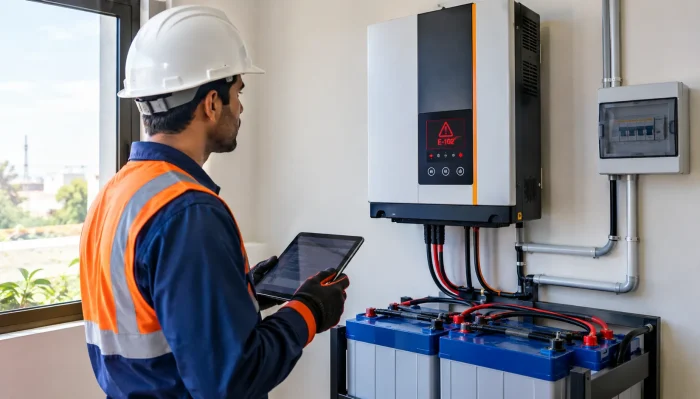
What Solar System Components Are Needed for 2,000 kWh per Month?
A complete solar system for this level of energy use normally includes more than panels.
The main components are:
Solar panels: Convert sunlight into DC electricity.
Solar inverter: Converts DC power into usable AC power and manages system operation.
Mounting structure: Holds the modules at the correct position and angle.
DC and AC cables: Carry electricity between the array, inverter, and electrical system.
Protection equipment: Includes breakers, isolators, surge protection, and related safety devices.
Earthing: Helps protect equipment and people from electrical faults.
Monitoring system: Tracks solar production and system performance.
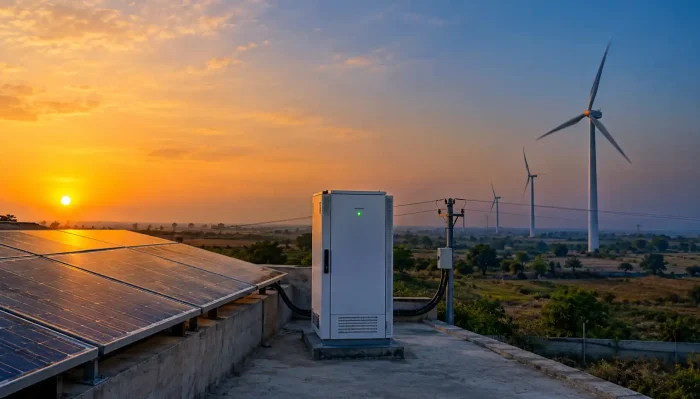
Battery: Optional for backup and energy storage.
For a large system, string design and inverter selection become important. A qualified installer should check panel voltage, current, MPPT ranges, cable sizes, and protection ratings before installation.
What Is the Best Solar Panel Size for a 2,000 kWh Monthly Requirement?
For many new projects, 550W to 600W panels are a practical starting point.
Higher-wattage panels can provide:
- fewer modules
- less roof surface
- fewer mounting points
- simpler array layouts
Lower-wattage panels can still make sense when:
- roof sections are small
- there are many obstacles
- panels must fit around existing structures
- the chosen inverter has specific string requirements
Current Pakistan market listings show wide price differences between older stock, standard A-grade modules, and premium N-type or bifacial panels. Recent 2026 listings put many 550W panels roughly in the PKR 15,000 to PKR 30,000 range, depending on brand, technology, grade, and supplier. Prices change often, so treat these as planning figures rather than a quotation.
A 15 kW system also needs an inverter, mounting structure, cables, protection, labor, and other balance-of-system items. Recent Pakistan market estimates place complete 15 kW on-grid systems around PKR 1.45 million to PKR 1.8 million, while battery-based systems can cost much more. Actual pricing depends on equipment brands, roof structure, battery size, and site work.
Get the Right Solar System for Your Actual Usage
A 2,000 kWh monthly bill is large enough that guessing the system size can become an expensive mistake.
Progressive Ventures designs solar systems around energy use, site conditions, equipment selection, and expected production. The company provides solar solutions for residential and commercial customers and offers site assessment, system design, installation, and net-metering support.
If you are ready to size your system, explore Solar Panel Installation or request a site-specific solar assessment from Progressive Ventures. A proper design can tell you the panel count, inverter size, roof area, expected production, and estimated project cost before you buy equipment.
Frequently Asked Questions
How many solar panels for 2000 kWh per month?
Most homes require between 24 and 36 high-efficiency solar panels, depending on panel wattage and sunlight availability.
How many solar panels to produce 2000 kWh per month?
A solar system sized between 14 kW and 16 kW can typically generate around 2,000 kWh per month under favorable conditions.
Is a 15 kW solar system enough for 2000 kWh per month?
Yes. In many sunny locations, a properly designed 15 kW system can produce between 1,800 and 2,300 kWh per month.
How much roof space is needed for a 2000 kWh per month solar system?
Most installations require approximately 600–1,000 square feet of usable roof space.
Should I install batteries with my solar system?
Battery storage is beneficial for backup power and increased energy independence, but a grid-tied system may be sufficient if net metering is available.
What affects solar panel output?
Solar panel output depends on sunlight hours, panel efficiency, roof orientation, shading, weather conditions, and overall system design.