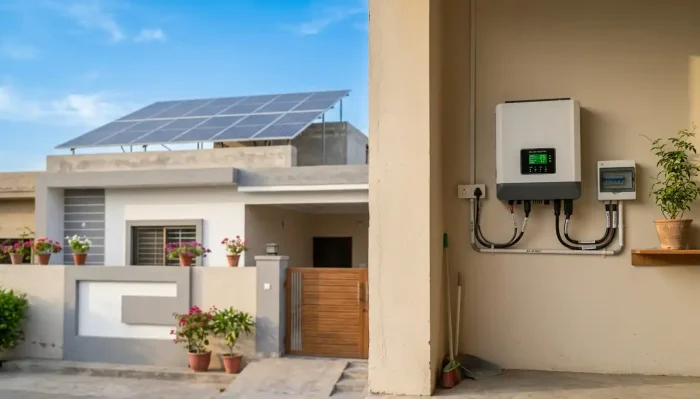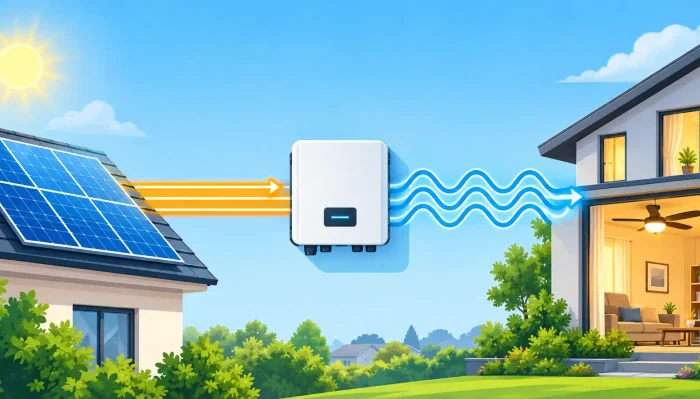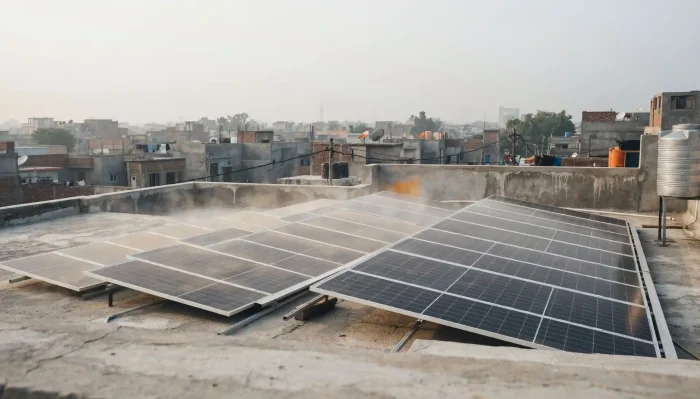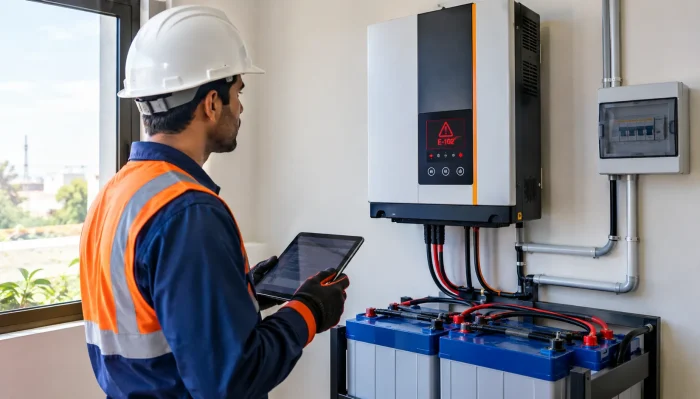
If you have a medium-sized home, a 6 kW solar system can be the best option for you. It is powerful enough to provide electricity to the bulk of your household appliances, along with giving some cost savings on electricity bills. But, before getting them installed, the question that all homeowners would like to know is, how many 6 kW AC solar units can handle? The answer is contingent on several variables, such as the type of your AC unit, other household appliances used at that moment, sun intensity at your location, and the solar panel system design.
Well, a decently sized 6 kW solar system can easily power 2 inverter ACs in a 24-hour day, especially when the sun has its maximum intensity. In some cases, with lower AC power consumption and optimal energy load management of other appliances, a 6kw system can also power three of them. Nevertheless, it is always better to know the exact power draw of AC units that you are planning to use with the solar system.
Understanding the Capacity of a 6kW Solar System
With your solar panels in perfect condition, a 6 kW solar system can produce as much as 6000 watts per hour. Now, it appears the rest is just straightforward extrapolation from that, but that is not to say it should produce exactly 6kW on an average day! Solar power fluctuates from hour to hour thanks to the strength of your sunlight (cloudy day = less power), your country’s weather patterns, the angle of your panels and their temperature, and not to mention the equipment that actually does the hard work.
So, under optimal circumstances, especially at noon in times of bright sunlight, your panel setup is estimated to yield close to the nominal value; conversely, at 6 AM, 6 PM, or during a dark and overcast day, production would naturally be lower.
Thus, solar homeowners should keep an eye on the estimate but make a realistic inference that 6 kW cannot solely cover it every hour of the day; a solar system’s 6 kW load capacity can be computed by calculating the wattage (energy) of an inverter combined with its interconnected appliances. Solar panels generate watts, whereas the wattage capacity of an inverter shows the number of watts it can provide and hence calculates how much wattage an appliance draws.
Energy consumption of the AC
That all depends on the tonnage and type of AC you are going to run. Current inverter ACs draw significantly less power than traditional non-inverter ACs because they aren’t shutting the compressor off entirely to get a temperature and are instead adjusting the 27 speed of it.
To give you an idea of how much energy a regular inverter AC uses:
- 1 ton: approx. 700 to 1,200 watts.
- 1.5 ton: Potentially 1,000 – 1,800 watts.
- 2-ton: approximately 1,500 to 2,500 W.
Note: these values are very general and are dependent on how cool you want the room to be, how well insulated your house is, the outside weather temperature, etc. When the air conditioner is running for the first time to bring the room to the desired temperature, it takes considerably more electrical energy compared to just keeping the room at a certain temperature. The air conditioner’s specification label on your air conditioner will be a much more accurate figure than these.
How Many ACs Can Run in a 6 kW Solar System?
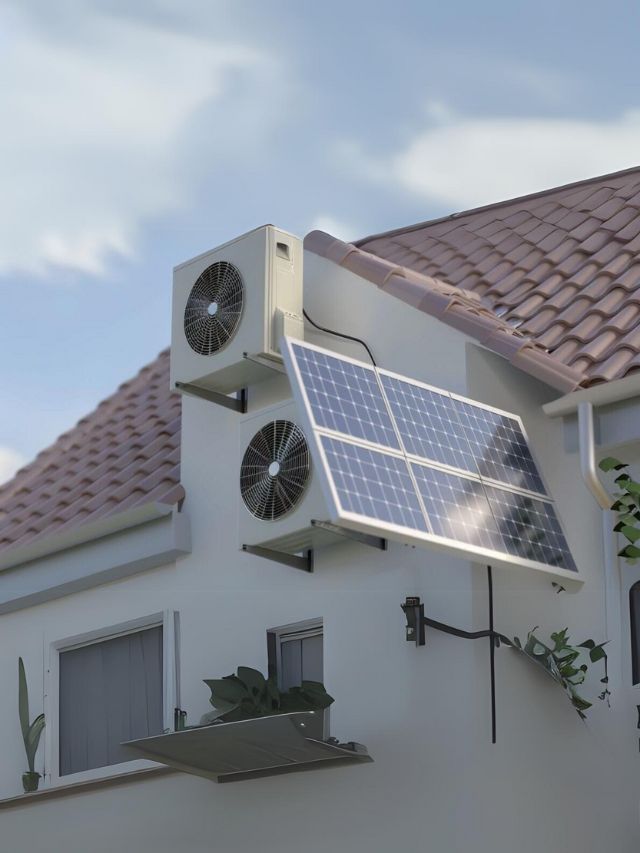
Two 1.5-ton inverter AC units and a few important loads would run most households smoothly with a 6Kw system. Highly efficient air conditioners in their relaxed state should allow running a few smaller loads, too. It is even possible to run 3 AC units if the latter are 1-ton inverters and are working at lower capacities during a decent solar power production time, but this leaves no headroom in the system for a refrigerator, fan lights, a water pump, a television, and so on.
Thus, the question of how many ACs can be run on a 6 kW solar system cannot be answered just by numbers; a solar panel installer must calculate the electrical load against the 6 kW system designed.
Running 2 efficient 1.5-ton inverter ACs would be fine for a 6 kW installation.
Estimated AC Load on a 6 kW Solar System
See the following case for how the AC pairings might impact the usable system capacity.
| Air Conditioner Combination | Estimated Power Consumption | Suitable for a 6kW System? |
| One 1.5-ton inverter AC | 1,000–1,800 watts | Easily manageable |
| Two 1.5-ton inverter ACs | 2,000–3,600 watts | Generally suitable |
| Three 1-ton inverter ACs | 2,100–3,600 watts | Possible with load management |
| Three 1.5-ton inverter ACs | 3,000–5,400 watts | Limited capacity for other loads |
| Two 2-ton inverter ACs | 3,000–5,000 watts | Possible but requires careful management |
Note that the numbers above and below represent estimates and not actual consumption rates. Your AC model and in-home appliances’ consumption will determine the true calculation, so reach out to a solar installer.
Read More: Can We Run AC on a Lithium Battery?
6kW Solar System Load Capacity in Pakistan
The load-carrying capacity (based on Pakistan’s 6 kW solar system) is dependent on whether you want an on-grid, off-grid, or hybrid solar system. Similarly, load is also determined by the appliances used by consumers, as many homes use air conditioners during summer, when on-grid efficiency of solar is high during the daytime.
It is generally a medium-sized household that has enough space for a 6 kW solar load, and if it contains inverter A/Cs, fridges, fans, LEDs, televisions, and other moderate electrical appliances, 6 kW solar is often ideal for household power usage. However, if you use large appliances and equipment of high wattage, like electric geysers, Irons, OVENS, large water pumps, or any other such appliances, that will reduce the overall efficiency of the system.
Can a 6kW Solar System Run ACs and Other Appliances?

Of course. A 6KW solar system can power AC and other household appliances too. Provided your electrical loads can stay within your inverter’s operational capabilities.
If you can imagine, two economical inverter ACs running under normal conditions together will use approximately 3,000W of power in total. If your ACs are running now, about 3,000W will remain, which can power some other home appliances during the high sun-producing hours. However, production and usage are a changing cycle. You might be using that residual 3,000 W.
- Refrigerators
- Ceiling fans
- Television
- Laptops/computers
- Microwave ovens
- Other such smaller kitchen appliances, etc.
However, use heavy power-consuming appliances with some care. An electric iron, a water pump motor, a microwave, two such ACs together, etc. When used together, they will momentarily drive the cumulative power load near/exceed the practical limits.
Why Inverter ACs Are Better for a 6kW Solar System
Best AC Unit for Solar Panel: Inverter ACs tend to suit solar well, as inverter air conditioners have a variable-speed compressor. Instead of the air conditioner’s compressor turning off and turning back on each time it switches into a ‘high power’ cycle, it just simply changes its electricity usage, corresponding with cooling demands, and once the set cooling temperature has been achieved, the inverter AC’s consumption level tends to plateau more than a non-inverter air conditioner; therefore, you may be surprised with how little power your AC is consuming whilst running, even as compared to its full rated consumption.
If a house is aiming to run several ACs on solar, then buying ‘energy efficient’ inverter ACs is absolutely recommended. The AC efficiency is crucial to how well the solar power system will manage the home power use.
Understanding 6 kV and 6 kVA Solar System Load Capacity
Homeowners often search for 6 kVA solar system load calculations, but we will enlighten you about what these differences are in electrical measurement units; we’ll be using kilowatts.
However, regarding the 6 kVA solar system load calculation, it all depends on the inverter’s power factor. The kVA unit may not mean real output. A 6 kVA can perform less or more than 6 kW when in operation, depending on the type of technology and the performance your inverter design has. To avoid confusion regarding your chosen solar system appliances, it is always best for you to compare and identify the power consumption.
Factors That Affect How Many ACs Can Run
The number of ACs that can effectively run on a 6kW system depends on several key factors:
AC Capacity and Energy Efficiency
Every AC has its own tonnage (cooling capacity) and efficiency rating. Two 1.5-ton inverter ACs will use less energy when run simultaneously if they are more efficient than other ACs you might choose that are smaller in capacity. To get an even more precise estimate, check the actual input power of the specific models you intend to purchase. This is usually printed on a label on each machine or listed in their respective product data sheets from the manufacturers.
Other Household Electrical Loads
Remember, you also use many other electrical appliances, such as refrigerators, fans, lights, pumps, kitchen equipment, and other items, on a daily basis. While the system’s wiring may be capable of supporting three or four ACs, you might still encounter issues if several other power-hungry appliances are running simultaneously with the air conditioners. It’s always important to calculate the total load that must be supported by the system, which includes the usage of everything you turn on at home.
System Type and Battery Capacity
The kind of system you have in place plays a role too. On-grid systems will use solar power while it’s being generated and use or provide grid energy as per applicable regulations, while hybrid systems combine solar panels, batteries, and grid usage.
Is a 6kW Solar System Enough for Your Home?
When 6kW Works Well
A 6kW system is usually a good fit if:
- Your ACs are inverter models
- Most of your AC use happens during daylight hours
- Your simultaneous load stays managed and predictable
- You are not running several large appliances at the exact same time
When to Consider 8kW or 10kW
| System | Best Suited For |
| 6kW | Moderate AC use plus normal household load |
| 8kW | Higher simultaneous AC load, 3 or more units |
| 10kW | Multiple larger ACs plus heavier household load |
Real 2026 pricing in Pakistan, for reference:
| System Type | Estimated Cost (PKR) |
| 6kW On-Grid | 900,000 to 1,300,000 |
| 6kW Hybrid (with battery) | 1,500,000 to 2,500,000+ |
| 8kW Hybrid | 2,000,000 to 3,200,000+ |
| 10kW Hybrid | 2,500,000 to 4,000,000+ |
Prices shift with panel brand, inverter quality, and battery type, so treat these as planning numbers, not a final quote. Pakistan also moved from net metering to net billing in 2026, with surplus units now bought back at a lower rate than before. That policy change directly affects how much you save by running ACs during the day versus exporting extra power, so it is worth checking current buyback rates through NEPRA before you finalise your system size. For a broader look at how solar output is measured worldwide, the IEA’s solar PV data is a solid reference point.
If your home falls into the 8kW or 10kW range, or you just want a proper load audit before buying anything, our team at Progressive Ventures can walk through your actual appliance list and recommend the right size. A correctly sized system, backed by professional Solar Panel Installation, saves you from the common mistake of buying too small and regretting it by the second summer. Reach out for a free load assessment before you commit to a system size.
Conclusion
If you’re looking to save money on your utility bills and plan to use air conditioners, a 6kW solar system may be right for you. Typically, two energy-efficient inverter AC units will run nicely when the sun is shining well. However, you might be able to power three, especially smaller units, or very efficient units if you plan it right.
How many ACs you can power depends on many factors, such as the efficiency of your ACs, the capacity of your inverter, how much energy your solar panels are generating, and whatever other devices you’re using. Your best course of action should be to figure out your total electrical demand as a whole, rather than concentrating solely on how many ACs will be running at any given time, and have a load assessment done professionally by someone in the solar industry!
FAQs
How many AC can run in a 6kW solar system?
A 6kW solar system can usually run 3–5 inverter AC units during peak sunlight hours, depending on AC capacity, solar production, and other electrical loads.
How many AC can run on 6kW solar system at night?
Nighttime AC operation requires batteries. The number of AC units depends on battery capacity and backup requirements.
What is the 6kW solar system load capacity?
A 6kW solar system can provide up to 6,000 watts of power output depending on inverter capacity and operating conditions.
Can a 6kW solar system run a 2-ton AC?
Yes, a 6kW solar system can run a 2-ton inverter AC, but the number of additional appliances should be considered.
What is the 6kW solar system price in Pakistan?
The price varies depending on solar panels, inverter brand, batteries, and installation requirements. Generally, on-grid systems cost less than hybrid systems.
Can a 6kW solar setup work for three AC units?
Three units of efficient inverter-type AC can perhaps be powered when their consumption does not exceed the maximum output that has been generated by the system. All other electricity-dependent applications within the household may also need to be rationed.
At what time of night can a 6kW solar system run AC units?
Solar does not generate any power in the dark of night. However, your home may be able to run ACs after sunset if it is a hybrid system that requires batteries for solar storage.
How can I measure the solar system capacity that I need for running my air condition units?
You have to ensure you determine what each air conditioner’s actual wattage consumption is, in conjunction with every additional electrical appliance that would make use of the solar power. To know your precise solar panel system requirements, you must calculate all usage precisely and arrange a solar load capacity estimation that professionals will handle.