Electricity powers nearly every aspect of modern living, from lighting and cooling to cooking and entertainment. Whether you’re applying for a new electricity connection, planning a solar installation, or simply trying to understand your home’s energy needs, one common question arises: How much kW is required for a house?
The answer depends on several factors, including the size of your home, the number of occupants, and the appliances you use daily. Understanding your household’s electricity demand can help you choose the right connection size, avoid overloading your electrical system, and make informed decisions about energy efficiency.
In this guide, we’ll explain how many kilowatts are needed for a house, how to calculate your home’s electricity load, and what Pakistani homeowners should consider when determining their energy requirements.
Understanding What kW Means in Home Power Planning
A kilowatt is the unit of electrical power your home requires at a given moment. It reflects the total amount of electricity your appliances can consume when used at the same time. Your average home power usage can be known when you calculate your active appliances along with their wattage.
When homeowners ask How Much kW Is Required for a House?, they are basically asking for the ideal size of electricity supply needed to run their lifestyle smoothly without interruptions or overload.
What Does kW Mean in Household Electricity?
Before calculating your home’s electricity needs, it’s important to understand what a kilowatt (kW) is.
A kilowatt is a unit of power equal to 1,000 watts. It measures the rate at which electricity is being used at a given moment.
For example:
- 1 kW = 1,000 watts
- A 100-watt light bulb uses 0.1 kW
- A 1,500-watt air conditioner uses 1.5 kW
Electricity providers use kW to determine the maximum load your electrical connection can handle. This makes understanding kilowatt requirements essential for homeowners.
kW Requirement for Different Types of Homes
Every home has a different structure and appliance density. This table gives a clear idea based on common usage patterns.
Typical Home Power Requirement Table
| Home Size | Common Appliances | Expected Load kW | Suitable Solar Size | Lifestyle Fit |
| Small Home | Fans, light, a fridge, TV | 3 to 4 kW | 3 to 5 kW | Light usage |
| Medium Home | AC fridge lights motors | 5 to 8 kW | 5 to 10 kW | Moderate usage |
| Large Home | Multiple AC oven motors | 10 to 15 kW | 10 to 15 kW | High usage |
| Villa | Luxury appliances with full automation | 15 to 25 kW | 15 to 25 kW | Heavy demand |
| Farm House | Pumps heavy cooling systems | 20 to 30 kW | 20 to 30 kW | Very high demand |
Small and Medium Homes Power Requirement
Small homes normally require between 3 and 4 kW. Their household electricity consumption is low due to fewer appliances, simple living habits and limited use of cooling devices.
Medium homes require between 5 and 8 kW. Their average home power usage increases due to multiple rooms and usage of ACs, along with electric motors and kitchen appliances.
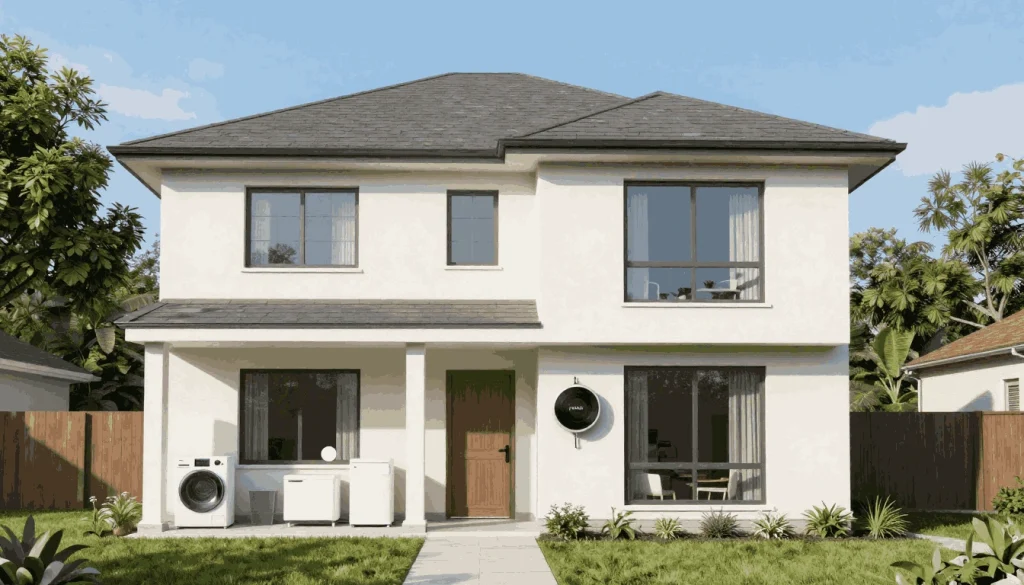
Large Homes and Villas Power Requirement
Large homes need between 10 and 15 kW because they have more air conditioners, larger fridges and entertainment devices. Their solar system size for the home also increases accordingly.
Villas require even more due to luxury appliances. When calculating how to calculate load for a house, you should also consider swimming pool pumps, security systems and central cooling, which increase the demand.
Understanding kW, kWh, and Why They Matter
Before calculating anything, it’s important to understand basic electricity terms.
- kW (kilowatt): Measures power (instant usage)
- kWh (kilowatt-hour): Measures energy consumption over time
Example:
If you use a 1 kW appliance for 1 hour, it consumes 1 kWh (1 unit) of electricity.
This is exactly what your electricity bill shows — units consumed.
Average Household Electricity Consumption in Pakistan
Electricity usage varies depending on house size, appliances, and lifestyle. However, we can estimate average usage:
Typical Monthly Consumption
| House Size | Units/Month | Daily Units | Estimated kW |
|---|---|---|---|
| 3 Marla | 200–300 | 7–10 | 2–3 kW |
| 5 Marla | 300–500 | 10–16 | 3–5 kW |
| 10 Marla | 500–800 | 16–27 | 5–8 kW |
| 1 Kanal | 800–1500 | 27–50 | 8–15 kW |
These numbers increase significantly when using multiple air conditioners.
Step-by-Step: How to Calculate kW Required for Your House
This is the most important part of the guide.
Step 1: List All Appliances
Make a list like this:
| Appliance | Quantity | Watts | Total Watts |
|---|---|---|---|
| Fans | 5 | 100 | 500 |
| Lights | 10 | 20 | 200 |
| AC | 1 | 1500 | 1500 |
| Fridge | 1 | 300 | 300 |
| TV | 1 | 100 | 100 |
Total Load = 2600 watts
Step 2: Convert to kW
2600 watts ÷ 1000 = 2.6 kW
Step 3: Add Safety Margin
Always add 20–30% extra for future appliances and peak usage.
Final Requirement = 3.2 – 3.5 kW
Solar System Size for Home
Now that you know your kW requirement, you can calculate the solar system size.
Simple Formula:
Daily Units ÷ Sunlight Hours = Required Solar kW
In Pakistan, average sunlight = 5 hours/day
Example:
- Daily usage = 20 units
- 20 ÷ 5 = 4 kW solar system
Factors That Affect kW Requirement
1. Air Conditioners
Air conditioners are the largest contributors to electricity consumption in most homes. A single AC unit can increase your load by approximately 1.5 kW, depending on its size and efficiency. Homes with multiple ACs will require a significantly higher kW capacity.
2. Usage Time
The longer you run your appliances, the more electricity you consume. For example, running an appliance for 10 hours instead of 5 hours will double its energy usage. Daily habits play a major role in determining your total kW requirement.
3. Appliance Efficiency
Energy-efficient appliances consume less power:
- LED lights use very little electricity
- Inverter appliances reduce overall consumption
- Older appliances tend to consume more energy
Upgrading to efficient devices can significantly reduce your total load.
4. Battery Backup
If you want backup during load shedding, your system must support additional load for batteries. This increases the total kW requirement because the system needs to store and supply extra energy.
5. Weather Conditions
Solar system performance depends on sunlight availability. During cloudy or rainy weather, energy production decreases. To maintain consistent power, a slightly higher system capacity is recommended.
Electricity Load Calculator in kW for Home
Calculating your household load is easier than many homeowners realise.
Step 1: List All Appliances
Create a list of the appliances you use regularly and note their wattage ratings.
| Appliance | Average Wattage |
| Refrigerator | 300 W |
| LED TV | 150 W |
| Air Conditioner | 1,500 W |
| Washing Machine | 500 W |
| Lighting | 200 W |
Step 2: Add the Total Wattage
Assume the following appliances operate simultaneously:
- Refrigerator: 300 W
- Air Conditioner: 1,500 W
- TV: 150 W
- Washing Machine: 500 W
- Lighting: 200 W
Total Load = 2,650 W
Step 3: Convert Watts to Kilowatts
Use the following formula:
kW = Total Watts ÷ 1,000
Example:
2,650 ÷ 1,000 = 2.65 kW
Step 4: Add a Safety Margin
Electrical experts often recommend adding a 20–30% buffer to accommodate future appliances and prevent overloading.
In this example:
2.65 kW + 30% = approximately 3.5 kW
This means a 3–5 kW connection would likely be suitable.
kW vs Solar Panels – Quick Guide
- A 1 kW system requires approximately 3–4 solar panels
- A 5 kW system requires approximately 15–20 panels
- A 10 kW system requires approximately 30–40 panels
How Much kW Does a Typical House Really Need?
A typical home usually requires 5 to 8 kW, depending on appliance count and timing of usage. Homes with multiple ACs may require 10 kW or more. This depends heavily on household electricity consumption throughout the day.
Most families prefer a solar system that offers stability, comfort and long-term savings. This is why choosing the correct solar system size for the home is essential for smooth daily operations.
What If You Want Backup Power?
If your area faces long power disruptions, you must add a battery backup. The battery size should match your total connected appliances and your average home power usage during outages.
Backup systems increase the total cost but offer unmatched comfort, making them a valuable investment.
What Affects the Final Required kW?
Many factors influence the total requirement, such as
- Number of AC units
- Duration of appliance usage
- Size of home
- Working hours at home
- Seasonal changes
- Future load expansion
Your final calculation of how much kW is required for a house must combine all of these factors, including appliance load, usage time, efficiency, and future energy needs, to ensure accurate results.
A proper assessment helps you choose the right system size, avoid unnecessary costs, and maintain consistent energy performance in your home.
In addition, working with a professional solar installation can significantly improve system performance. Experts conduct detailed load analysis, assess your roof and sunlight conditions, and design a system that maximises efficiency and long-term savings.
By combining accurate calculations with expert guidance, you can ensure your solar system operates at its full potential while meeting your household energy needs effectively.
Final Thoughts
Understanding How Much kW Is Required for a House helps you manage energy wisely and plan future upgrades with confidence. When you evaluate your household electricity consumption and match it with the right solar plan, you ensure comfort savings and long-term reliability for your home. Our team helps you determine the perfect solar system size for your home, for your specific needs.
If you need professional help, simply reach out through our contact us option. Our experts guide you based on your average home power usage and provide the most suitable system without confusion. Whether you want solar installation, wind energy or hydropower energy solutions, we deliver the complete package with reliability and trust.
FAQs
What is the ideal kW for a small home?
A small home usually needs around 3 to 4 kW, depending on appliances.
What size system does a medium home need?
A medium home typically needs 5 to 8 kW based on regular usage.
Does AC usage increase my kW requirement?
Yes, ACs significantly increase your kW requirement because they consume high power.
How do I know the exact kW needed?
You can calculate it by checking your connected load and simultaneous usage.
Is solar a good choice for reducing home power costs?
Yes, solar reduces monthly bills and provides long-term savings.
Can I expand my solar system later?
Yes, most systems allow expansion if your future power needs increase.