Yes, solar can power a telecom tower. Solar systems for telecom towers combine panels, batteries, and a controller to run base station equipment. They cut diesel use and keep sites online during grid outages. Progressive Ventures has worked in solar installation for 16 years, and this guide covers what operators should know before planning a site.
What Are Solar Systems for Telecom Towers?
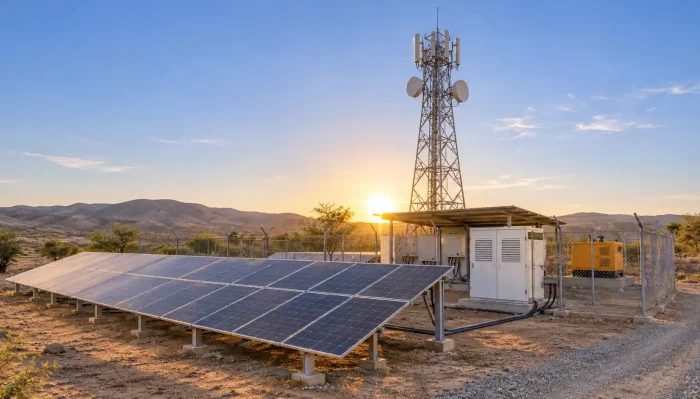
A telecom tower solar system turns sunlight into electricity for a base station. It feeds the radios, transmission gear, cooling, and site lighting. Most sites also keep a battery bank and a backup source, either the grid or a diesel generator.
Telecom solar power systems usually feed a 48 V DC bus, the standard voltage for most telecom equipment.
Why Do Telecom Towers Need Solar Power?
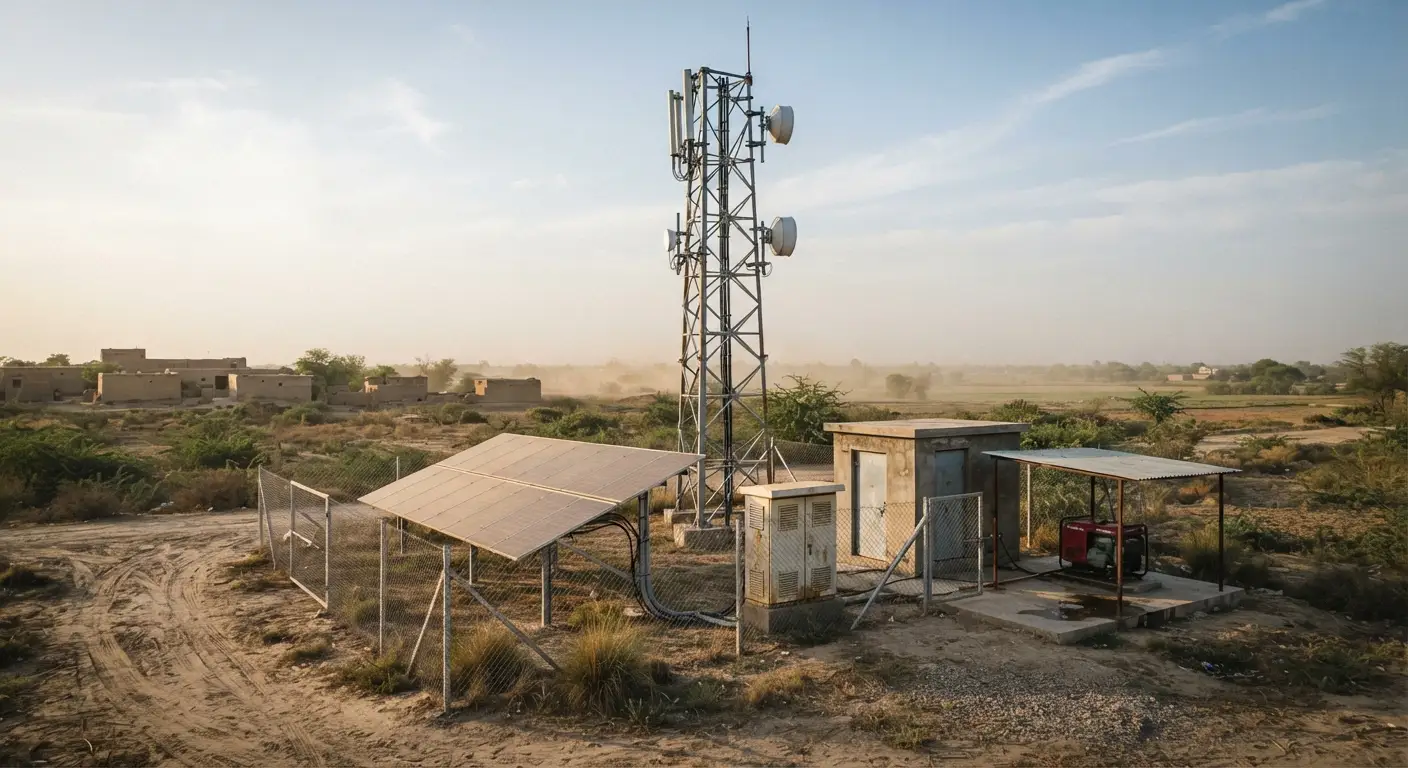
Towers need solar because fuel is costly, grids fail, and many sites are hard to reach.
Rising Electricity and Diesel Costs
A generator burns fuel every hour it runs. That fuel has to be trucked in, stored, and guarded against theft. Solar has no fuel bill once installed.
Uninterrupted Power Supply
Telecom equipment cannot tolerate gaps. Grid outages and load shedding are common in parts of Pakistan, so even a grid-connected site needs backup. Solar with batteries covers those gaps, and the generator starts only when the batteries run low.
Powering Remote Telecom Sites
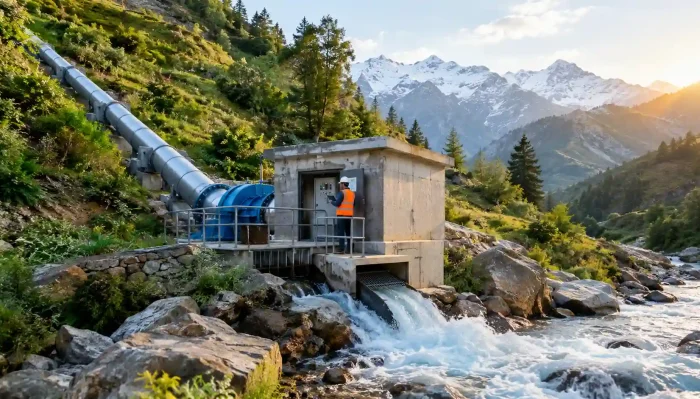
Towers in mountains, deserts, and rural districts often have a weak grid or none. Refueling trips there take hours. Solar lets these sites run with far fewer visits.
How Does a Solar Power System for Telecom Towers Work?
The system follows five steps:
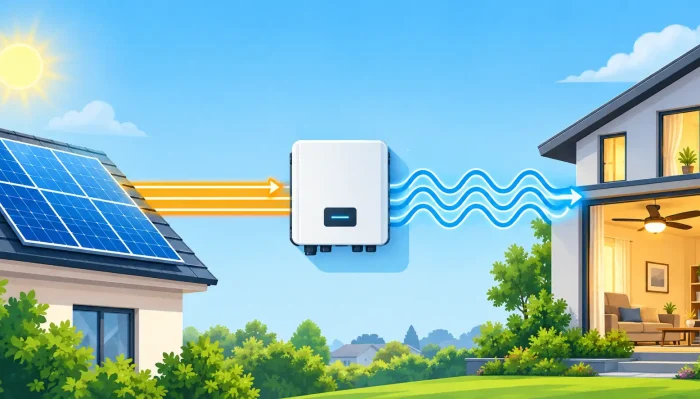
- Panels turn sunlight into DC electricity.
- A charge controller regulates that power and charges the batteries.
- Batteries store energy for nights and cloudy spells.
- Rectifiers or hybrid inverters supply the 48 V DC bus that runs the equipment.
- A site controller calls on the grid or generator only when solar and batteries cannot meet the load.
What Are the Main Components of a Telecom Tower Solar System?
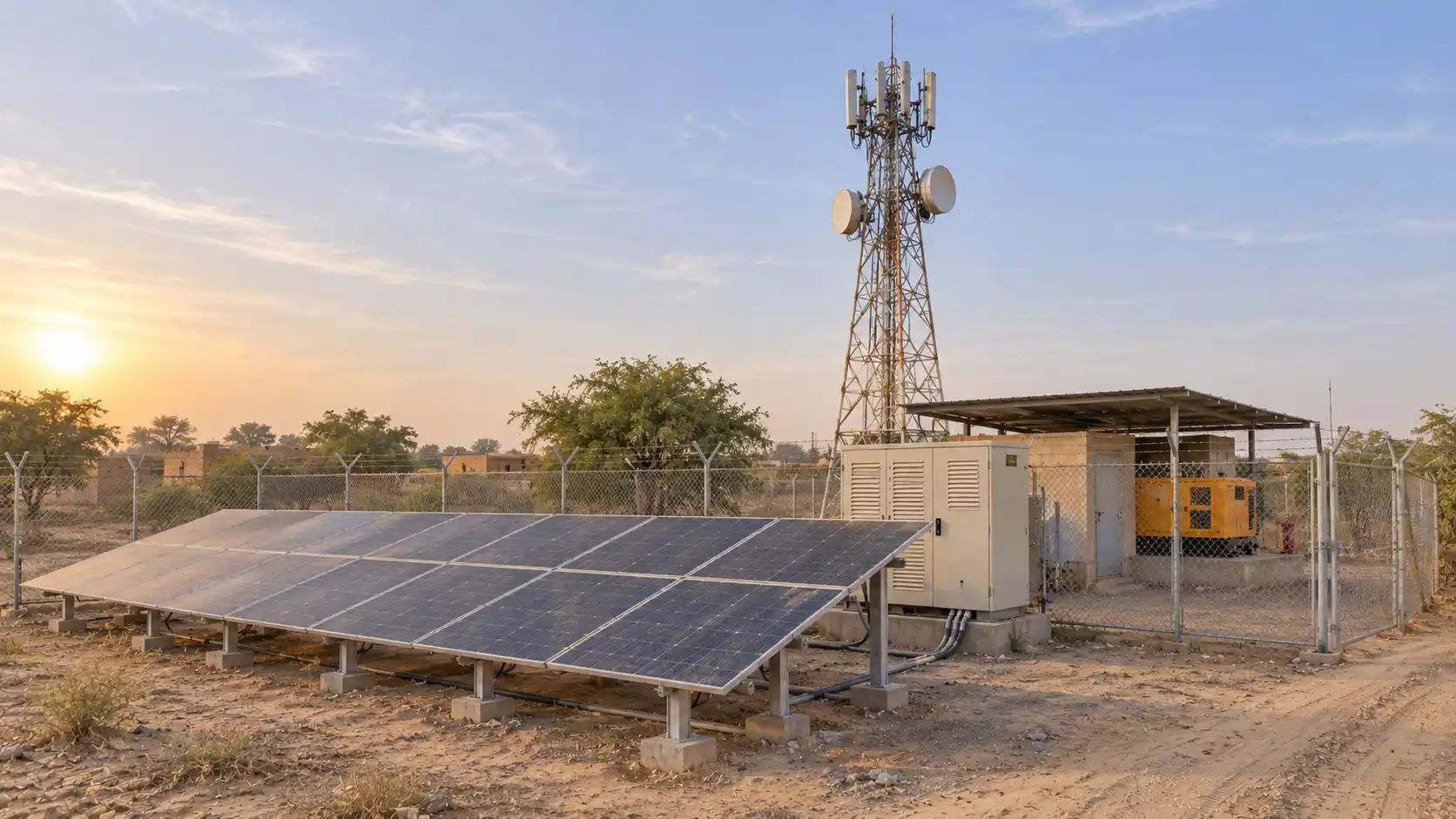
Solar Panels
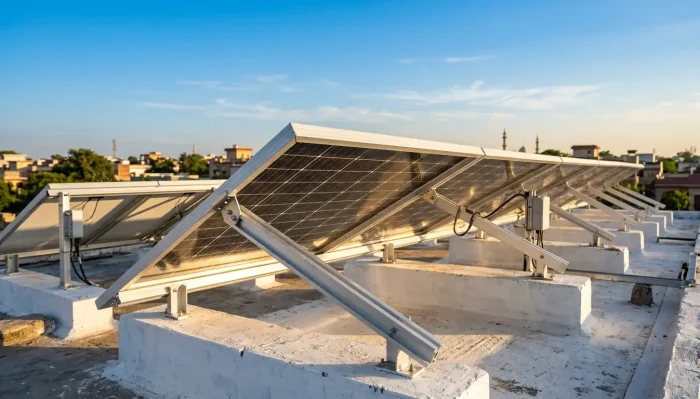
Panels sit on the ground, on a shelter roof, or on a frame near the tower. Tower sites are small, so monocrystalline panels are a common pick for their power per square meter.
Solar Charge Controllers
MPPT controllers track the best operating point of the array and usually collect more energy than older PWM units. They also protect batteries from overcharging.
Battery Storage Systems
Lithium iron phosphate (LiFePO4) batteries are widely used because they last longer and handle heat better. VRLA gel batteries cost less upfront but wear out sooner at hot sites.
Hybrid Inverters and Rectifiers
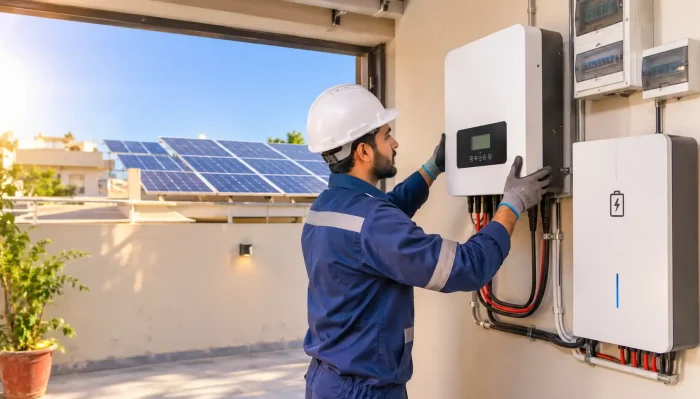
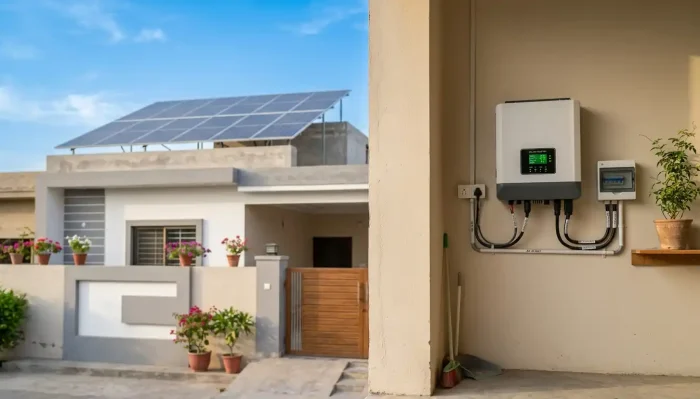
Rectifiers convert AC from the grid or generator into 48 V DC. Hybrid units manage solar, battery, and grid together.
Diesel Generators
The generator stays as last-resort backup. In a hybrid design it runs far less, so it needs fewer service visits.
Types of Solar Power Systems Used for Telecom Towers
| Type | Power sources | Best for | Main limit |
| Off-grid | Solar and battery | Sites with no grid | Needs larger storage |
| Grid-tied | Solar and grid | Sites with a stable grid | Needs batteries to ride through outages |
| Hybrid | Solar, battery, grid, generator | Most Pakistani sites | Higher design effort |
Off-Grid Solar Systems
Off-grid telecom tower solutions suit sites with no grid at all. They need enough panels and storage to cover several cloudy days.
Grid-Tied Solar Systems
A basic grid-tied system shuts down when the grid fails, so towers need batteries added.
Hybrid Solar Power Systems
Telecom tower hybrid power systems blend solar, batteries, the grid, and a generator under one controller. Solar and storage take the load first. The grid or generator steps in only when needed.
How to Calculate Solar System Requirements for a Telecom Tower?
The example below uses a 2 kW site load. Replace it with your own metered figures.
Calculate Daily Power Consumption
Multiply the load by 24 hours. A 2 kW load uses 48 kWh a day. Include cooling, which can be a large share at hot sites.
Determine Solar Panel Capacity
Divide daily energy by peak sun hours and system efficiency. With 5 peak sun hours and 75 percent efficiency, 48 ÷ (5 × 0.75) gives 12.8 kW. That is about 24 panels of 550 W.
Calculate Battery Backup Requirements
Pick the hours of backup you need. Twelve hours at 2 kW is 24 kWh. Divide by 0.8 for lithium’s usable depth of discharge, and you need about 30 kWh. Off-grid sites should add days of autonomy.
Consider Sunlight Hours and System Losses
Heat, dust, wiring, and shading all cut output. Most of Pakistan gets strong sunlight, but a dusty site loses real energy between cleanings.
What Are the Benefits of Solar Systems for Telecom Towers?
- Lower fuel and transport spending
- Fewer site visits and less fuel theft risk
- Longer generator life from reduced runtime
- Steadier power for network uptime
Solar Power Solutions for Telecom Towers in Pakistan
Solar power for telecom towers suits Pakistan because sunlight is strong across most regions and grid supply is uneven in many areas.
Solar Power for Remote Telecom Sites
Remote sites in Balochistan, Thar, and the northern areas gain the most. Access is hard and fuel runs are expensive. Solar and storage cut those trips sharply.
Solar and Diesel Generator Integration
Set the controller priority to solar first, battery second, generator last. Run the generator at a healthy load to recharge batteries, since diesel engines wear faster when they idle lightly loaded.
Battery Backup for Telecom Infrastructure
Size batteries for the longest outage a site actually sees, not the average. Summer heat above 45 °C in parts of Sindh and Punjab shortens battery life, so shade and ventilate the cabinets.
How Much Does a Solar System for a Telecom Tower Cost?
No honest single price exists, because every site differs. The main cost drivers are:
- Site load in kW
- Battery chemistry and hours of backup
- Distance and road access
- Mounting structure and monitoring features
Payback comes mostly from diesel saved. Sites with long generator runtimes recover their investment fastest. Ask for a quote based on a site survey and your metered load.
Installation and Maintenance Requirements for Telecom Tower Solar Systems
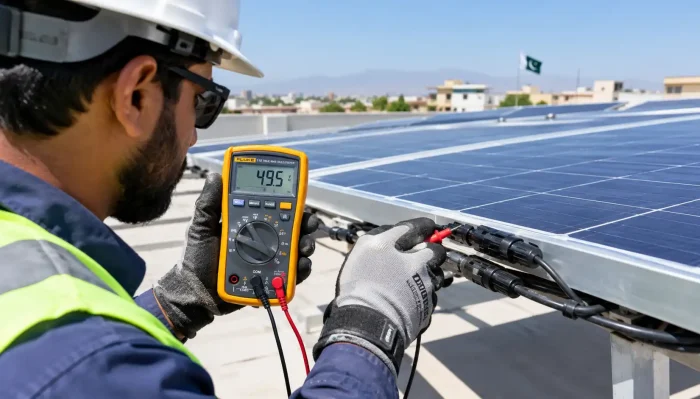
A site survey comes first. It checks shading, space, structure strength, and existing power gear. Good installation also needs proper earthing and lightning protection, since towers attract strikes.
Our team at Progressive Ventures recommends hiring an installer with telecom experience. Professional Solar Energy Installation should include commissioning tests and a generator switchover test.
Routine maintenance is simple:
- Clean panels on a set schedule
- Check connections and cables
- Review battery health and temperature
- Test controller switchover
How to Choose the Right Solar Solution for a Telecom Tower?
- Measure your real site load.
- Record how many hours the grid fails.
- Choose a battery for your site temperature and cycle needs.
- Ask for remote monitoring.
- Confirm earthing and lightning protection are in scope.
- Check the installer’s telecom track record.
Final Thoughts
Solar cuts fuel costs, keeps towers online, and makes remote sites easier to run. Start with a measured load, choose a hybrid design for most sites, and size batteries for real outages. Progressive Ventures brings 16 years of solar experience to telecom projects. Contact us today to plan a site survey for your towers.
FAQs
How many solar panels are needed to power a telecom tower?
A 2 kW load needs about 24 panels of 550 W. Your number changes with sunlight, losses, and panel size.
Can solar power run a telecom tower 24/7?
Yes, with enough battery storage. A generator or grid backup covers long cloudy spells.
What type of battery is best for telecom towers?
LiFePO4 suits most sites because of long life and heat tolerance. VRLA gel works where upfront cost matters most.
Can solar power replace diesel generators in telecom towers?
At many sites it replaces most generator runtime. Most operators still keep a small generator as backup.
How long do telecom tower solar batteries last?
Lithium batteries often last 8 to 10 years or more. VRLA batteries usually last 3 to 5 years, less in hot sites.