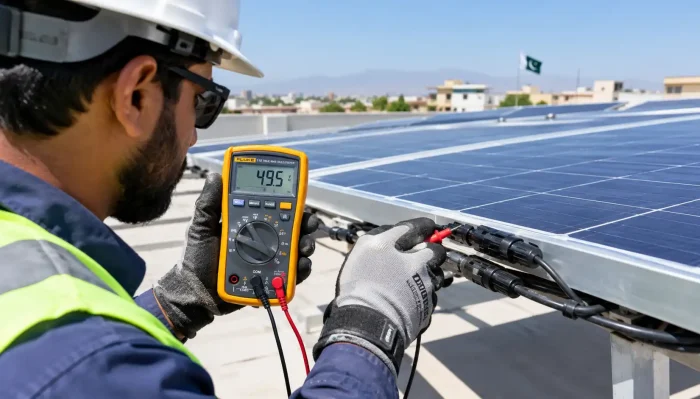
People ask questions such as what is open circuit voltage in solar panel datasheet‚ and we have a short answer․ Open circuit voltage‚ or Voc‚ is the greatest potential voltage output from a solar panel when no load is connected and no current is flowing․
At Progressive Ventures‚ we have 16 years of experience in the solar energy field․ Voc is generally the key factor to consider when testing the safety of a solar system․ Using the wrong Voc for your inverter can cause your inverter to fail the first time temperatures are low․ For more information on Voc and testing and measuring Voc‚ please read this article․
Open Circuit Voltage (Voc)
Open circuit voltage is the voltage measured across the positive and negative terminals of a solar panel with no connected loads․ With no connected loads‚ there is no current flow in an open circuit․
The solar panel voc term can be explained by analogy․ Picture a tank of water with a closed valve․ There is high pressure in this closed tank with no flow of water․ Voc is the highest voltage possible in a solar panel circuit․
Manufacturers provide Voc information on the panel and panel spec sheet․ Voc is tested under Standard Test Conditions (STC) of 1‚000 W/m² irradiance and 25°C panel operating temperature and other standard industry lighting conditions․ Most 60-cell panels have a Voc of about 37 to 40 V․ New 550 W panels have a Voc of about 50 V․
How Does Open Circuit Voltage Work?
A solar cell makes voltage the moment light hits it. Each silicon cell produces roughly 0.6 to 0.7 V on its own. A panel links dozens of cells in series, and their voltages add up.
With no load, the electrons have nowhere to go. Current drops to zero and voltage climbs to its peak. Once you connect an inverter or battery, current flows and the voltage falls below Voc. That is why a working system never runs at Voc.
Sunlight changes Voc only a little once the sun is up. Current swings a lot with light, but voltage stays fairly steady. Temperature moves Voc far more, as you will see below.
How to Calculate Solar Panel Open Circuit Voltage
If you want to know how to calculate open circuit voltage for a full string, you need three numbers. Take the panel’s Voc and its Voc temperature coefficient from the datasheet. Then add the lowest temperature your site will see.
Use the cold value, because cold is when Voc is highest. Your design must stay safe at that peak.
Step-by-Step Example
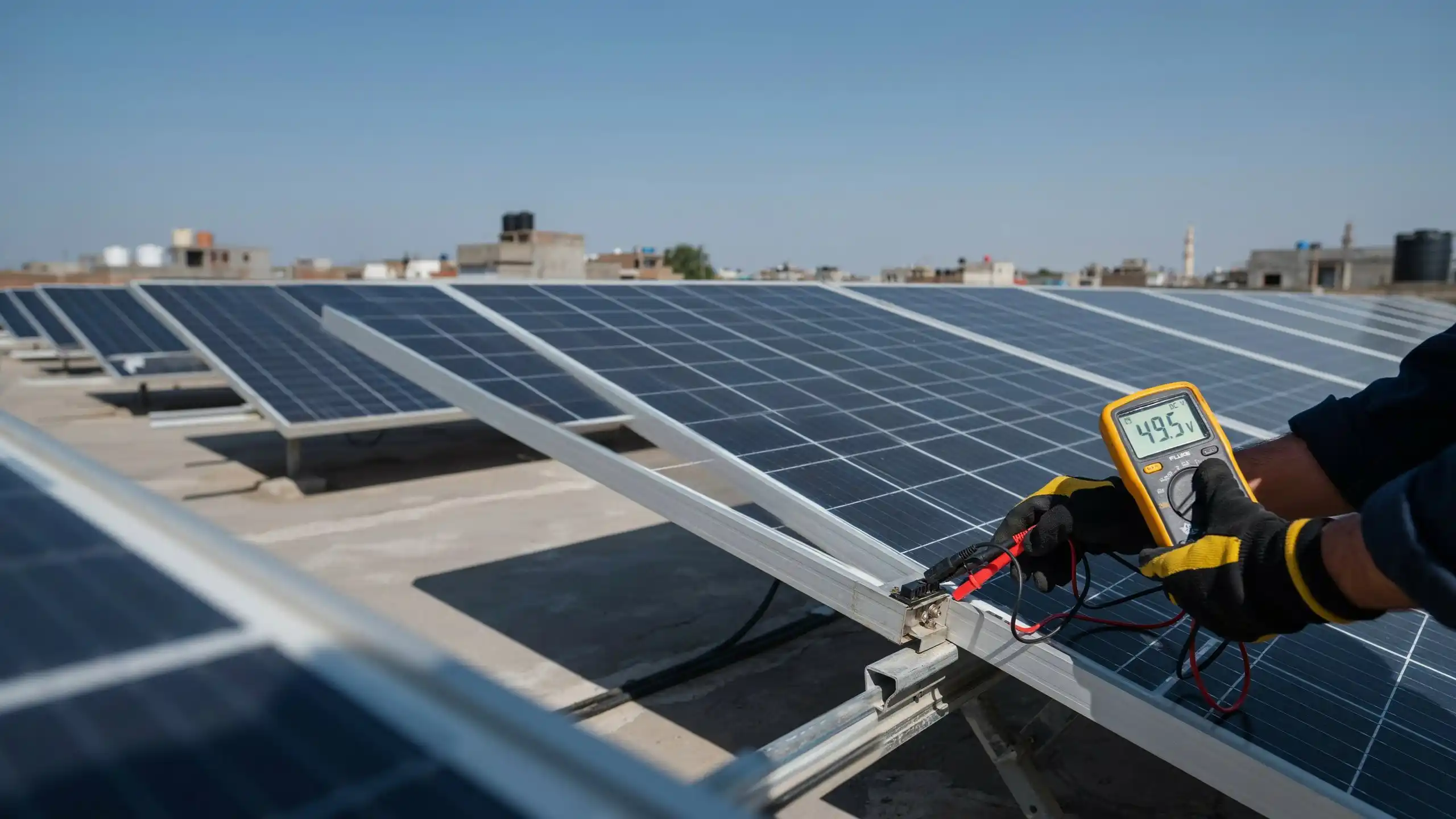
- Read the STC Voc from the datasheet. Our example panel is 49.5 V.
- Read the Voc temperature coefficient. Our example is minus 0.27% per °C.
- Subtract 25 from your site’s lowest temperature. At 0°C, the gap is minus 25°C.
- Multiply the two: minus 25 times minus 0.27% gives a 6.75% rise.
- Multiply the panel Voc by 1.0675. That gives 49.5 × 1.0675 = 52.84 V per panel.
- Multiply by the panels in the string. Ten panels give 528.4 V.
Winter nights in Islamabad and much of Punjab can fall close to freezing. Northern areas like Murree and Gilgit drop well below it. Always use the real local minimum, not a guess.
What Factors Affect Solar Panel Voc?
Temperature matters most, but several things shift Voc. This table sums them up.
| Factor | Effect on Voc |
| Cell temperature | Voc falls as cells heat up and rises as they cool |
| Number of cells in series | More cells give a higher Voc |
| Cell type | PERC, TOPCon, and polycrystalline cells give slightly different voltages |
| Sunlight intensity | Small change, except in very weak light |
| Shade and dust | Cut current far more than voltage |
| Age and damage | Cracked cells and failed bypass diodes lower Voc |
On a hot afternoon in Pakistan, cell temperatures can pass 60°C. That pulls Voc well below the label value. On a freezing morning, it climbs above the label value.
Read more What Causes Solar Panels to Lose Efficiency
How to Measure Open Circuit Voltage
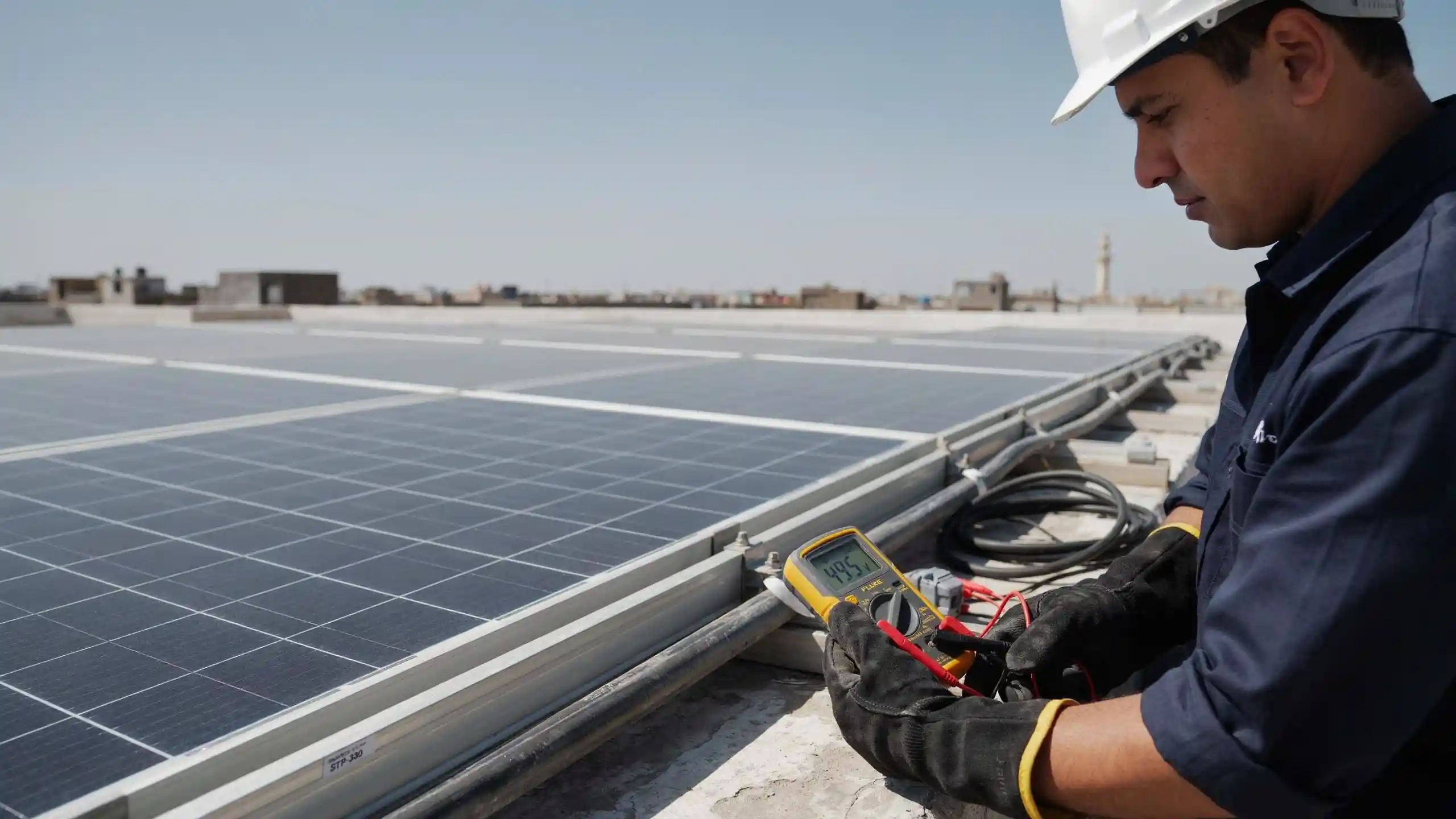
Safe solar panel voltage testing takes about ten minutes and a digital multimeter. Choose one rated for at least 1,000 V DC if you test full strings.
- Test in steady sunlight. Passing clouds give unreliable readings.
- Switch off the inverter and open the DC isolator. Disconnect the panel or string from the inverter.
- Wear insulated gloves and eye protection. A string can carry several hundred volts DC.
- Set the multimeter to DC voltage, on a range above the expected Voc.
- Use MC4 test probes so you never touch exposed metal. Place red on positive and black on negative.
- Record the reading, the time, and the panel temperature. An infrared thermometer helps here.
- Compare the result with the datasheet value, corrected for temperature.
If one panel reads noticeably lower than its neighbors, check its connectors, bypass diodes, and cells for damage.
What Is the Difference Between Voc and Vmp?
The voc vs vmp question comes down to load. Voc is the voltage with no current. Vmp is the voltage at the maximum power point, where the panel delivers its highest wattage under load.
Vmp sits lower, usually 15 to 20 percent below Voc.
| Voc | Vmp | |
| Full name | Open circuit voltage | Voltage at maximum power |
| Current flowing | None | Yes |
| Typical value, 550 W panel | About 50 V | About 41 to 42 V |
| Main use | Safety limits and maximum string size | Inverter operating range and power output |
Use Voc to stay under the inverter’s upper limit. Use Vmp to stay inside its operating range, so the inverter can pull full power.
Why Is Voc Important When Choosing a Solar Inverter?
Every inverter has a maximum DC input voltage. If your string’s Voc goes above it, the inverter can be damaged, and that damage may not be covered by warranty.
Knowing what is open circuit voltage in solar panel strings makes the rule simple. The cold-corrected string Voc must stay below the inverter’s maximum DC input. In our earlier example, ten panels reach 528 V at 0°C. An inverter capped at 500 V cannot accept that string, but nine panels (475.6 V) fit.
Run three checks before you buy:
- Cold Voc: The string’s cold Voc stays below the inverter’s maximum DC voltage.
- Hot Vmp: On a hot afternoon, string Vmp stays above the inverter’s minimum operating voltage.
- Current: Panel short-circuit current stays within the inverter’s input limit.
A proper Solar Panel Installation includes this string sizing before the first panel goes on the roof.
Final Thoughts
Open circuit voltage is the peak voltage a panel makes with no load, and it sets the safe limit for your string size. Calculate it with a cold temperature correction, measure it with a multimeter, and keep it below your inverter’s maximum DC input. Check Vmp as well, so the inverter still reaches full power on hot afternoons. You now know what is open circuit voltage in solar panel design and why it matters.
Progressive Ventures brings 16 years of solar experience to every project. Planning a system? Contact us today for string sizing and a full site assessment.
FAQs
What does Voc stand for on a solar panel?
Voc stands for open circuit voltage. It is the highest voltage a panel makes with no load connected.
Can Voc be higher than the datasheet value?
Yes. Cold, bright weather pushes Voc above the STC rating printed on the label.
Is open circuit voltage dangerous?
Yes. Any string can carry several hundred volts whenever light hits it, so treat it as live.
Do shade and dust change Voc?
Only slightly. Shade and dust reduce current much more than voltage.
What is a normal Voc for a 550 W panel?
Most 550 W panels read about 49 to 51 V. Check your own datasheet for the exact figure.