A commercial solar system in Pakistan costs roughly PKR 65 to PKR 90 per watt for on-grid setups and PKR 100 to PKR 150 per watt for hybrid systems with battery backup. For a typical 20kW to 50kW business installation, that works out to a total cost between PKR 1.5 million and PKR 4.3 million, installed and ready to run.
So if you are searching for how much do commercial solar panels cost before you call an installer, that is your real starting number for 2026. The rest of this guide breaks it down by system size, brand, and the local rules that change your final bill.
Quick Answer: Average Commercial Solar Panel Cost Per Watt in Pakistan
Prices below reflect turnkey installation, meaning panels, inverter, mounting, wiring, and labor are all included. These are 2026 market averages and shift with the dollar rate and panel brand.
| System Type | Cost Per Watt (PKR) | Notes |
| On-grid commercial system | 65 – 90 | No battery, exports surplus to DISCO |
| Hybrid commercial system | 100 – 150 | Lithium battery backup for load shedding |
| Off-grid commercial system | 160 – 220+ | Large battery bank, no grid connection needed |
Bigger systems usually bring the per-watt price down. A 100kW factory installation often costs less per watt than a 20kW retail shop, simply because fixed costs like design, labor mobilization, and net metering paperwork get spread across more panels.
Commercial Solar System Cost by Size (10kW to 500kW+)
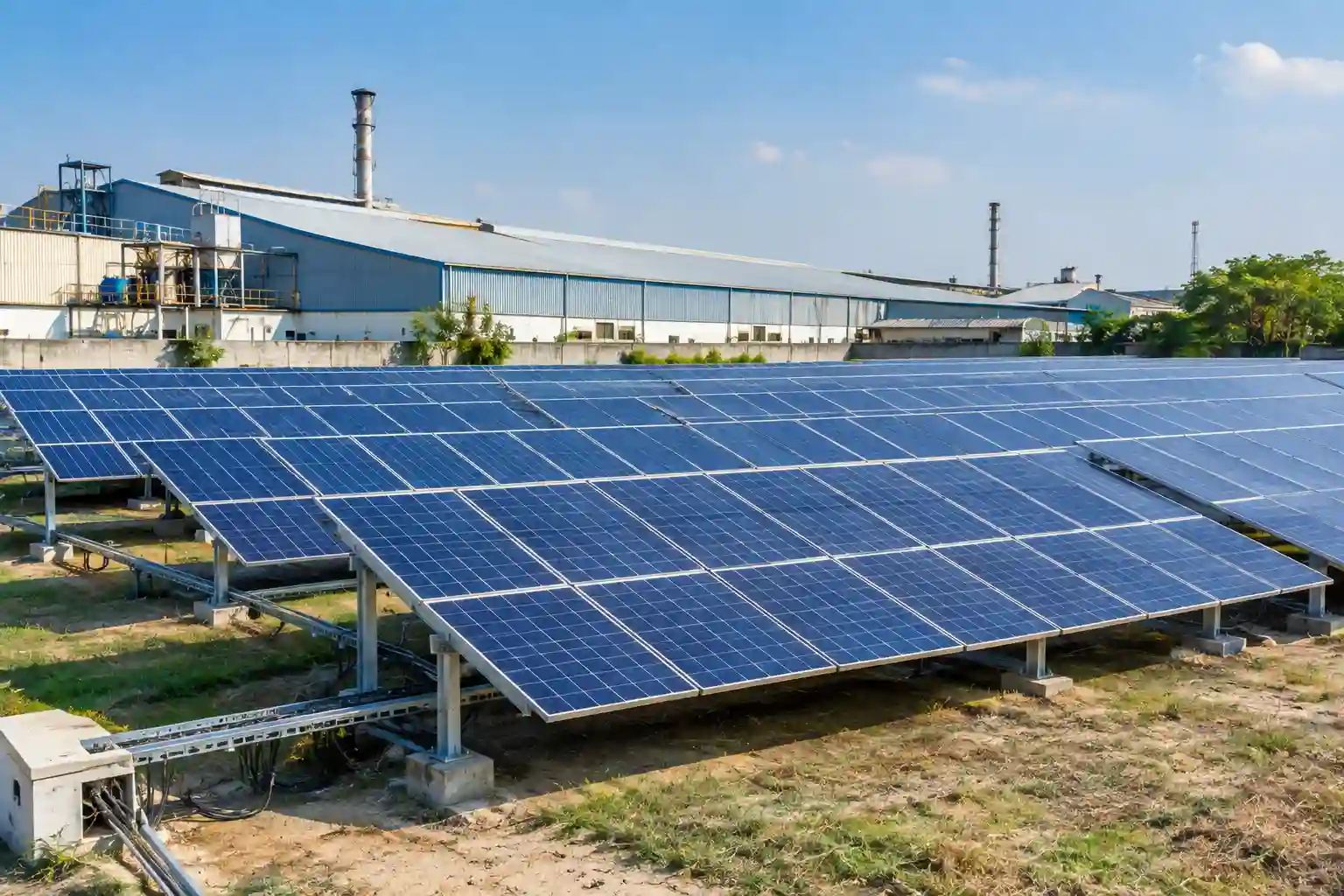
This is the table that actually answers the question most business owners are asking. The average cost of a commercial solar system depends heavily on your building type and daily electricity use.
| System Size | Estimated Total Cost (PKR) | Typical Use Case |
| 10 kW | 850,000 – 1,150,000 | Small office or shop |
| 20 kW | 1,550,000 – 2,000,000 | Retail store, clinic, small workshop |
| 30 kW | 2,150,000 – 2,750,000 | Mid-size workshop or showroom |
| 50 kW | 3,600,000 – 4,300,000 | Small factory or textile unit |
| 100 kW | 6,900,000 – 8,200,000 | Mid-size factory, warehouse |
| 200 kW | 13,000,000 – 15,500,000 | Large textile unit or industrial plant |
| 500 kW+ | 30,000,000+ | Large industrial plant, custom EPC project |
These figures cover Tier-1 panels on an on-grid setup. Add 30 to 50 percent if your business needs a hybrid system with lithium battery backup, which most factories running continuous shifts through load shedding tend to need.
What’s Included in the Price? (Hard Cost vs Soft Cost Breakdown)
Two quotes for the same system size can differ by hundreds of thousands of rupees. Usually the gap comes from what is quietly left out. Here is a rough breakdown of where your commercial solar installation cost actually goes:
- Solar panels: around 35 to 40 percent of total cost
- Inverter: around 12 to 15 percent
- Mounting structure (GI or aluminum): around 8 to 10 percent
- Wiring, cabling, and Balance of System (BOS): around 7 to 9 percent
- Net metering equipment (bi-directional meter): around 2 to 4 percent
- Labor and installation: around 12 to 15 percent
- Transport, especially for upcountry or industrial sites: around 3 to 6 percent
If a quote looks unusually cheap, check which of these line items got cut. Thin cabling, generic mounting brackets, or a skipped grid interconnection filing tend to be where corners get cut first.
Read more What Is the Cost of Solar Panel Installation in Pakistan
Factors That Affect Commercial Solar Panel Cost in Pakistan
A few local factors move the price more than most buyers expect.
- System type. On-grid costs less upfront. Hybrid and off-grid systems cost more because of the battery bank.
- Panel type and brand. Mono PERC panels are cheaper than N-type TOPCon or bifacial panels. Jinko, Longi, Canadian Solar, and JA Solar are the most common Tier-1 names in the Pakistani market right now.
- Inverter brand and quality. Huawei, Growatt, Solis, and Sungrow sit at different price points, with Huawei usually priced highest for its reliability record.
- Battery type, if hybrid. Lithium batteries cost more upfront than lead-acid but last far longer and need less maintenance.
- Roof type and mounting complexity. A flat industrial roof with elevated structure costs more to mount on than a simple pitched rooftop.
- Site location. Transport cost rises sharply for remote industrial zones far from Lahore, Karachi, or Faisalabad.
- The USD to PKR exchange rate. Almost every panel and inverter sold in Pakistan is imported. This is the single biggest factor most cost guides skip, and it can move your quote by 10 to 15 percent within a single quarter.
- Net metering application and DISCO fees. These add a fixed cost regardless of your system size, so they matter more for smaller businesses.
Once you weigh all of these together, the answer to how much do commercial solar panels cost changes from one business to another, even for the same system size.
Net Metering Cost and Process for Commercial Solar in Pakistan
This is the part most cost guides skip completely, and it matters more in 2026 than ever before.
NEPRA replaced the old net metering framework with the Prosumer Regulations 2026 on February 9, 2026. Under the new rules, a business exporting surplus solar power to the grid now gets paid a net billing rate close to PKR 11 per unit, down from the older rate of roughly PKR 26 per unit. New connections also get a five-year contract instead of the previous seven years. If your business signed a net metering agreement before February 9, 2026, your old rate and contract terms stay valid until that agreement expires.
The application goes through your local DISCO, whether that is LESCO in Lahore, K-Electric in Karachi, IESCO in Islamabad, or MEPCO in Multan.
A PEC-certified engineer needs to prepare your single-line diagram, and your inverter needs anti-islanding protection to pass inspection. The bi-directional meter itself typically costs between PKR 18,000 and PKR 60,000 depending on your DISCO and meter type, on top of processing and demand note charges. Most businesses report the full process, from application to a working meter, taking two to four months.
This shift matters directly for your payback math. Under the new net billing rules, a business earns far more by using its own solar power during the day than by exporting it. Sizing your system to match your daytime load, rather than maximizing export, is now the smarter approach for most factories and offices.
Commercial Electricity Tariffs and Payback Period Calculation
Here is a real working example using current 2026 rates.
A textile workshop on the B3 industrial tariff pays around PKR 27 per unit as of February 2026, with peak-hour charges reaching PKR 35.68 and off-peak dropping to PKR 23.67. A 50kW solar system for this factory costs roughly PKR 3.9 million installed.
That system generates around 200 units per day on average across the year, or about 6,000 units a month. If the factory runs day shifts and self-consumes about 70 percent of that output, it avoids paying PKR 27 per unit on roughly 4,200 units, saving close to PKR 113,000 a month. The remaining 30 percent gets exported under net billing at PKR 11 per unit, adding another PKR 19,800 a month.
That puts total monthly savings near PKR 133,000, or about PKR 1.6 million a year. Against a PKR 3.9 million system cost, payback lands somewhere between two and a half and four years, depending on weather, actual load patterns, and any seasonal shutdowns. Over 25 years, even with normal panel degradation, that same 50kW system can return several times its original cost in avoided electricity bills.
Every factory runs differently, so treat this as a working example rather than a promise. A site-specific load study will give you an exact number.
Ways to Finance a Commercial Solar System in Pakistan
Most businesses do not pay cash upfront for a commercial solar installation cost this size. A few real financing routes exist in 2026:
- Cash purchase. Fastest payback since there is no interest to account for.
- SBP Renewable Energy Financing Scheme. Offers a concessional rate near 6 percent through partner banks for eligible commercial and SME projects, covering systems from 1 kW captive use up to large utility-scale plants. Allocation is limited by quota and requires a technical audit, so confirm availability at your bank before counting on it.
- Standard bank leasing. Commercial loans outside the SBP scheme are KIBOR-linked, usually landing between 15 and 18 percent in 2026.
- Installment plans from solar installers. Many companies offer in-house payment plans spread over 12 to 36 months, letting the monthly savings offset the installment.
- Islamic or ijara financing. Shariah-compliant Murabaha and ijara structures are available through banks like Meezan for businesses that need a non-interest option.
Maintenance and Long-Term Cost of Ownership
Solar panels are low maintenance, but not zero maintenance. Budget for these over the system’s life:
- Annual cleaning. Dust buildup cuts output, especially in industrial areas. Expect a modest recurring cost that scales with array size.
- Inverter replacement. Most inverters need replacing around year 10 to 12, even though panels keep working past that point.
- Warranty terms. Tier-1 panels typically carry a 25-year linear power output warranty. Inverters usually come with 5 to 10 year product warranties.
- Expected lifespan. A well-installed system runs 25 years or more, with panel output dropping roughly 0.5 to 0.6 percent each year.
On-Grid vs Hybrid vs Off-Grid Commercial Systems: Cost Comparison
| Type | Relative Cost | Battery Backup | Best For |
| On-grid | Lowest | None | Businesses with steady grid access and daytime loads |
| Hybrid | Mid to high | Yes, lithium recommended | Factories that cannot stop production during load shedding |
| Off-grid | Highest | Large battery bank | Remote sites with no grid connection at all |
Most commercial buyers in Pakistan land on hybrid once they calculate the real cost of downtime during outages. The extra battery cost often pays for itself the first time a lost production shift would have cost more.
How to Get the Best Commercial Solar Panel Price (Without Cutting Corners)
Getting a fair price on Solar Panel Installation starts with comparing at least three detailed quotes, not just three numbers. Ask each installer for the exact panel model, inverter brand, and warranty terms in writing. A quote that looks cheap but skips a proper single-line diagram or uses generic mounting hardware will cost you more in repairs within a few years.
Right-sizing matters just as much as price. A system built for maximum export under the old net metering rules is now oversized for most businesses under net billing. Verify that your installer is AEDB-registered and that your panels carry genuine Tier-1 certification, not just a sticker claiming it.
At Progressive Ventures, we size every commercial system around your actual daytime load first, then build the export capacity around what is left. That approach keeps your commercial solar panel cost per watt as low as possible while protecting your payback timeline under the current net billing rates. If you want a real, site-specific quote instead of a rough estimate, reach out to our team for a free load assessment.
For further reading on the regulatory side of this topic, see NEPRA’s official tariff and policy notifications and Dawn’s coverage of the 2026 net metering overhaul.
FAQs
What is the price per watt of commercial solar panels in Pakistan?
As of 2026, on-grid commercial systems run PKR 65 to PKR 90 per watt installed, while hybrid systems with battery backup run PKR 100 to PKR 150 per watt.
How much does a 50kW commercial solar system cost?
A 50kW on-grid system typically costs between PKR 3.6 million and PKR 4.3 million, fully installed with Tier-1 panels.
How long does it take for a commercial solar system to pay for itself?
Most factories on industrial tariffs see payback between two and a half and four years, depending on how much power they use during daylight hours.
Is net metering available for commercial solar in Pakistan?
Yes, but it now works as net billing under the NEPRA Prosumer Regulations 2026, paying roughly PKR 11 per exported unit instead of the older retail-rate credit.
Do commercial solar panels come with installment options?
Yes. Many installers offer in-house installment plans, and banks offer both KIBOR-linked loans and, for eligible projects, the SBP Renewable Energy Financing Scheme near 6 percent.
What’s the difference between commercial and industrial solar system cost?
Commercial usually refers to offices, shops, and clinics under 50kW, while industrial covers factories and plants from 100kW upward. Industrial systems cost less per watt due to economies of scale but need more site-specific engineering.